



The Oasis for
Rational Conservatives

Friday, March 27, 2026

Member Menu

Spain Reconquista

Central Asia Exploration

The Amazon's Pantanal

Reconquista Exploration

Wheeler Expeditions

Member Discussions

Article Archives

Archives

L i k e U s ! ! !

AN IDEA TO PROTECT AMERICANS FROM PRO-CRIME STATE AND PROSECUTORS

[TTP: there is, perhaps, much in this article to both like and dislike, and enough grey area to have a great conversation. Tell us what you think in the comments!]

The United States literally began with these words: “We hold these truths to be self-evident, that all men are created equal, that they are endowed by their Creator with certain unalienable Rights, that among these are Life, Liberty and the pursuit of Happiness.”

(What that actually means, particularly the pursuit of Happiness part, is different for different people. At a minimum, however, we can all agree that Life means, well...life.)

The above quotation, of course, comes from the Declaration of Independence. But that document doesn’t define the structure of our government; the Constitution does.

And it’s from the Constitution that we get our federal system, under which (originally) the federal government had a few well-defined and finite powers such as defense, foreign relations, and adjudicating conflicts between the various states.

States, on the other hand, reserved all those powers not specifically prohibited to them or delegated to the federal government.

The truth is that the system worked very well for a long time. About 150 years.

But starting in the 1910s, with the passage of the 16th and 17th amendments, the line between the states and the federal government started to blur; in the 1930s, it began to fray; and by the 1990s, it was basically gone, which is the situation we find ourselves with today…

You know one place where federal control largely doesn’t extend?

The criminal justice system.
Read more...

THE CHINA OPENING – NIXON’S STRATEGIC MASTERSTROKE AND HOW HIS SUCCESSORS SQUANDERED IT

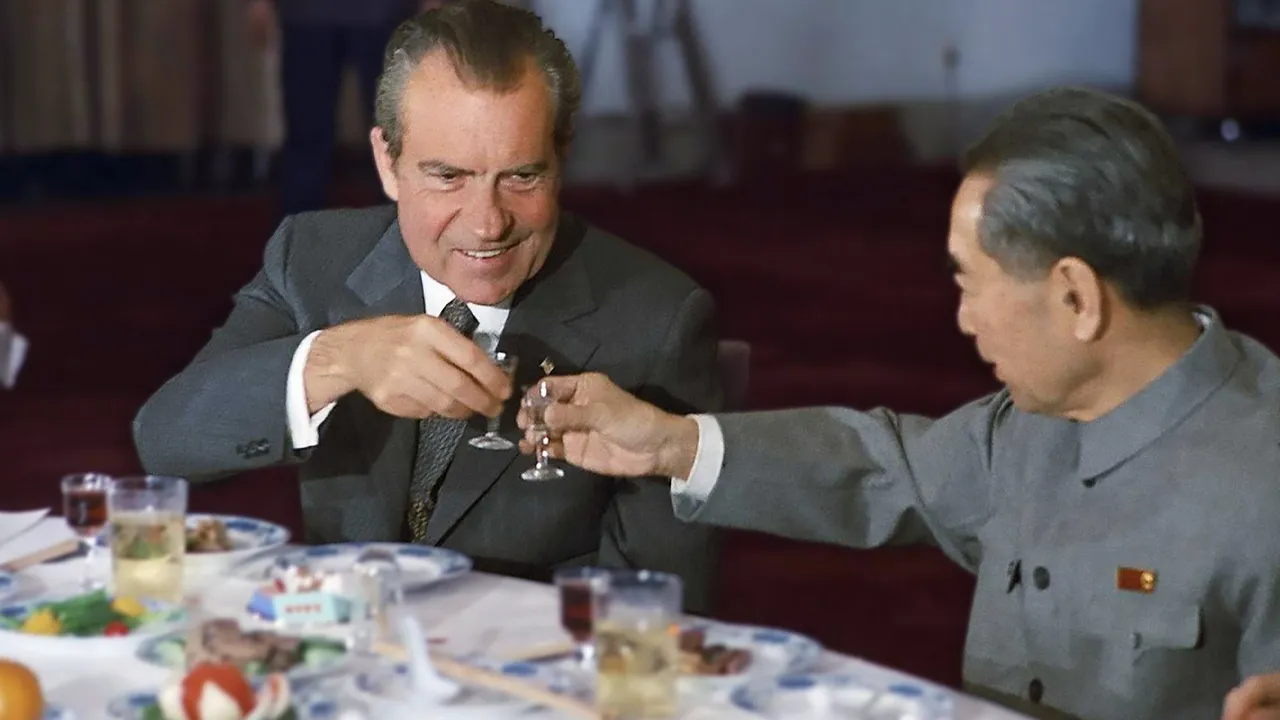
In February of 1972, President Richard Milhous Nixon accomplished what generations of diplomats, academics, and foreign policy mandarins had insisted was impossible.
The fiercely anti-communist president who had built his career exposing Soviet espionage in the United States stepped onto the soil of the People’s Republic of China (PRC) and altered the trajectory of global geopolitics.

For decades prior, Communist China had existed behind an opaque ideological barricade. Since Mao Zedong’s triumph in 1949 the Chinese Communist Party (CCP) ruled a nation that was diplomatically isolated, economically stagnant, and politically convulsive.

Washington had no formal relations with Beijing. American diplomats spoke of China only through intermediaries. The Cold War was defined by a bipolar confrontation between the United States and the Soviet Union, while China simmered as a volatile and unpredictable revolutionary state.

President Nixon saw something others failed to grasp.

The communist world was not monolithic. In fact, by the late 1960s, the Sino Soviet split had grown into a deep strategic rivalry. Moscow and Beijing were not merely ideological cousins. They became competitors.

Nixon and his duplicitous National Security Advisor Henry Kissinger recognized an opportunity of historic magnitude. By normalizing relations with China, the United States could exploit divisions within the communist bloc and weaken the Soviet Union’s strategic position. It was a geopolitical triangulation of breathtaking sophistication. The gamble worked.

Nixon could not have known that thirty years later…

Read more...

PAXTON’S BEAR TRAP

The political maneuver that unfolded this week in the Texas Senate runoff is best understood through a simple analogy.

Imagine a hunter placing a steel trap along a narrow path in the forest.

The trap is not hidden by complexity. It is hidden by inevitability.

The hunter knows that if the animal continues down the path it will eventually step into the mechanism. The trap works not because it deceives the animal but because the path offers no other direction.

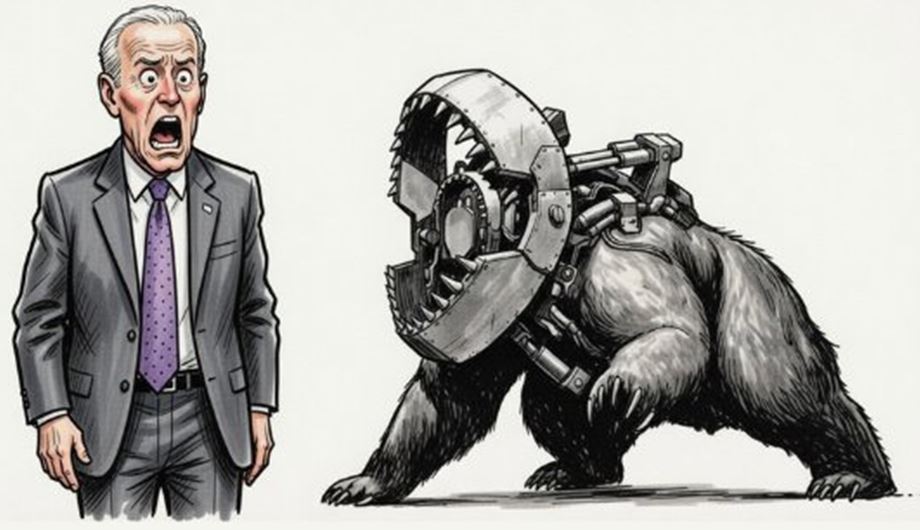
Ken Paxton’s challenge to Senator John Cornyn and Senate Leader John Thune functions in much the same way. It is a device constructed so that every available move reveals something important about the character and competence of those who must respond to it.

Read more...

KURDS – NEUTRAL NOW, BUT RATTLING SABERS

In a region that has been in conflict for time immemorial, a people have carved out a home for themselves.

The Kurds are a stateless ethnic group that spans across several countries, including Iran, Iraq, Syria, and Turkey.

In Iraq specifically, not only have the Kurds managed to create an autonomous zone that they fiercely defend from all comers, but they are considering aligning with the U.S. to fight against Iran’s jihadist regime.

There is a saying amongst the Kurds: they have “no friends but the mountains.” This ethnic group has been caught in bloody conflict after bloody conflict.

After the fall of the Ottoman Empire, the Kurds were not given any sort of sovereign territory. They were divided amongst the nations and left to preserve their way of life and culture in hostile lands. Every time they tried to declare independence, stronger powers shut them down.

The late Ayatollah Ali Khamenei even declared jihad against Kurdish insurgents demanding independence.

One thing the Kurds are good at is warfare. Their fighting force, the peshmerga, has become formidable due to its knowledge of the terrain, its bravery, and its toughness.

The Kurds have long sided with the U.S. in various conflicts.

Read more...

FLASHBACK FRIDAY: THE TOMB OF CYRUS THE GREAT

jw-cyrus-the-great-tombIn the vast valley of Pasargadae there stands this simple tomb with nothing around it for miles and miles. It has been like this for many centuries, for it entombs the founder of Persia, Cyrus the Great (600-530BC). Revered as the liberator of the Jews from their Babylonian captivity in 539 BC, hailed by Herodotus for his humanity and wisdom, this small structure symbolizes the humility of an extraordinary man. Yet the tomb is a structure of engineering genius, the oldest built on principles of base-isolation withstanding the countless earthquakes Persia has suffered for the last 2500 years.

I was first here in 1973 when Persia (renamed Iran in 1933) flourished under the Shah. Here I am in 2014, when everyone I met expressed admiration for America and their contempt for the mullah tyranny they endured. I hope to return once more when the Land of Cyrus will be free again. (Glimpses of Our Breathtaking World #146 Photo ©Jack Wheeler)

Read more...

BADAB-E-SURT

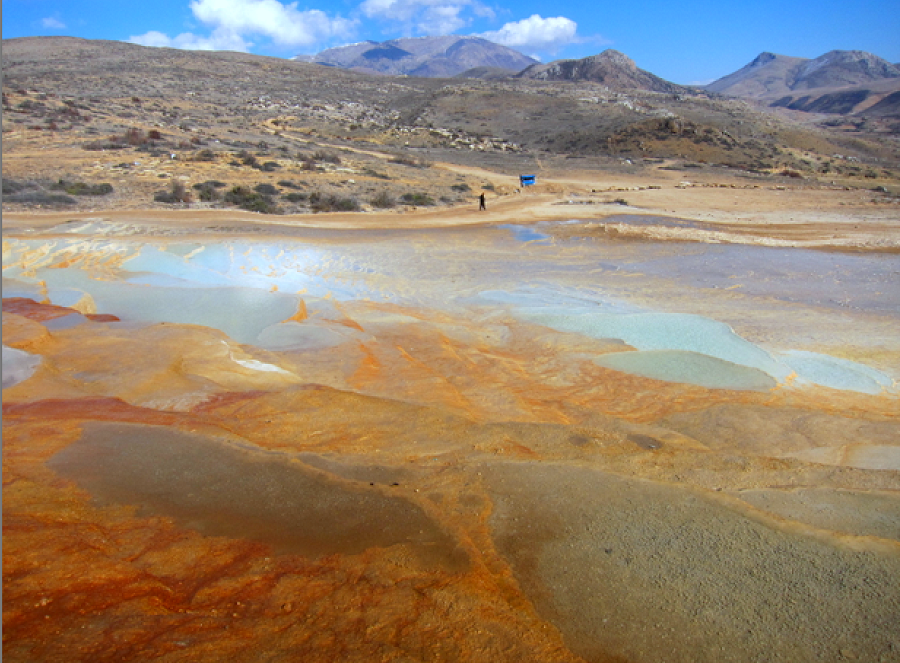
springs-of-intensityThe “Springs of Intensity” in Persian are a series travertine terraces in remote northern Iran of such impressionist beauty they look like a masterpiece of Claude Monet. For thousands of years, water flowing down a mountainside from two hot mineral springs depositing carbonates have built these natural multi-colored staircases.

Iran is an enormous country – almost the size of Alaska, four times the size of California – filled with wonders, natural and cultural. We were welcomed in every part of the country in our exploration of it in 2014. While the current political climate does not allow that today, the day will come before long when we will return. (Glimpses of Our Breathtaking World #130 Photo ©Jack Wheeler)

Read more...

BRANDON WHEELER AT THE DOOR TO HELL

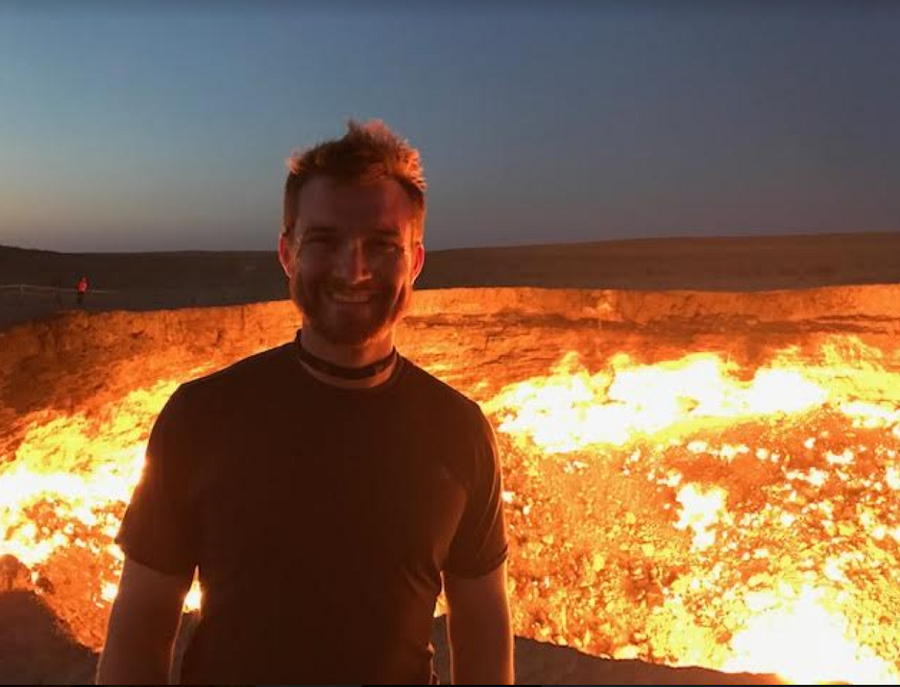
brandon-at-door-to-hellWe camped here overnight in May 2019 crossing Turkmenistan’s Kara Kum (Black Sand) Desert. The Darvaz Gas Crater – known to locals as “The Door to Hell” – has been burning nonstop since 1971, when Russian engineers set it on fire expecting it to burn off and it never has. We will be back here soon, and you can be with us. This is a night -- and a sight -- you’ll never ever forget.  My son Brandon can vouch for that! (Glimpses of Our Breathtaking World #44 Photo ©Jack Wheeler)

Read more...

THE ARK OF BUKHARA

ark-of-bukhara

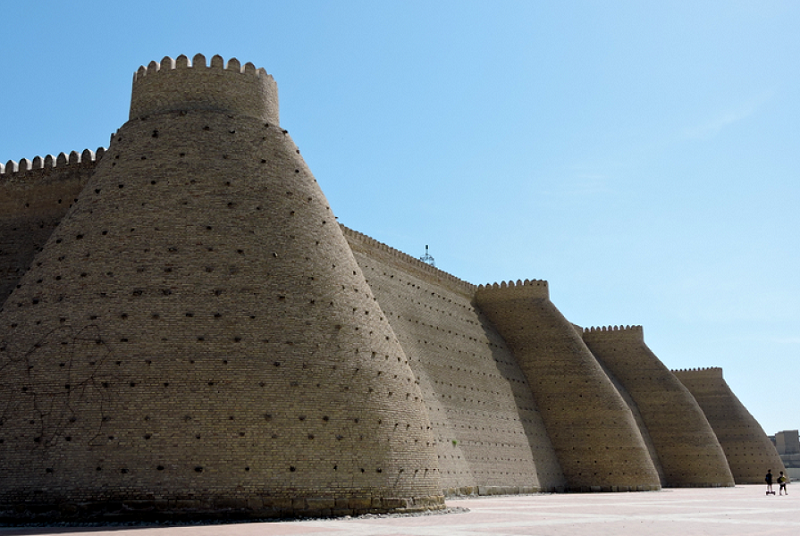
The ”Ark” was the palace-fortress of Bukhara rulers since 500 BC. The ancient Silk Road oasis has a history of 5,000 years. Today Bukhara is in Uzbekistan, one the Stans of Central Asia. Each are uniquely enchanting. Together they comprise one of the most culturally, historically, and scenically spectacular, yet mysterious and unknown, regions on our Earth. (Glimpses of Our Breathtaking World #36 Photo ©Jack Wheeler)

Read more...

ELEPHANTS IN THE SAHARA

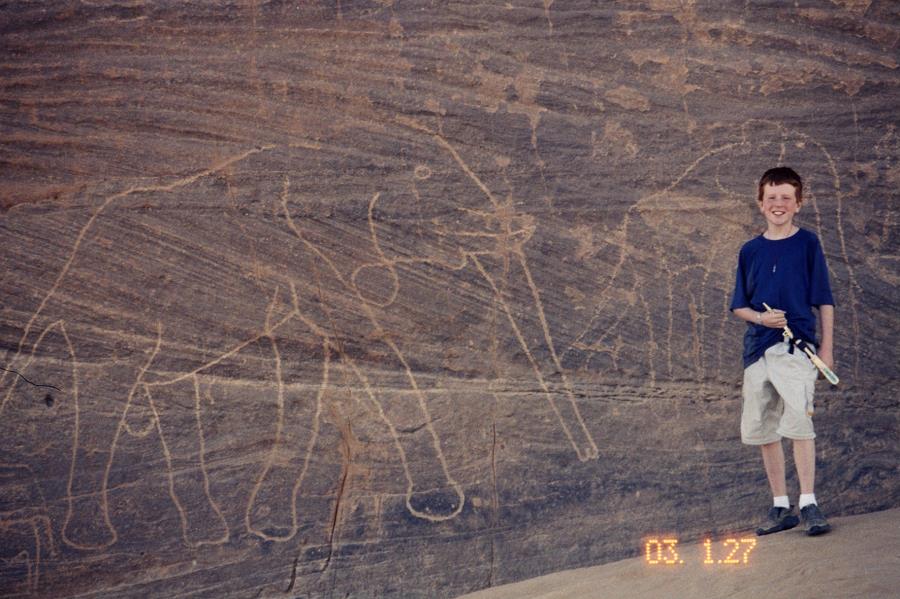
©2019 Jack Wheeler10,000 years ago, the Sahara was green, with lakes, rivers, and such an abundance of animals it was a hunting paradise for people who lived here. You’ll find their petroglyphs carved on to rock outcroppings like this that my son Jackson and I found on a Trans-Sahara Expedition in 2003.

The Milankovitch astronomical cycles that drive Earth’s climate produced a West African monsoon that greened the Sahara back then. When the cycles shifted ending the monsoon, the Sahara turned dry desert as it remains today. Political cycles that permitted a peaceful crossing of the world’s greatest desert have also shifted, making this too dangerous now.

A Trans-Sahara Expedition is one of the world’s great adventures. Hopefully, one will be possible again in the not-too-distant future. (Glimpses of Our Breathtaking World #7 photo ©Jack Wheeler)

Read more...

IRAN CANCELS PLAN TO ATTACK CALIFORNIA AFTER SEEING GAVIN NEWSOM ALREADY DESTROYED IT

TEHRAN — Rumors of the Ayatollah regime's nefarious plot to launch an assault on the west coast of the United States hit a snag on Wednesday, as Iran canceled plans to attack California after seeing Gavin Newsom had already destroyed it.
The Iranian government had issued threats that it was prepared to take revenge on the U.S. by launching attacks against California, but leaders were said to have reconsidered their plan after intelligence reports showed that the state had been completely decimated under Newsom's leadership.

"You can't destroy something that's already destroyed," said a spokesman for the supreme leader. "We were deep into strategizing a way to inflict mass destruction on California in the nation of the Great Satan, but our secret operatives said there's nothing left to do that hasn't already been done there. Rampant crime, crumbling infrastructure, raging wildfires, and, how you say… poop all over the streets. We're not sure we could do anything that would make it worse."

Sources revealed that the Iranians had reached out to Governor Newsom's office to offer congratulations on the job he did wiping out California. "What he has accomplished is impressive," one insider said. "He's done more to cripple America and strike fear in the hearts of Americans than we could ever hope to do. Well done, Governor Newsom. We admire you greatly, sir."

At publishing time, the Iranian government had reportedly asked Newsom if he was interested in becoming the next supreme leader when the position inevitably becomes available.

~ Babylon Bee reporting.

Read more...

HALF-FULL REPORT 03/06/26

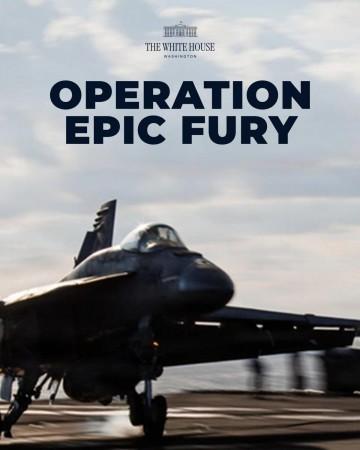
Operation Epic Fury

The past week has confirmed a stark reality: the U.S.-Israel-Iran confrontation is a global conflict involving international order, energy flows, and technological supremacy. Operation Epic Fury, launched February 27, demonstrated the decisive combination of intelligence, AI, and precision strikes.

Over 50 stealth fighters, followed by bombers and conventional aircraft, eliminated Iran’s top leadership and the next tier in rapid succession. AI enabled near-perfect targeting, turning decapitation into a reliable instrument of strategy.

Tehran responded with missiles, drones, and proxy attacks across Israel, the Gulf, and Cyprus, while Hezbollah fired into northern Israel. By early this week, U.S. and Israeli forces had crippled Iran’s missile infrastructure, extending the battlefield beyond the Persian Gulf into strategic choke points like the Strait of Hormuz.

This conflict illustrates a principle central to modern strategy: power now moves at the speed of compute.

Naval supremacy remains indispensable. Fast jets strike, but submarines, carriers, and integrated ISR systems hold the lanes. The March 3 sinking of Iran’s IRIS Dena by a Virginia-class submarine protected Diego Garcia and the B-2 bombers essential for precision strikes.

Control of sea and digital lanes underpins operational tempo, while AI drives intelligence, targeting, and decision cycles.

Against this backdrop, London operates like a man behind the curtain. Through environmental regulation, energy suppression, and war-risk manipulation at Lloyd’s, it seeks to throttle U.S. AI and energy independence, rerouting strategic leverage through insurance premiums and market control.

Lloyd’s itself is a centuries-old, market-based insurance hub where no single entity owns the system, yet its underwriters can disrupt energy flows, spike costs, and constrain global commerce. Recent cancellations around Hormuz froze 150 tankers, spiked freight, and pushed oil above $90 per barrel.

U.S. responded with DFC-backed insurance guarantees and naval escort proposals that highlight the strategic stakes: in the 21st century, national survival depends on unbroken command of compute, sea control, and energy infrastructure.

Iran shows how compute and naval dominance shape modern conflict. London shows how institutional leverage can do the same quietly. The lesson is that strength must be paired with vigilance, moral clarity, and operational reach.

The Anglo-American partnership, if not recalibrated, can strangle U.S. technological and energy freedom. In this 250th year of the Republic, that unfinished business cannot wait.

Keir Starmer must go.

Read more...

PERSIAN HOPE

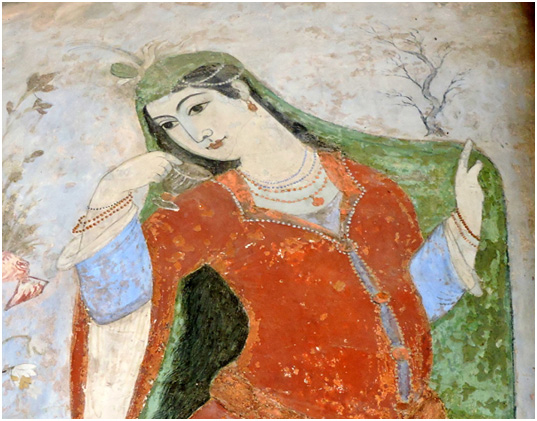
Fresco of a Persian woman, Ali Qapu Palace, Isfahan, early 1600s – JW photo

[This Monday’s Archive was originally published in To The Point on December 14, 2014, then updated on September 27, 2018. It could not be more relevant to right now, with POTUS’ Decapitation Strike on the entire top leadership of Iran’s Mulla Terrorist regime in Iran ereyesterday (2/28), and vow to eliminate the regime, bring freedom to Iran, and secure greater security thereby to America and the World. Appended is TTP’s Nutshell History of Persia, originally published on August 18, 2005, also updated on 9/27/18.]

TTP, December 14, 2014, updated September 27, 2018

Shiraz, Iran.  “Where are you from?” the Iranian man asked me.

With a big smile, I happily answered, “America.”  He responded with a smile of his own.  “Ah, America… America Number One!”

He hooked his two index fingers together.  “American people, Iranian people, good… friends.”  He unhooked his fingers and waved his hand in a gesture of contempt.  “Governments, no good.”  We both belly-laughed.

This took place in November of 2014, when our government meant the despised Obama to him.  It doesn’t mean that any longer. Iran is back in the news this week, with President Trump delivering a clear condemnation in his brilliant speech to the UN General Assembly Tuesday (9/25):

“We cannot allow the world’s leading sponsor of terrorism to possess the planet’s most dangerous weapons. We cannot allow a regime that chants “Death to America,” and that threatens Israel with annihilation, to possess the means to deliver a nuclear warhead to any city on Earth. Just can’t do it.

We ask all nations to isolate Iran’s regime as long as its aggression continues. And we ask all nations to support Iran’s people as they struggle to reclaim their religious and righteous destiny.”

Thus I am optimistic that there’s hope for Iran.  The long – two thousand five hundred year long – history of Persia and the West is what I call The Persian Ratchet.  An ebb and flow that ratchets up and down over the centuries.  I’ve appended a summary of this history at the end.  Note it includes why Persia had its name changed to Iran in 1935.

Note also that history comes after photos of mine that I’m sure you’ll enjoy.For now, let’s talk about the Iranian people I met a little while ago, for it is they, not their government, that give me hope.

Read more...

KHARG ISLAND – THE NERVE CENTER OF IRAN’S OIL EMPIRE

Americans would be wise to begin paying very close attention to a small rugged island in the northern Persian Gulf that few could locate on a map only weeks ago.

That island is Kharg Island (it’s sometimes spelled Khark Island.)

It is nothing less than the main distribution center for Islamic Republic of Iran’s oil.

At a moment when the United States and its allies are confronting the Islamic Republic during the ongoing military confrontation known as Operation Epic Fury, Kharg Island stands as one of the most consequential strategic locations in the entire Middle East.

If Iran’s regime derives financial oxygen from oil exports, then Kharg Island is the lung through which that oxygen flows.

Read more...

JUDGEMENT DAY AT THE NEW NUREMBERG

Every now and then you see one of those stories that you would assume would land on the front page of the news, but doesn’t.

As most of us know, the attack on Israel that occurred on October 7, 2023 resulted in numerous members of Hamas being taken prisoner during the event and in the subsequent IDF operation in Gaza.  Early on I was hearing that a move was afoot to put at least some of them, who could be identified as having committed murders of Israeli civilians, on trial in the fashion of Nuremberg.  I hoped it was true, but frankly had limited hope of this.

Then, this story dropped…..

Read more...

RETHINKING MILITARY INTERVENTION IN THE AGE OF AMERICA FIRST

I joined the Marine Corps because Saddam Hussein invaded Kuwait. I was young, but not confused.

A dictator had crossed a border with tanks, absorbed a weaker neighbor, and dared the world to respond.

President George H. W. Bush did respond. He assembled a coalition, liberated Kuwait, and then stopped.

At the time, I felt frustration. If Saddam was the problem, why leave him in power? Why halt the advance when the job seemed half done?

I believed, as many did, that the first Gulf War should have ended with regime change in Baghdad.

That early conviction shaped my support for later wars. When we went into Afghanistan and then Iraq, I did not recoil. I thought we were finishing unfinished business. I thought we could remove tyrants and midwife stable democracies. I thought American power, applied with moral clarity, could reshape broken regimes.

But the decades that followed chastened that confidence.

We discovered that removing a regime is easier than replacing it. We discovered that democracy building is not an export commodity. We discovered that intelligence agencies and development bureaucracies cannot engineer legitimacy from abroad.

Endless deployments and open-ended missions taught many of us a difficult lesson. The U.S. should not be in the business of remaking other nations in its own image. We are not good at it, and it does not work.

But….

Read more...