






DEMOCRATS PROMISE THAT IF ELECTED EVERY VOTER WILL GIVE THEM $5,000
 WASHINGTON, D.C. — Just days after President Donald Trump vowed to issue every American citizen a $5,000 check if Republicans won the midterms, Democrats countered with their own offer: if they are elected, every voter would give them $5,000.
The heartfelt plea was reportedly designed to motivate the Democrat base and get people energized ahead of the midterms, a voting period with famously low voter turnout compared to presidential election years. And nothing motivates Democrats more than promising to take away people's hard-earned money.
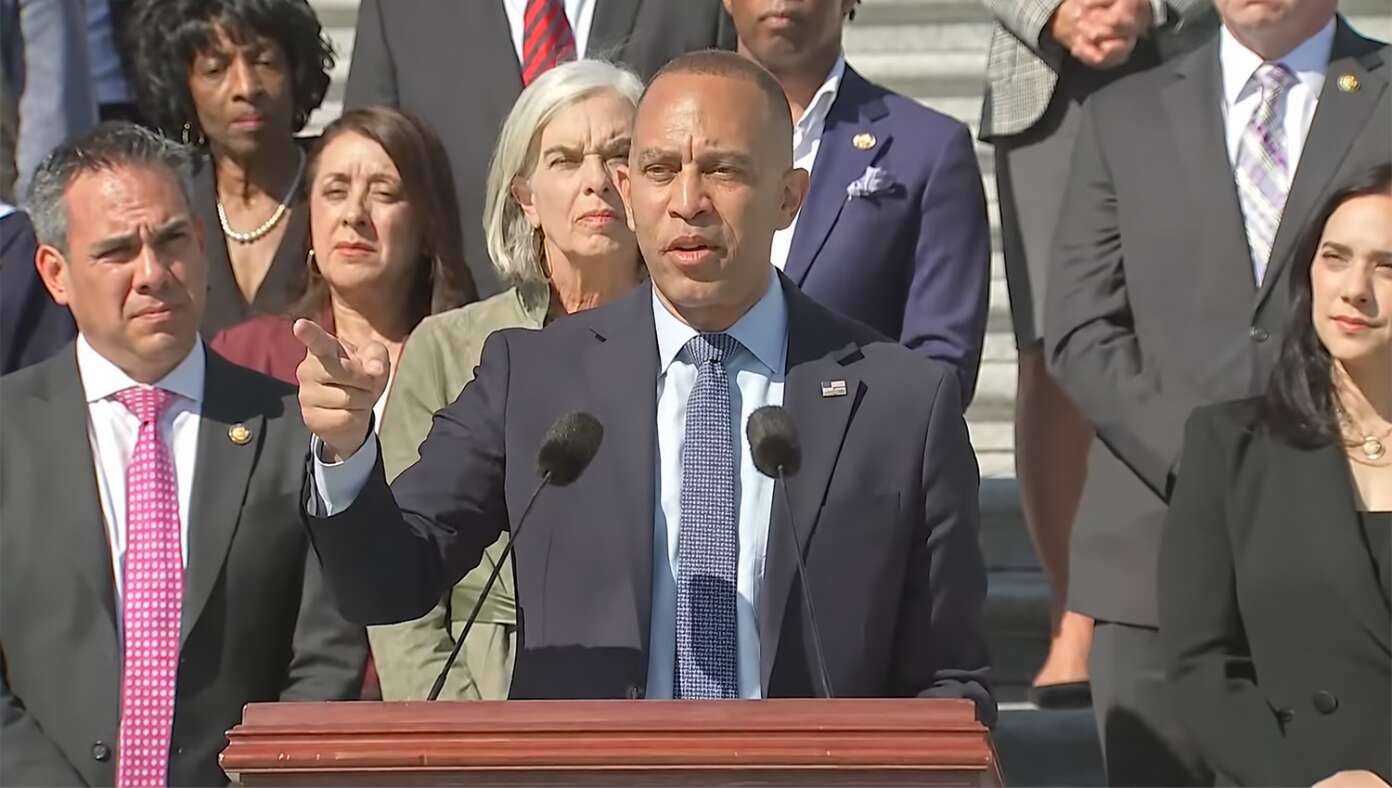
In an appearance on CNN, House Minority Leader Hakeem Jeffries explained the party platform. "Republicans are going to reframe this as us taking voter money, but that's not true at all," he said. "We're not taking your cash, you get to give us your cash. That's a big difference. But either way, we end up with your money, and that's what's important."
At a campaign event on Friday, Rep. Alexandria Ocasio-Cortez reiterated the popular talking point. "Kennedy famously said, 'Ask not what your country can do for you, but what you can do for your country,'" she said. "And what you can do is give us $5,000 when we raise taxes after the midterms. We will have more of your money. That is our solemn pledge to the American people."
As predicted, Republicans did indeed accuse Democrats of trying to steal taxpayer dollars. "They're not even promising anything, they're just saying they'll take your money," Sen. Rand Paul pointed out. "I don't know why people keep voting for them. Am I out of touch? Should I be stealing money?"
At publishing time, Democrat approval ratings had surged upward among voters who don't pay taxes.
~ Babylon Bee reporting.

 [Every day now, we read of another Christian Church “mysteriously” burned down, while our country’s politics and social media are infested with Hate America Islamic Fascists like Hasan Piker, Ilhan Omar, and Abdulrahman Mohamed El-Sayed. This Monday’s Archive was first published in 2007, yet provides intellectual ammunition with which to defend ourselves from this hateful infestation today. Use it liberally.]
 Last month, the Enemedia crowed. The “experts” announced 1.5 percent growth and pronounced judgment. Trump’s promised boom had failed to arrive.

 Over the weekend, a German political party called Alternative für Deutschland (AfD) won a major victory in the state of Saxony-Anhalt.






 U.S. — As the aftermath of the Lindsay Clancy mistrial continued to reverberate across the country, one member of the jury confirmed that white women were now arguing that black men should only have three-fifths of a jury vote.