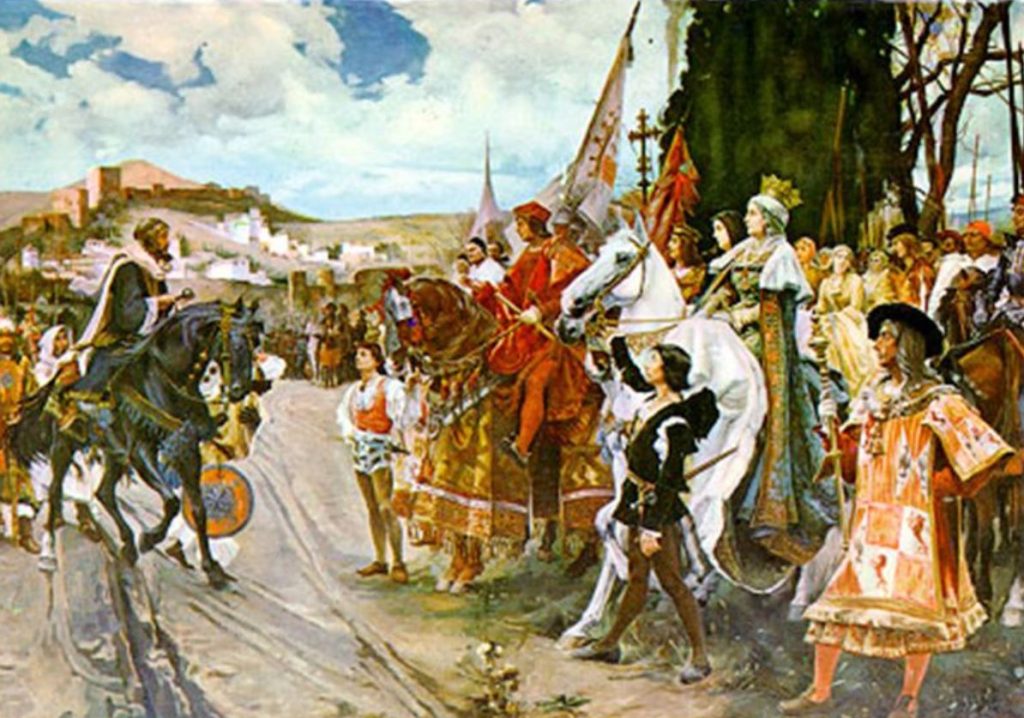
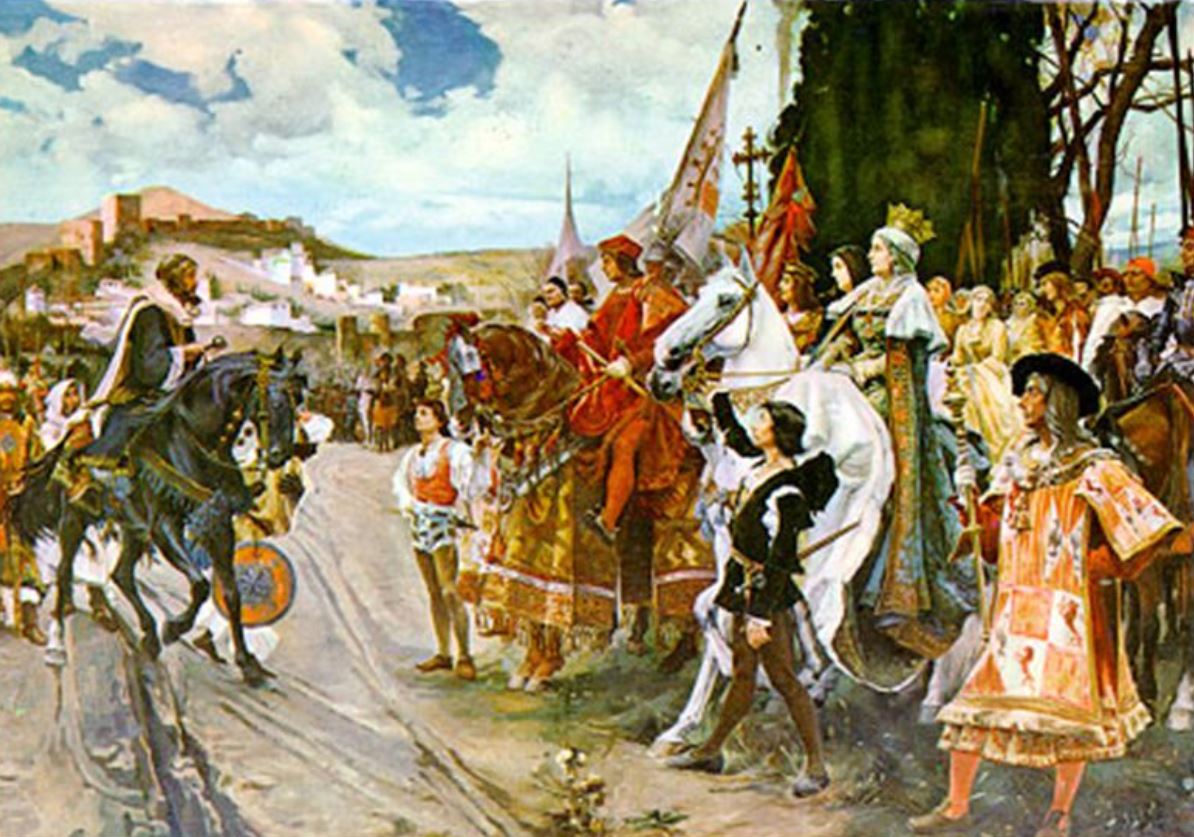
 This painting, “The Capitulation at Granada” by Francisco Pradilla Ortiz in 1882, depicts one of the most epic events in the world history of Christianity.
On January 2, 1492, the last ruler left of what was Moslem Spain, Boabdil of Granada, surrendered to King Ferdinand of Aragon and Queen Isabella of Castile. In attendance was Christopher Columbus, courting the Spanish monarchs for sponsorship to sail west to find the riches of the East.
This moment was the completion of nearly 800 years of Christian knights waging war to expel the Islamic invaders of their land. That land, Hispania, Spain, had been Christian for centuries – from the 200s AD on as a Roman province by the Christians of Rome, then by the Christian Visigothic Kingdom. But in 711, Moslem armies crossed the Strait of Gibraltar to invade and conquer all of Visigothic Christian Spain.
Except for a remote region of snow-capped mountains in Spain’s far northwest, where Visigothic knights led by a nobleman named Pelagius had fled. There, in 718, in a cave called Covadonga, they had a vision of the Virgin Mary, who told them they must fight and expel the invaders of Islam and recapture Hispania for Christ.
Pelagius declared war against the invaders, attracting Christian knights hiding elsewhere. In 722, the Moslem armies attacked, only to be soundly defeated by Pelagius’ forces in the Battle of Covadonga. The Reconquista, the epic Reconquest of Christian Spain from the invaders of Islam, had begun.
From 722 to 1492, 770 years, it took three dozen generations of Christian warriors to wage and complete the Reconquista. This is unquestionably the greatest triumph and commitment of a Christian people fighting for their faith against an alien enemy out to destroy them.
This October, we are going to trace and experience it from start to finish, from Covadonga to Granada. “We” meaning Rebel (who’s fluent in Spanish) and me leading a special group of TTPers who want to personally experience this epically heroic Christian history.
Read more...




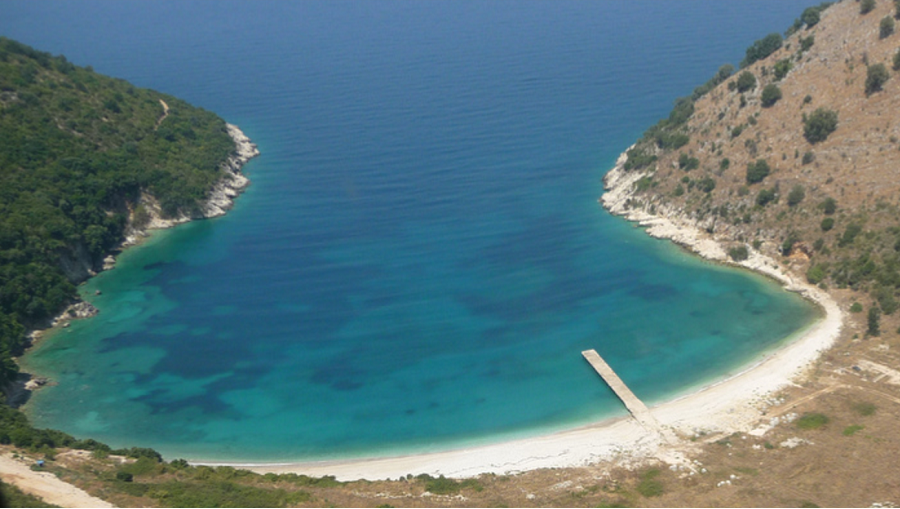 In the Mediterranean, experienced travelers know the French Riviera from St. Tropez to Menton, and the Italian Riviera from Ventimiglia to Cinque Terre. There is one Riviera in the Med they may not know – Albania’s. The Med has many beautiful coastlines, and just about all of them have been “discovered” by jet-setters to backpackers. Not yet, however, for Albania from Saranda in the south across from Greece’s Corfu to Vlora across from the tip of Italy’s Boot Heel.

 John Solomon is reporting on previously suppressed information indicating that, as early as 2020, we knew the Chinese were trying to interfere in our elections, and that this intelligence was covered up.
 In all the tens of millions of words that have been written by the mainstream media about the Trump-Russia collusion story, in all the hundreds of names that have appeared within those often-breathless filings, one name almost never appears:
  [TTP: Parenting the citizens (and politicians) of the future is hard, especially in the Age of the Screen. Here is an excellent essay to assist in navigating this supremely important mission.]