


THE AMAZIGH
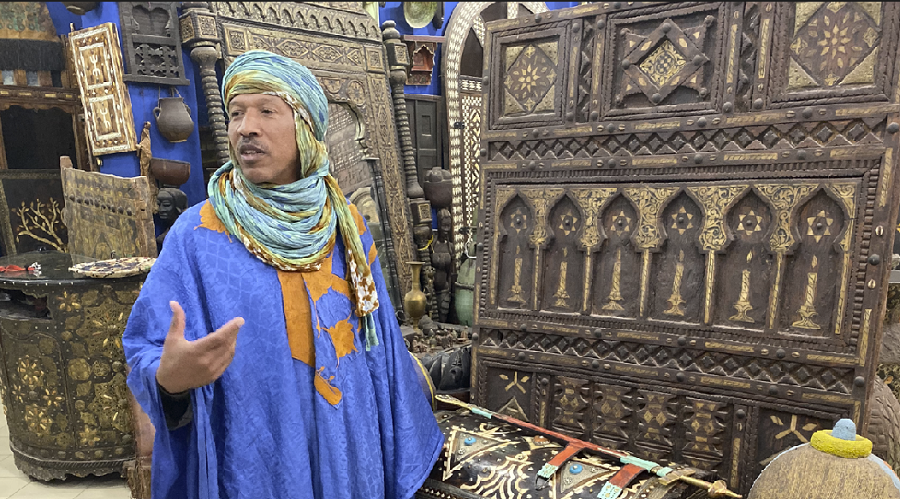 They call themselves Amazigh – meaning “the unconquered” – who are the original people of Morocco having lived there for over 12,000 years. You’ve heard of them as Berbers, a name they find offensive. Another people you’ve heard of are the Lapps, the reindeer-herders of far northern Scandinavia, who call themselves Saami.
Astoundingly, they are directly related, for both are descended from the same stock of Cro-Magnon Ice Age hunters in Western Europe that split in two 15,000 years ago – one moving thousands of miles far north, the other thousands of mile south crossing the Gibraltar Strait to North Africa. Geneticists know this because the Amazigh and Saami share the same mitochondrial DNA haplogroup U5b1b. (See Saami and Berbers – An Unexpected Mitochondrial DNA Link, American Journal of Human Genetics, March 2005.)
So when you visit Morocco and meet a gentleman like that pictured above amidst a display of spectacular Amazigh artwork, you’ll know what incredible history resides within him. (Glimpses of Our Breathtaking World #242 photo ©Jack Wheeler)



 The 2024 race is still close.

 Nationalism has become the great bugaboo of global talking heads today. It is discussed in the marbled halls of Western capitals as a scourge that must be eliminated just as swiftly as its equally detested cousin, populism.