




I happen to be a big fan of Carly Fiorina. I thought she was scapegoated at HP. I thought she was about as good a U.S. Senate candidate as anyone could reasonably ask of a first-timer, especially running in California. She has shown herself remarkably knowledgeable on an extraordinary range of issues, right on most of them, and courageous throughout.
But it’s not my job to tell you what I want to be true: I’m here to tell you what I honestly think. And Ted’s picking Carly for VP just one day after his Northeastern nightmare gives me enormous pause.
On a more positive note, fears have run high that the #NeverTrump movement and those Trump supporters who say they’ll never vote Republican if he’s not the nominee are in a GOP suicide pact. But there’s a factor everyone’s leaving out that makes all of this irrelevant, and greatly improves the eventual Republican nominee’s chances.
Speaking of Trump, his assault on the delegate system — which so far has provided him with 200 more delegates than he would have under the proportional system he claims to prefer — is growing into an assault on the American Constitutional order. This has…consequences.
Oh, and Obama’s bare-knuckled threat against Britain? It’s backfiring, big time.
Dear Chairman Priebus,
Last Friday (4/22), Politico ran a story headlined: Delegates Face Death Threats From Trump Supporters.
Such threats are becoming commonplace throughout the country. This is criminal activity, not political. Perhaps the most revealing line in the Politico article is: “The Trump campaign did not respond to a request for comment.”
By not making any effort to ensure this criminal activity conducted by his supporters ceases and desists, Mr. Trump is aiding and abetting it, thus becoming an accomplice to the crime.
Trump supporters issuing threats of violence are neither conservatives nor Republicans of any stripe. They are thugs. Pure and simple. They are not engaging in democratic political activity. They are attempting to replace our democracy with a thugocracy. This can not be tolerated.
One of the more prominent examples of this is a Trump supporter named Gary Forbes, publisher of “Trump Magazine.” He’s compiling a database of photos of GOP convention delegates and their families, and overtly threatening them with “an extremely vicious response” should they vote for Cruz on a second ballot.
What follows is a quote directly from Forbes’ website. He has a very large following of thousands of Trump supporters all over the country. This is what he is explicitly advising them to do regarding a contested convention (underlining mine, italics his):
So, the conventional wisdom goes, the pressure is now on #NeverTrump.
The logic goes something like this: now that Trump is the presumptive Republican nominee, #NeverTrump supporters will stab Trump in the back if they don’t support him. We must all unify behind the authoritarian con man who believes in precisely zero conservative principles; if we don’t, we’ve betrayed the country.
There’s enough irony there to overwhelm you.
There is a certain irony to the fact that triumphant Trump supporters who have been touting the strength of their candidate for months – who have, in fact, suggested that those who don’t support Trump are unnecessary vestiges of an outdated philosophy – are now preemptively declaring their candidate a loser, and blaming others in the process.
There’s also irony to the notion that Trump can openly proclaim that if he doesn’t win the nomination, his voters will stay home – yet if his opponents say the same, they’re the traitors. Thus the Trump Cult has defined the enemies of the godking.
But let’s put the irony aside, and examine whether there’s a continuing argument for #NeverTrump.
It took me two months to read this 650-page, small-type book, the third volume in a trilogy. In that time I read several other books, absorbing Deirdre McCloskey’s Bourgeois Equality in small doses on trains, ships, sofas and beds.
If that sounds like faint praise, it’s not. I wanted to savor every sentence of this remarkable feast of prose.
The subtitle is: How Ideas, Not Capital or Investment Enriched the World. It is a giant of a book about a giant of a topic: the “great enrichment” of humanity over the past 300 years. It is so rich in vocabulary, allusion and fact as to be a contender for the great book of our age.
The gist of her argument is that the Industrial Revolution (which was not a revolution, for it started extremely slowly and is still gathering pace) was not caused by an accumulation of capital, or the exploitation of colonies, or science, or government policy, or a change in institutions.
All these explanations are too small or arrive too late to explain the astonishing 2,900% increase in real incomes of westerners.
The cause was a change in values that allowed merchants to engage in trade without being despised and persecuted, “a bourgeois rhetorical tsunami around 1700 in the North Sea.”
Before — and in many places, since — “the sneer by the aristocrat, the damning by the priest, the envy by the peasant, all directed against trade and profit and the bourgeoisie, conventional in every literature since ancient times, has long sufficed to kill economic growth.”
Most people don’t realize this yet, but if a Democrat gets the keys to the White House next year it’s game over for the US economy.
This isn’t just for the obvious reason that liberals like Bernie Sanders and Hillary Clinton don’t understand free markets or small government.
It’s because the left has got its hands on the magic formula that enables it to do at both federal and local level all the things that lefties love to do – the meddling, the nannying, the taxing, the regulating, the confiscating, the cronyism – virtually unopposed by the people who should be opposing them.
The left is cunning. Like the Taliban – “you have the watches, we have the time” – it plays a very long game. The tactics it has been using in the environmental wars date at least back to Saul Alinsky and probably as far back as the Cultural Marxists of the 1930s Frankfurt School.
What’s certain is for several decades now – and most especially since the Fall of the Berlin Wall supposedly won the capitalist argument – the left has been using environmentalism as a cloak to disguise its usual controlling, misanthropic, puritanical, big government agenda with a kindly aura of bunny-hugging caringness.
There’s a solution to this and it’s actually pretty simple.
Saudi Arabia has launched a radical ‘Thatcherite’ shake-up to an avert economic crisis and prepare the kingdom for the post-carbon world, stunning analysts with claims that it could break reliance on oil within just four years.
Prince Mohammad bin Salman Al Saud, the country’s de facto ruler, vows to build a $3 trillion wealth fund and break onto the world stage as an investment superpower, the spearhead of an historic package of measures intended to bring the deformed economy kicking and screaming into the 21st Century.
Salman, a 31 year-old tornado determined to smash the status quo, has amassed immense power over the economy and defense that belies his title as deputy crown prince, filling the cabinet with modern technocrats and startling his sinecure cousins from the Al Saud family with the unfamiliar prospect of hard work.
The plan known as “Vision2030” aims to slash $80bn of wasteful spending each year and impose some degree of order on the kingdom’s chaotic finances with a consumption tax and fresh levies. Can the Saudi Prince really pull this off?
Would you like for the bank to give you a check each month for your mortgage interest payment rather than you paying the bank interest?
As mad as that question seems, the fact is that some homeowners in Denmark are now receiving checks each month because their mortgages have negative (below zero) interest rates. A negative interest rate is the situation in which the lenders pay you to borrow money from them.
A number of central banks now have negative interest rates, including Japan, the European Central Bank, Sweden, Denmark, Switzerland and others — all done in the hope of increasing inflation (which is more madness). The chairman of the U.S. Federal Reserve has said she is not ruling out negative interest rates.
Negative, zero or very low interest rates encourage people to buy much more expensive homes than they normally would, which is to their benefit until interest rates rise. Despite stagnant economies many European cities are experiencing a rapid rise in home prices largely because of low interest rate policies. This real estate bubble cannot be sustained, so at some point it is going to all come crashing down.
Sorry to start this with a bummer, but this is a stupid evil day. April 22 is the birthday of one of the greatest monsters in the history of human depravity -- Vladimir Ilyich Ulyanov, born in 1870, who adopted the pseudonym “Lenin” after the Lena River in Siberia.
It’s appropriate that Lenin’s birthday is the holiest day of the year by the world’s eco-fascists, which they celebrate as “Earth Day” – otherwise known as “Let’s-Return-to-the-Stone-Age-and-Live-in-a-Cave-Day.” I just wish they’d all do that and leave the rest of us alone.
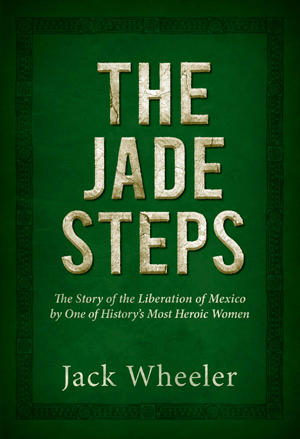
On to something far more pleasant. You may have noticed the new Wheeler Expeditions link on the TTP home page. The site just got started and will see significant improvements in the next month. You may note that the first one offered is Hidden Pacific II. That’s because Hidden Pacific I got sold out before we could put it up.
The same with my Himalaya Helicopter Expedition, also sold out (scroll down on the “Upcoming Trips” page to see it). This is to reach the base camps of all the great Himalaya giants 8,000 meters or 26,000 feet high by helicopter – never been done before. So I leave for Kathmandu in just a few days.
In my absence, I’m happy to announce that my buddy and true Renaissance Man, Rod Martin, will once again be manning the HFR helm. Rod’s HFRs were really popular with TTPers while I was in India two months ago, and I know they will be again. Thanks, Rod!!
Ok – ready to laugh your head off? And have your jaw drop? And to side with the Mafia over Moslems? And to know the Hero of the Week? Here we go….
No, this is not to accuse Donald Trump of treason. But it sure is regarding who’s running his campaign now – Paul Manafort.
No one who reads Michael Isikoff’s report for Yahoo News on Wednesday (4/18), Top Trump Aide Lobbied for Pakistani Spy Front, and who has an accurate understanding of Pakistan’s Inter-Services Intelligence Agency (ISI) can conclude otherwise.
The man who hired Manafort, Syed Ghulam Nabi Fai, went to federal prison. According to the FBI Report on Fai’s guilty plea (Dec. 2011):
“For the last 20 years, Mr. Fai secretly took millions of dollars from Pakistani intelligence and lied about it to the U.S. government. As a paid operative of ISI, he did the bidding of his handlers in Pakistan while he met with U.S. elected officials, funded high-profile conferences and promoted the Kashmiri cause to decision-makers in Washington.”
And who in Washington arranged those meetings with elected officials, those conferences, and those promotions to DC decision-makers? Paul Manafort. He doesn’t belong running a presidential campaign. He belongs in jail with Syed Fai.
Here’s the background on just how evil the Pak ISI is, and how treasonous was Manafort’s work for it.
China panic has abated. The Shanghai Composite index of equities is back above 3,000. The much-feared devaluation never happened.
The yuan has strengthened against the dollar this year, to the consternation of Western tourists. Outflows of money have slowed as dollar debt is paid off and Chinese investors wind down 'carry trade' positions.
The International Monetary Fund has just raised its forecast for Chinese growth this year to 6.5%, insisting that it is still far too early to talk about a hard-landing.
Yet that is where the good news ends, for there is a poisonous sting in the tail. We can put away those charts projecting China's 'sorpasso', the moment when the country surpasses the US to become the world's biggest economy. It is not going to happen and here’s why. This is a horror story for real.
I live on a dairy farm. I love full-fat milk, butter and, above all, double cream. As a child I drank milk unpasteurized, straight from the cow — and I grew to be almost 6ft 6in, so it cannot have been all bad.
Nonetheless, I believed fat was bad for me because the medical establishment said so again and again. From time to time I made ineffectual efforts to take up margarine and even that watery stuff they call skimmed milk.
But cream remains a guilty pleasure.
I assumed that behind the advice to cut out the cream lay hard evidence from well-controlled trials. Yet it turns out I have often been lied to by the diet police over the years.
There is no evidence that dietary fat is a big cause of heart disease, or obesity — and we have actually had the facts on this for decades.
It’s a shocking miscarriage of scientific justice. The whole theory that saturated fats from animals cause heart disease by upping cholesterol is as full of holes as a Swiss cheese.
It always has been, we can now see. Right from the start, in the 1950s, those laying the blame on diet for the epidemic of heart disease got it wrong. Here’s the story.
Last week, the nation’s largest coal company, Peabody Coal, declared bankruptcy, as have many other coal companies in the past few years.
They were partly victims of the development of fracking technology, which greatly increased the supply and reduced the cost of natural gas – but they were even more victims of President Obama’s stated war on coal.
The officials of the coal industry could not do much about the fracking revolution, but they allowed themselves to be unfairly and irresponsibly pilloried by the green lobby and the Obama administration.
Over the years, I have watched many industries, companies and individuals be destroyed by unwarranted attacks, and even entire countries maligned. But I have also been impressed by those that have successfully fought back.
Just contrast the reaction of the National Rifle Association (NRA) and the coal industry.
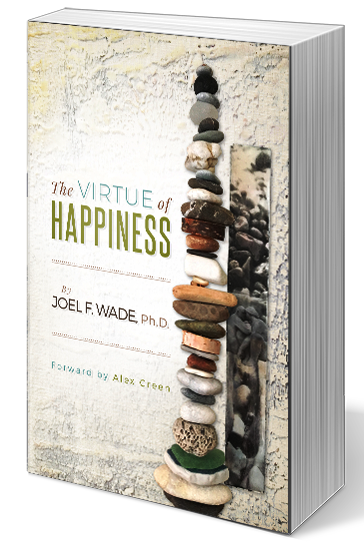
When we get to know people, we are, in part, building a reputation with each other. "What kind of person is he?" "How does she handle a difficult situation?" "What kind of attitude does he bring to his work?" "How does she respond to confrontation or adversity?"
There are multitudes of small interactions that give us information about a person’s character and personality, values and integrity. Over time we come to decide whether this is the kind of person we want to spend time with; whether we like how we feel when we’re with them.
Here is a piece that is often missing: We watch ourselves just like we watch others, and we develop a reputation with ourselves accordingly.
This is the essence of earned self-esteem.
What kind of a person are you, in your own assessment? Do you have values, goals, and priorities? And do you act in accordance with those values, goals, and priorities? Are you the kind of person you would like to be? And if not, what are the barriers to becoming the kind of person you would like to be?