






THE CHINA OPENING – NIXON’S STRATEGIC MASTERSTROKE AND HOW HIS SUCCESSORS SQUANDERED IT
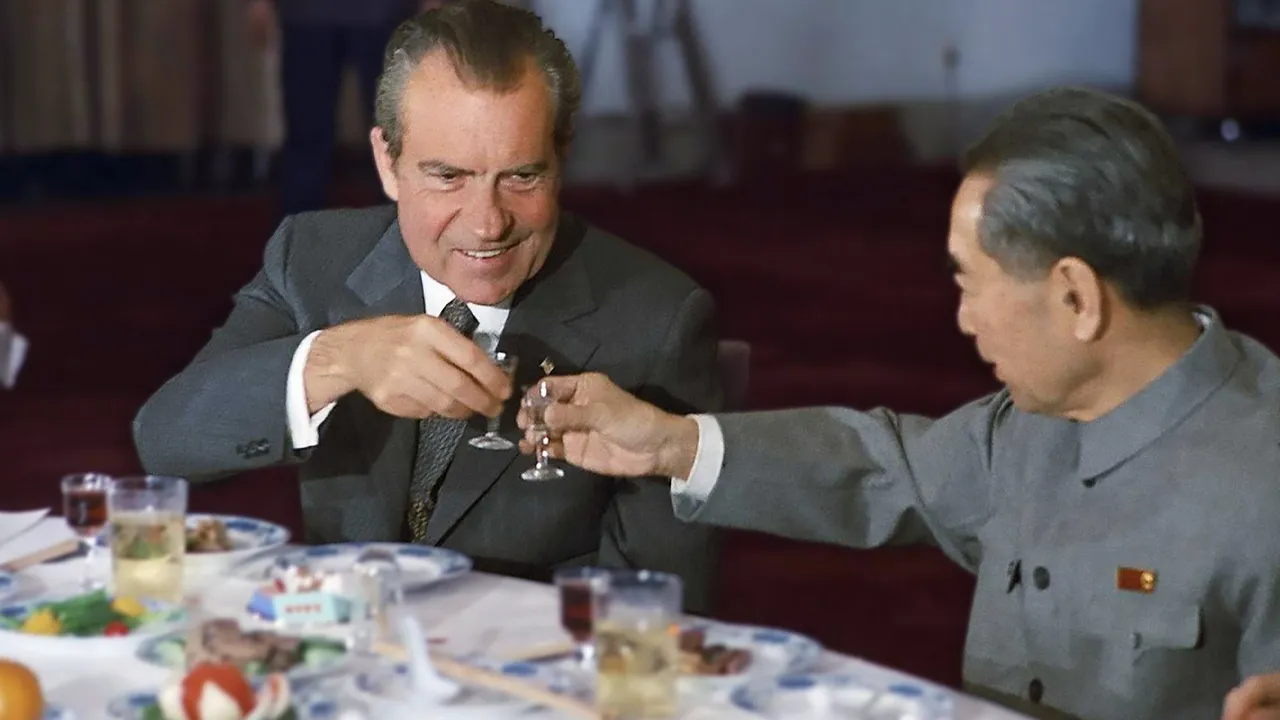 In February of 1972, President Richard Milhous Nixon accomplished what generations of diplomats, academics, and foreign policy mandarins had insisted was impossible.
The fiercely anti-communist president who had built his career exposing Soviet espionage in the United States stepped onto the soil of the People’s Republic of China (PRC) and altered the trajectory of global geopolitics.
For decades prior, Communist China had existed behind an opaque ideological barricade. Since Mao Zedong’s triumph in 1949 the Chinese Communist Party (CCP) ruled a nation that was diplomatically isolated, economically stagnant, and politically convulsive.
Washington had no formal relations with Beijing. American diplomats spoke of China only through intermediaries. The Cold War was defined by a bipolar confrontation between the United States and the Soviet Union, while China simmered as a volatile and unpredictable revolutionary state.
President Nixon saw something others failed to grasp.
The communist world was not monolithic. In fact, by the late 1960s, the Sino Soviet split had grown into a deep strategic rivalry. Moscow and Beijing were not merely ideological cousins. They became competitors.
Nixon and his duplicitous National Security Advisor Henry Kissinger recognized an opportunity of historic magnitude. By normalizing relations with China, the United States could exploit divisions within the communist bloc and weaken the Soviet Union’s strategic position. It was a geopolitical triangulation of breathtaking sophistication. The gamble worked.
Nixon could not have known that thirty years later…

 In a region that has been in conflict for time immemorial, a people have carved out a home for themselves.

 TEHRAN — Rumors of the Ayatollah regime's nefarious plot to launch an assault on the west coast of the United States hit a snag on Wednesday, as Iran canceled plans to attack California after seeing Gavin Newsom had already destroyed it.


 Americans would be wise to begin paying very close attention to a small rugged island in the northern Persian Gulf that few could locate on a map only weeks ago.

 I joined the Marine Corps because Saddam Hussein invaded Kuwait. I was young, but not confused.