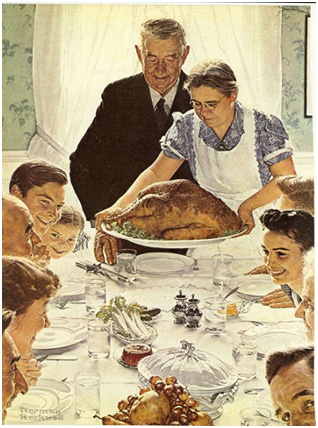
 On Thanksgiving Day, Americans gather with their family and friends to celebrate the blessings that Providence has bestowed on their beloved country.
A deep appreciation of these blessings involves understanding that they were earned. It is to understand the awesome truth of how “God helps those who help themselves” applies to the Mayflower Pilgrims and their First Thanksgiving at America’s birth.
This is an appreciation and understanding of which those on the Left are incapable – for it would mean celebrating the capitalist freedom that made that original Thanksgiving possible. That made America possible.
This no liberal, no Democrat, no leftie can do. Thus they must distort history instead.
The distortion starts in Kindergarten, with the childish make-believe of your kid's school play portraying the noble Squanto teaching the helpless Pilgrims how to feed themselves. So let’s drop the curtain on the distortion and watch the real thing.
The real history of the Mayflower Pilgrims was recounted by their leader, William Bradford (1590-1657) in his book Of Plymouth Plantation, completed in 1647. It is as effective a refutation of socialism and affirmation of capitalism as there has ever been. Here it is entire.
Little more than three weeks ago, our freedom and abundance was threatened as never before by a Fascist Left determined to destroy it.
With Donald Trump, Americans chose the embodiment of capitalist abundance over being impoverished wards of The State.
Churchill defined Marxism, be it Socialism or Fascism, as “the gospel of envy.” It is the gospel that Obama, Hillary, the Enemedia, and all Democrats preach. It takes extreme moral courage to reject it.
Yet that moral courage is exactly what a majority of American voters demonstrated on November 8th. Only American voters could be so envy-free to elect so opulent a capitalist businessman who proudly flaunts his earned wealth rather than apologizing for it.
Now more than ever is the time to focus anew on all that we love about our country, to know that Providence has always smiled upon it - for we, like the Pilgrims have chosen capitalist freedom over socialist slavery.
Read more...






 Getting tired of winning yet? Hope not, ‘cause the show is just getting started.