





The Oasis for
Rational Conservatives

Saturday, March 7, 2026

Member Menu

The Amazon's Pantanal

Serengeti Birthing Safari

Wheeler Expeditions

Member Discussions

Article Archives

Archives

L i k e U s ! ! !

HALF-FULL REPORT 03/06/26

Operation Epic Fury

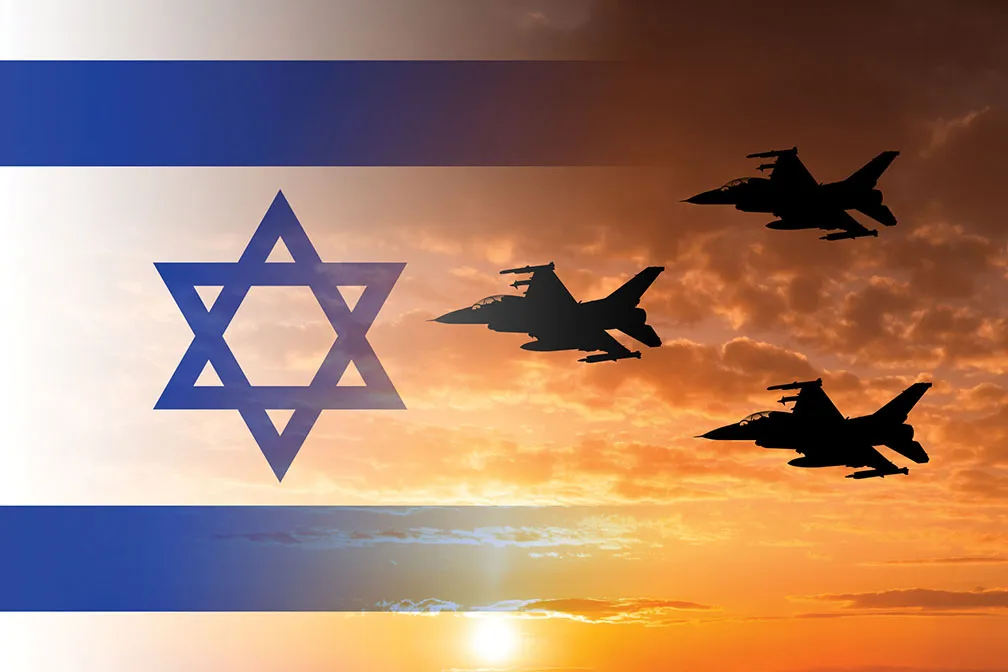
The past week has confirmed a stark reality: the U.S.-Israel-Iran confrontation is a global conflict involving international order, energy flows, and technological supremacy. Operation Epic Fury, launched February 27, demonstrated the decisive combination of intelligence, AI, and precision strikes.

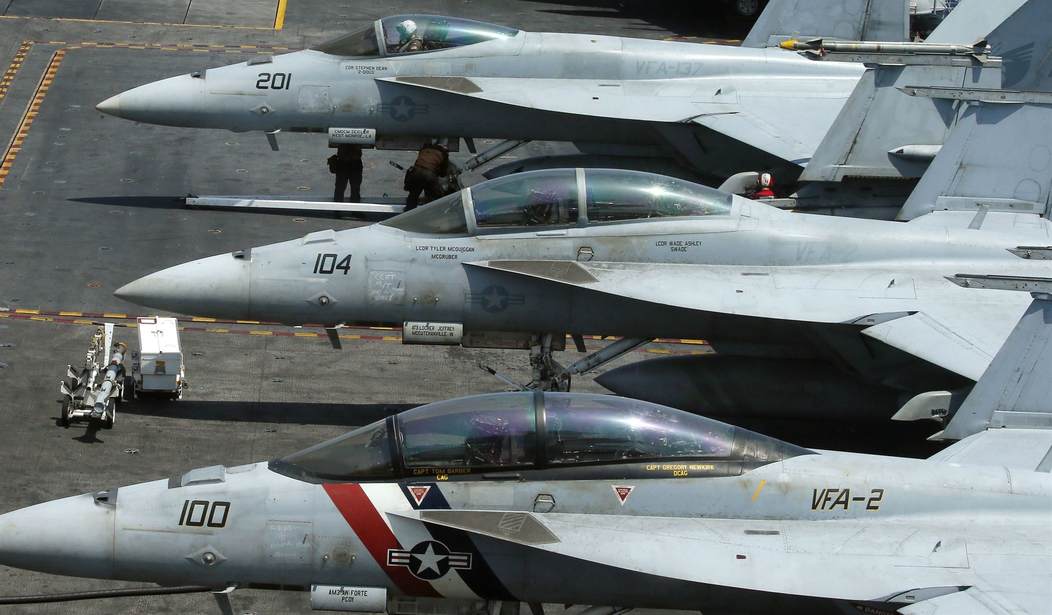
Over 50 stealth fighters, followed by bombers and conventional aircraft, eliminated Iran’s top leadership and the next tier in rapid succession. AI enabled near-perfect targeting, turning decapitation into a reliable instrument of strategy.

Tehran responded with missiles, drones, and proxy attacks across Israel, the Gulf, and Cyprus, while Hezbollah fired into northern Israel. By early this week, U.S. and Israeli forces had crippled Iran’s missile infrastructure, extending the battlefield beyond the Persian Gulf into strategic choke points like the Strait of Hormuz.

This conflict illustrates a principle central to modern strategy: power now moves at the speed of compute.

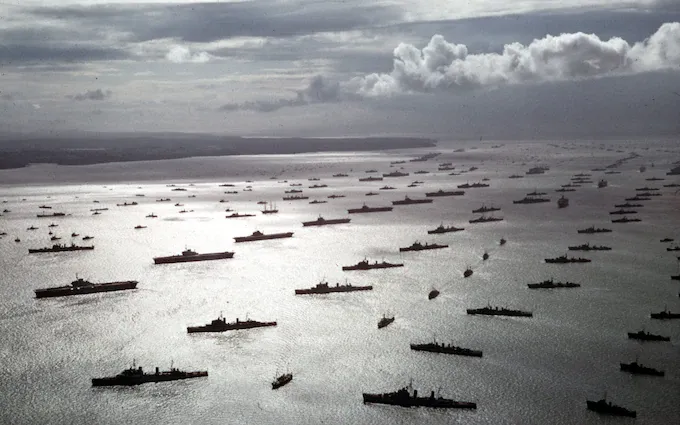
Naval supremacy remains indispensable. Fast jets strike, but submarines, carriers, and integrated ISR systems hold the lanes. The March 3 sinking of Iran’s IRIS Dena by a Virginia-class submarine protected Diego Garcia and the B-2 bombers essential for precision strikes.

Control of sea and digital lanes underpins operational tempo, while AI drives intelligence, targeting, and decision cycles.

Against this backdrop, London operates like a man behind the curtain. Through environmental regulation, energy suppression, and war-risk manipulation at Lloyd’s, it seeks to throttle U.S. AI and energy independence, rerouting strategic leverage through insurance premiums and market control.

Lloyd’s itself is a centuries-old, market-based insurance hub where no single entity owns the system, yet its underwriters can disrupt energy flows, spike costs, and constrain global commerce. Recent cancellations around Hormuz froze 150 tankers, spiked freight, and pushed oil above $90 per barrel.

U.S. responded with DFC-backed insurance guarantees and naval escort proposals that highlight the strategic stakes: in the 21st century, national survival depends on unbroken command of compute, sea control, and energy infrastructure.

Iran shows how compute and naval dominance shape modern conflict. London shows how institutional leverage can do the same quietly. The lesson is that strength must be paired with vigilance, moral clarity, and operational reach.

The Anglo-American partnership, if not recalibrated, can strangle U.S. technological and energy freedom. In this 250th year of the Republic, that unfinished business cannot wait.

Keir Starmer must go.

Read more...

PERSIAN HOPE

Fresco of a Persian woman, Ali Qapu Palace, Isfahan, early 1600s – JW photo

[This Monday’s Archive was originally published in To The Point on December 14, 2014, then updated on September 27, 2018. It could not be more relevant to right now, with POTUS’ Decapitation Strike on the entire top leadership of Iran’s Mulla Terrorist regime in Iran ereyesterday (2/28), and vow to eliminate the regime, bring freedom to Iran, and secure greater security thereby to America and the World. Appended is TTP’s Nutshell History of Persia, originally published on August 18, 2005, also updated on 9/27/18.]

TTP, December 14, 2014, updated September 27, 2018

Shiraz, Iran.  “Where are you from?” the Iranian man asked me.

With a big smile, I happily answered, “America.”  He responded with a smile of his own.  “Ah, America… America Number One!”

He hooked his two index fingers together.  “American people, Iranian people, good… friends.”  He unhooked his fingers and waved his hand in a gesture of contempt.  “Governments, no good.”  We both belly-laughed.

This took place in November of 2014, when our government meant the despised Obama to him.  It doesn’t mean that any longer. Iran is back in the news this week, with President Trump delivering a clear condemnation in his brilliant speech to the UN General Assembly Tuesday (9/25):

“We cannot allow the world’s leading sponsor of terrorism to possess the planet’s most dangerous weapons. We cannot allow a regime that chants “Death to America,” and that threatens Israel with annihilation, to possess the means to deliver a nuclear warhead to any city on Earth. Just can’t do it.

We ask all nations to isolate Iran’s regime as long as its aggression continues. And we ask all nations to support Iran’s people as they struggle to reclaim their religious and righteous destiny.”

Thus I am optimistic that there’s hope for Iran.  The long – two thousand five hundred year long – history of Persia and the West is what I call The Persian Ratchet.  An ebb and flow that ratchets up and down over the centuries.  I’ve appended a summary of this history at the end.  Note it includes why Persia had its name changed to Iran in 1935.

Note also that history comes after photos of mine that I’m sure you’ll enjoy.For now, let’s talk about the Iranian people I met a little while ago, for it is they, not their government, that give me hope.

Read more...

KHARG ISLAND – THE NERVE CENTER OF IRAN’S OIL EMPIRE

Americans would be wise to begin paying very close attention to a small rugged island in the northern Persian Gulf that few could locate on a map only weeks ago.

That island is Kharg Island (it’s sometimes spelled Khark Island.)

It is nothing less than the main distribution center for Islamic Republic of Iran’s oil.

At a moment when the United States and its allies are confronting the Islamic Republic during the ongoing military confrontation known as Operation Epic Fury, Kharg Island stands as one of the most consequential strategic locations in the entire Middle East.

If Iran’s regime derives financial oxygen from oil exports, then Kharg Island is the lung through which that oxygen flows.

Read more...

JUDGEMENT DAY AT THE NEW NUREMBERG

Every now and then you see one of those stories that you would assume would land on the front page of the news, but doesn’t.

As most of us know, the attack on Israel that occurred on October 7, 2023 resulted in numerous members of Hamas being taken prisoner during the event and in the subsequent IDF operation in Gaza.  Early on I was hearing that a move was afoot to put at least some of them, who could be identified as having committed murders of Israeli civilians, on trial in the fashion of Nuremberg.  I hoped it was true, but frankly had limited hope of this.

Then, this story dropped…..

Read more...

RETHINKING MILITARY INTERVENTION IN THE AGE OF AMERICA FIRST

I joined the Marine Corps because Saddam Hussein invaded Kuwait. I was young, but not confused.

A dictator had crossed a border with tanks, absorbed a weaker neighbor, and dared the world to respond.

President George H. W. Bush did respond. He assembled a coalition, liberated Kuwait, and then stopped.

At the time, I felt frustration. If Saddam was the problem, why leave him in power? Why halt the advance when the job seemed half done?

I believed, as many did, that the first Gulf War should have ended with regime change in Baghdad.

That early conviction shaped my support for later wars. When we went into Afghanistan and then Iraq, I did not recoil. I thought we were finishing unfinished business. I thought we could remove tyrants and midwife stable democracies. I thought American power, applied with moral clarity, could reshape broken regimes.

But the decades that followed chastened that confidence.

We discovered that removing a regime is easier than replacing it. We discovered that democracy building is not an export commodity. We discovered that intelligence agencies and development bureaucracies cannot engineer legitimacy from abroad.

Endless deployments and open-ended missions taught many of us a difficult lesson. The U.S. should not be in the business of remaking other nations in its own image. We are not good at it, and it does not work.

But….

Read more...

DID ISRAEL JUST WIPE OUT THE LAST OF IRAN’S RULING MULLAHS?

It can't possibly have been this easy. Right?

After the death of Ali Khamenei, the Iranian regime appointed an interim ayatollah to take temporary charge of the nation.

That may not have lasted long; reports that Alireza Arafi was killed shortly after his appointment have circulated, although they have not been confirmed yet.

Regardless, the constitution of the Islamic Republic requires the 88 mullahs on the "Assembly of Experts" to appoint Khamenei's permanent successor in a vote, which would normally take place in their Qom headquarters.

About that ...

Read more...

A DAY OF RECKONING FOR HILLARY AND THE CABAL?

The puzzle pieces are falling into place faster than the Deep State ever imagined. The case against the Clintons as a crime family, which I laid out in 2019 when I discussed their Deep State RICO conspiracy, has just been validated by fresh evidence.

John Solomon nails it with the “Clinton Corruption Files.” Irrefutable documents that Attorney General Pam Bondi and FBI Director Kash Patel sent to Congress in late 2025 confirm a “massive bribery operation” through the Clinton Foundation—specifically, foreign interest donations in exchange for State Department favors during Hillary’s tenure as Secretary.

Three FBI offices (New York, Washington, Little Rock) independently flagged pay-to-play, but Obama-era leadership obstructed the probes. Deputy Attorney General Sally Yates (Obama’s No. 2 at DOJ) issued the kill order: “Shut it down.”

Whistleblowers reported buried evidence and blocked grand juries, while Russiagate was fast-tracked as the smokescreen.

This video sums up much of the new evidence…

Read more...

RUMINATION AND ITS ANTIDOTE

To ruminate means literally to chew over and over again.

It’s what ruminants (cows, sheep, goats, deer, giraffes, buffalo, and antelope) do with grass so they can draw as much of the nutritional value from it as they can.

When we dwell too much on what hurt us in the past, we are ruminating. We “re-chew” our negative thoughts and memories, drawing as much pain and suffering out of them as we possibly can.

This is one of the worst things we can do for our sense of happiness and well-being.

The compulsion to ruminate can be powerful, especially if we’ve practiced it a lot. We can develop an irresistible urge to replay the events that have made us miserable.

Yet some of the popular notions from psychotherapy can lead people to believe this is a good thing. We think we are figuring something out. In fact, it’s more like re-striking a bruised injury thinking that will help it to heal.

When we purposefully remember painful memories over and over again, without changing our perspective towards them, we actually reinforce the pain with each visit.

Remember, our narrative memories aren’t facts, they are stories that can contain facts—but they can also contain mistaken ideas or conclusions. So when we ruminate we are not exploring Truth with a capital “T,” we are replaying a painful and helpless story.

I don’t say this to deny anybody’s experience or to minimize anybody’s trauma, but the best thing we can do with painful experiences is to have them take their proper place in history.

Read more...

FLASHBACK FRIDAY – GUINNESS AT THE NORTH POLE

jw-guinness-parachute-jumpApril 15, 1981 – this is the exact moment when I landed on the sea-ice at 90 North latitude, the North Pole, to set a Guinness World Record for “The Northernmost Parachute Jump.”

On a Wheeler Expedition to the top of the world, we landed our ski-equipped Twin Otter on a configuration of ice called an “old frozen-over lead” precisely at 90N. My clients got out, we took the fuel drums out, rear door off, took off again with me, the pilot and co-pilot. I had pilot Rocky Parsons go up to 8,000 feet for a mile of freefall, directed him to the spot – tiny black dots of our people on the ice – told him when to cut the engines, and I was out the door.

OMG what a rush, falling straight down on the very top of our planet, a world of ice below – meadows of rubble ice, rivers of open water called leads snaking through the ice, lakes of water called polynyas, pressure ridges of turquoise ice, terminal velocity, back flips, somersaults, fun in the sky. Altimeter shows 2,500 feet, time to go – pull out the hand deploy, see the canopy furl out in full, grab the hand toggles, spin around for more fun, line it up to come in next to everyone, stand-up landing, Guinness Book. Totally cool. (Glimpses of Our Breathtaking World #5 photo ©Jack Wheeler)

Read more...

THE REMOTEST CHURCH

baihanluo-catholic-church

Baihanluo Catholic Church is the remotest Christian Church on earth. The isolated village is in a roadless region high on a Himalayan mountain ridge deep in “The Great River Trenches of Asia” – one of our planet’s most dramatic geological features where four major rivers – the Irrawaddy, Salween, Mekong, and Yangtze all spill off the Tibetan Plateau coursing south in tight parallel for 100 miles.

catholic-mission-in-laos

In the late 1800’s, French Catholic missionaries made their way far, far up the Mekong from the French colony of Laos to befriend the Nu and Lisu tribespeople up here. They responded by building this beautiful wooden church that has been lovingly cared for by the local parishioners ever since.

I led an expedition traversing all three of the great trenches twenty years ago (2001). We were welcomed so warmly by the devout villagers. It’s hard to get more remote than this, yet they have retained their faith for at least four generations now. You can imagine how powerful and experience it was to be with them. (Glimpses of Our Breathtaking World #138 Photo ©Jack Wheeler)

Read more...

RIZONG GOMPA

rizong-gompaRizong is a Gompa or monastery for lamas or monks of the Gelugpa or Yellow Hat sect of Tibetan Buddhism.  It is built like it is virtually glued onto a steep cliff in a hidden side valley of the Upper Indus River in the remote region of Ladakh or Indian Tibet.

Ladakh is culturally and geographically Tibetan, yet the British were able to sequester this region for India and away from Chinese-Occupied Tibet, so it is here that real Tibet still flourishes. (Glimpses of Our Breathtaking World #206 photo ©Jack Wheeler)

Read more...

TWO COOL MOUNTAIN TAJIK KIDS AT THE FIRST PEARL OF SHING

tajik-kidsThe high hidden Valley of Shing in western Tajikistan holds a series of seven stepping-stone lakes called the Seven Pearls of Shing.  The valley is dotted with tiny villages of Mountain Tajiks, descendants of the ancient Sogdians who fought Alexander the Great.

Alexander fell in love with and married a Sogdian princess named Roxanna – and the girls of Shing are often named Roxanna to this day.  The Mountain Tajiks of the Shing are a special people – strong, independent and free.  They are also warm and welcoming.  The kids – the girls just like the boys – grow up vibrant and confidant.  These two young brothers exemplify that.

Each of the seven pearls have a unique breathless beauty, for they are of different colors and change according to the time of day.  We are here at Mijnon (Eyelash), the first pearl, followed by Soya (Shade), Hushnor (Vigilance), Nophin (Navel), Khurdak (Little One), Marguzor (Blossoming), and Hazor Chasma (Thousand Springs).  Towering above us are snow-laced mountains 18,000 feet high. (Glimpses of Our Breathtaking World #53 photo ©Jack Wheeler)

Read more...

HORSESHOE BEND

horseshoe-bendLooking down 1,000 feet above world-famous Horseshoe Bend of the Colorado River at sunset is one of most iconic views our planet offers us. It is to be found near Page, Arizona near the border with Utah. Yet in truth, the number of different mind-blowing iconic views is uncountable in this part of the American West.

Close by are the Vermillion Cliffs, and the simply psychedelic Antelope Canyon. Just a bit further is the Grand Escalante Staircase, a little bit further Zion and Bryce Canyons and Monument Valley. And of course, right next door is something called The Grand Canyon.

There are people who have explored this region for years and will tell you there’s so much they’ve yet to see. You can explore the world over – what I’ve done my whole life – and yet there is so much of Creation to be soul-thrilled by just in this one region of northern Arizona and southern Utah – and I haven’t mentioned Moab which is a total mind-blow all by itself.

Take a break from all the worries of the world to come to here. Pick a place that will thrill your soul for a few days. That’s what’s needed now. (Glimpses of Our Breathtaking World #134 Photo ©Jack Wheeler)

Read more...

HALF-FULL REPORT 02/27/26

Trump’s American System.

In every republic, power flows not just through laws or budgets, but through the stories citizens carry in their minds and President Trump’s 2026 State of the Union mastered that terrain.

Trump’s address was a study in classical rhetoric calibrated for the modern era. He layered repetition, contrast, and emotional storytelling to make abstract policies tangible. He drove home the notion of national revival. Guests in the gallery and personal anecdotes humanized policy.

Media fragmentation played to his advantage, with short declarative beats engineered to travel widely and dominate the narrative before opposition responses could land. The result was a speech that forced all others to react within the framework he defined.

Central to the speech was Trump’s economic philosophy: the American System. Tariffs, border security, and industrial policy were framed as deliberate tools to rebuild domestic production, protect sovereignty, and empower a producer culture. He connected these policies to historical continuity, linking contemporary industrial revival to the founding principle of self-government.

Critics fixated on procedural and economic theory, but Trump anchored his argument in tangible outcomes such as rising wages, new factories, energy expansion. This made abstract policy visible to voters and reinforced his narrative of national strength through productive capacity.

Beyond domestic policy, the address underscored global strategy, civilizational priorities, and industrial character. The Supreme Court ruling on tariffs tested executive limits, yet the administration’s tactical pivot demonstrated flexibility within legal boundaries.

And then there is Cuba, Iran and Pakistan.

America needs more of what the Boy Scouts used to teach and will soon again.

Read more...