





THE SALEM WITCH TRIAL OF JUDGE KAVANAUGH
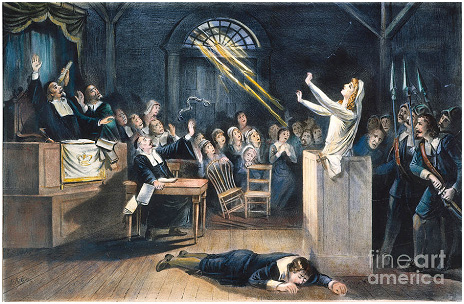 The Salem Witch Trials (Feb. 1692-May 1693) turned on what was called “spectral evidence.”
That was testimony from witnesses—either malicious or hysterical—who claimed the accused had assumed the form of a black cat or some other devilish creature and had come visiting in the night in order to torment the witness with bites and scratches, or to rearrange the bedroom furniture, or to send the baby into paroxysms.
Susannah Sheldon, aged about 18, testified that the defendant Sarah Good’s apparition—not the actual Sarah Good, but her spirit, her specter—“most violently pulled down my head behind a chest and tied my hands together with a whale band and almost choked me to death.” Other witnesses blamed Good for the mysterious deaths of cows or for causing a broom to fly up into an apple tree.
The judge, William Stoughton, admitted this nonsense into evidence. Hysterical fantasies had real consequences: Sarah Good and four other defendants were hanged on July 19, 1692.
Three hundred twenty-six years later, an anonymous woman—a spectral and possibly nonexistent woman, for all that one knew when the story emerged—accused Brett Kavanaugh of sexually assaulting her 36 years ago, when he was a high-school student.
It seemed as if the American constitutional process might be drawn back to the three centuries-old neighborhood of Salem, Mass.