Dr. Jack Wheeler
June 30, 2025
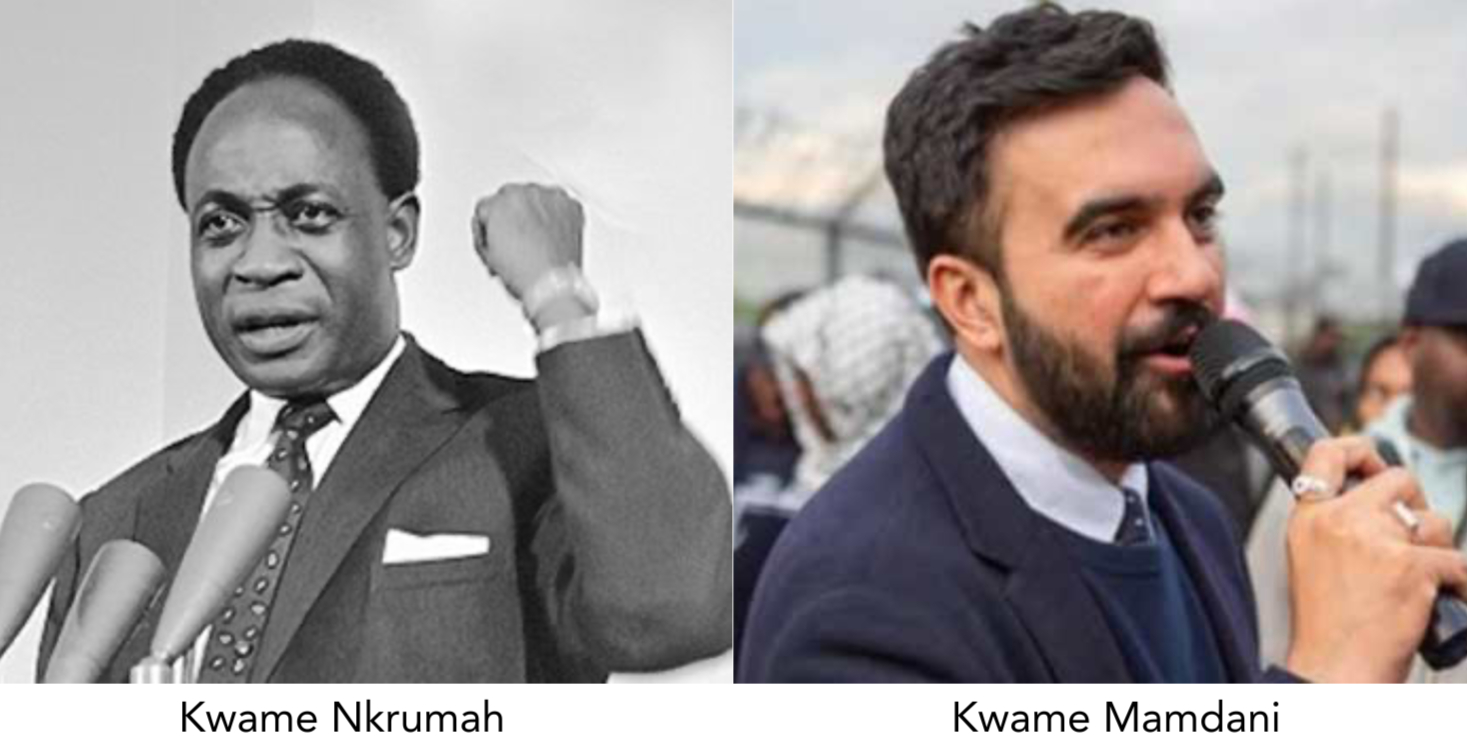 [This Monday’s Archive was originally published on March 21, 2012. Then we were suffering under the rule of an America-hating autocrat from Kenya. Today, New Yorkers may soon be under the rule of an America-hating autocrat from Uganda. It was written while in Ghana, West Africa, and recounts how a Marxist named Kwame “Africanized” Ghana’s economy into ruin. Zohan Kwame Mamdani threatens to do exactly that to New York, as it is who his Marxist father named him after to be his model, The description below of Ghana’s Kwame fits New York’s Kwame to a T.]
TTP, March 21, 2012
Accra, Ghana. By independence in 1952, Ghana was the richest tropical country in the world, with huge foreign currency reserves from massive sales of cocoa, coffee, gold, timber, and bauxite. The Brits had provided the new nation with an efficient civil service, an impartial judiciary, a fair electoral system with competent elected politicians, and a prosperous middle class.
Its rule Nkrumah was wildly popular, promising hope and change that would solve everyone’s grievances. The world press fawned on him just as obsequiously, starting with a Time Magazine cover story in 1953.
Nkrumah’s true identity was plain for anyone to see – a charismatic charlatan, an intellectual lightweight, a self-proclaimed Marxist who hated capitalism, a self-worshipping narcissist of the highest order, and a black racist who hated whites and the West. So radical left the Soviet Union awarded him the Lenin Peace Prize in 1962.
To the surprise of no one with unblinkered vision, but to the shocked surprise and denial of every fawning liberal on the planet, he proceeded to run Ghana straight into the ground. As he built a personality cult around him -- Ghana’s soldiers, e.g., marched to the cadence “Nkrumah can do no wrong, Nkrumah can do no wrong” – Ghana’s fabulous economy collapsed and sunk into a morass of corruption.
Read more...





 A quick visit to my Wikipedia page will confirm, “Jack Cashill is an American author, blogger and conspiracy theorist.”
 Donald Trump is opening up a new frontier in his trade war.
 When we look back on the 1980s, a decade characterized by renewed Western strength and prosperity after the malaise of the 1970s, many of us think of three towering figures: Ronald Reagan, Margaret Thatcher, and Pope John Paul II.

 SACRAMENTO, CA — In the latest front on his war against the Trump administration's immigration policies, Governor Gavin Newsom officially declared California a sanctuary state for child slavery.


 [I’ve known Grover for over 40 years. In all those years, the dream of his organization, Americans for Tax Reform, is what this bill makes possible. We’ll be talking about this more in tomorrow’s HFR. Read Grover now for a head start. – JW]