



FLASHBACK FRIDAY – THE MAN-EATER OF DALAT
 Dalat, South Viet Nam, 1961. I was 17 years old. A friend of my father’s, Herb Klein, came by our house. He was a prominent businessman whose passion was big-game hunting. He had just returned from the mountain jungle highlands of South Viet Nam and regaled us with stories of the Montagnard tribespeople who were plagued by tigers with a taste for human flesh. He told me that after climbing the Matterhorn, living with Amazon headhunters, and swimming the Hellespont, hunting a man-eating tiger should be my next adventure.
“You’d be saving so many lives, Jack,” he told me. “There’s one I heard about from the Co Ho Montagnards that’s killed and eaten almost 20 of them in the forests outside the town of Dalat. I know who can guide you, he was mine, his name is Ngo Van Chi.”
Somehow, I talked my parents into letting me do this. I had saved up the money from giving tennis and judo lessons. So there I was, in pitch dark in a “mirador” of branches and leaves, holding a .300 Weatherby with a flashlight wired to the barrel, waiting for this man-eating tiger to come for the rotting water buffalo we set out as bait. Chi and I heard the tiger, I put the rifle barrel out, Chi clicked on the flashlight, I saw these two enormous red eyes, and fired.
And there he is, the Man-Eater of Dalat, who would never kill another human being ever again. (Glimpses of Our Breathtaking World #175 photo ©Jack Wheeler)
 The recent Democrat cry of “affordability” is ironic in many ways.

 It was the political equivalent of Bill Belichick’s teenybopper girlfriend — a moment so utterly incomprehensible, all you could do was shake your head in disbelief when you heard the news. “Wait… WHAT happened?!”
 In the shadow of every government shutdown, a deeper crisis emerges, one not of policy, but of identity.

 The racialist influencer Nick Fuentes has caused an uproar with his appearance on Tucker Carlson’s podcast.

 Do words have any meaning? Most people think so, which is why there is an endless debate about which words should be permitted by law, which should be a matter for the law, and which words should be debated in the realm of manners.
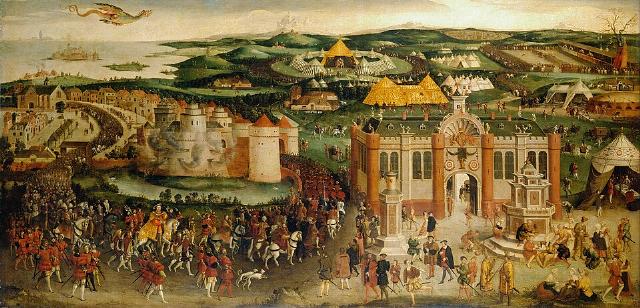 For centuries, Britain — and England in particular — has represented a civilizational ideal for much of the modern world.