Dr. Jack Wheeler
May 19, 2025
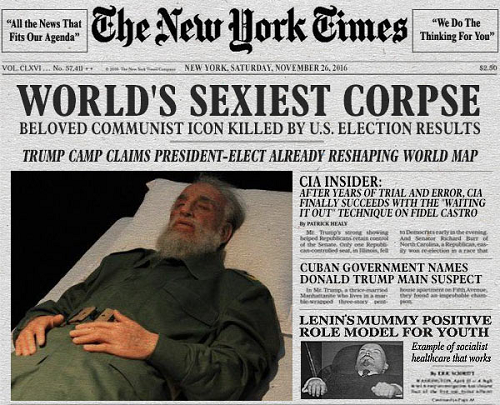 [This Monday’s TTP Archive was originally published on December 2, 2016. A little over three weeks before (November 8), Donald Trump stunned the world being elected President, and now the Babylon Bee couldn’t help celebrating both that and Castro croaking on November 25. For me, it was an opportunity to discuss why those on the Left so often have a compulsion to worship the worst of humanity rather than the finest.]
It was the summer of 1992. Our youngest son, Jackson, had been born in May, and I was staying put, not traveling anywhere to remain at home to help Rebel take care of him.
A friend of mine named Ray Kline called. Ray was a legendary intel guy in Washington, having been the Deputy Director of the CIA under John Kennedy, and later Director of the DIA (Defense Intelligence Agency at the Pentagon).
It was Ray Kline who, in the fall of 1962, drove down the George Washington Parkway from Langley CIA headquarters to the White House, entered the Oval Office, and placed the satellite photos of the Soviet missile emplacements in Cuba on Kennedy’s desk to personally explain them to the President of the United States.
That’s how the Cuban Missile Crisis began.
Ray was calling to tell me about a 30th anniversary conference of the veterans of the Crisis he had just come back from. The conference was in Havana, Cuba.
“You went to Cuba, Ray?” I asked, amazed. “Jack, the Soviet Union has vanished off the map [December 1991] and a lot of Castro’s people are nervous” he replied. “They are trying to convince him to make his peace with the US. They even asked me if I knew of a conservative organization that would send a delegation to Havana and talk to them.”
Ray paused for effect. “I suggested you and your Freedom Research Foundation.”
Read more...







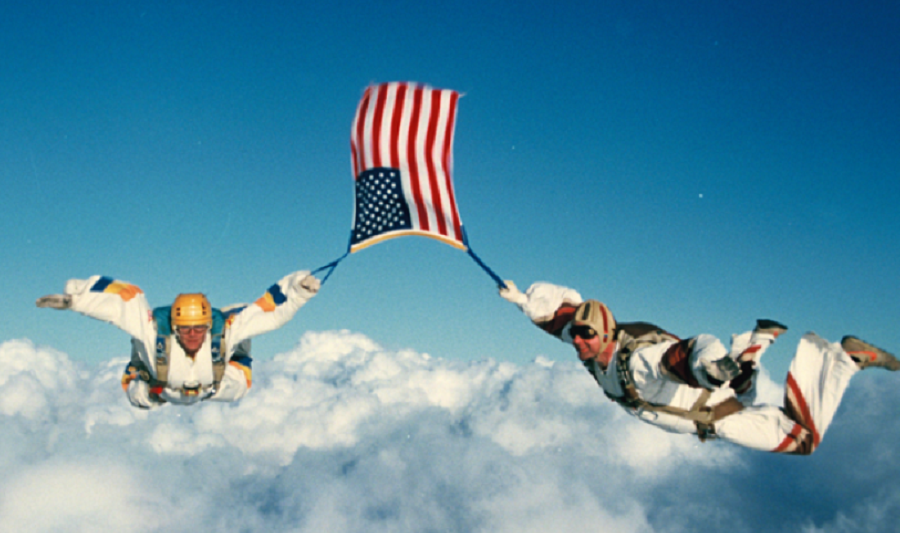 My skydiving buddy Chris Wentzel and I made this flag jump on Memorial Day years ago to pay tribute to those in our military who gave their lives for America. I’m on the right, Chris on the left. The jump was performed at the Skydive Perris drop zone in Perris, California. It’s only fitting I post this on TTP in honor of those whom we memorialize in gratitude on this Memorial Day weekend. (Glimpses of Our Breathtaking World #303 photo ©Jack Wheeler)


 Former FBI boss James Comey posted an image of seashells forming “86 47” but quickly claimed, “I didn’t realize some folks associate those numbers with violence. It never occurred to me but I oppose violence of any kind so I took the post down.” The Secret Service has good reason to take it as a threat.
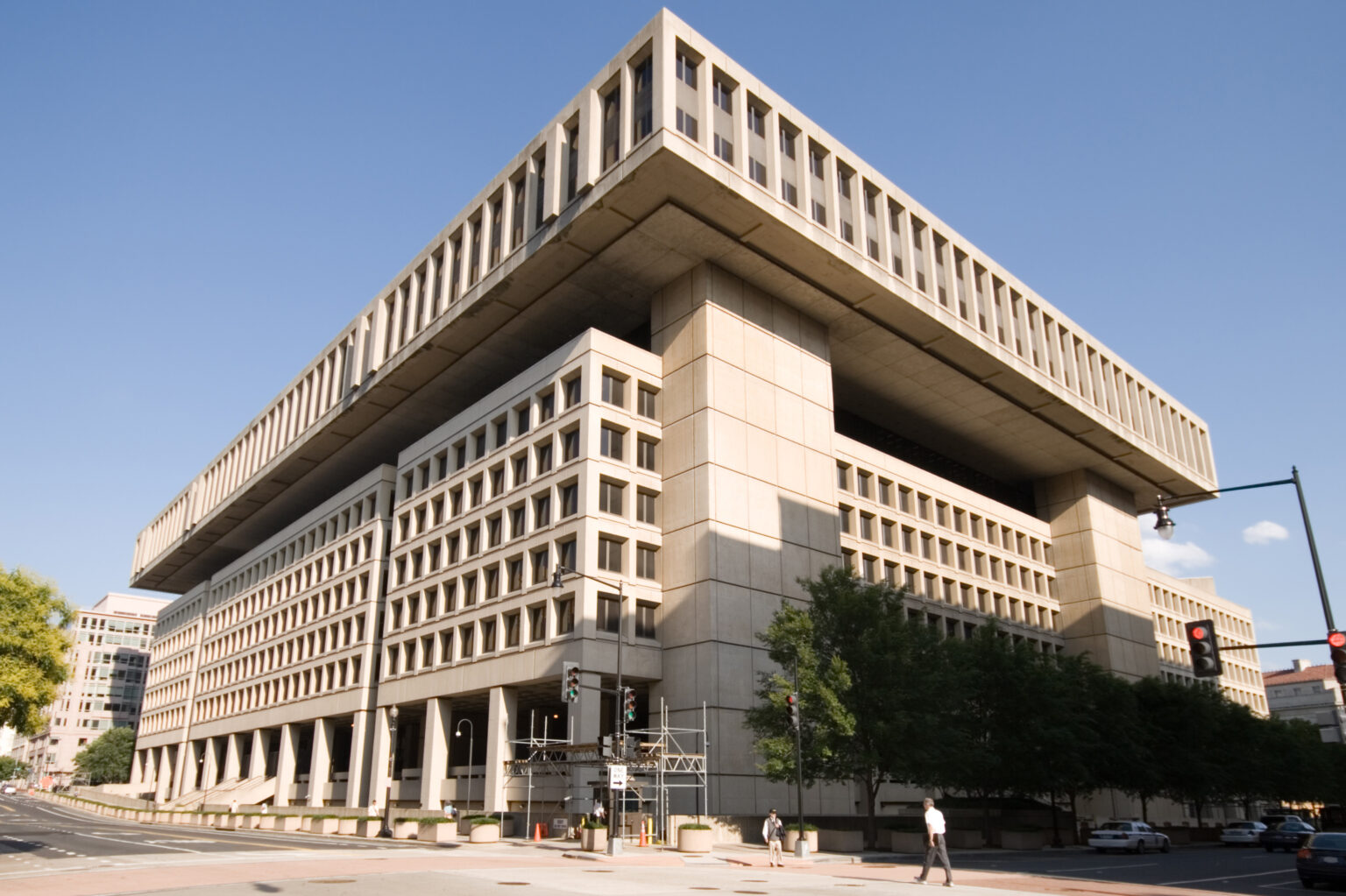 Current FBI Director Kash Patel is closing down the agency’s Washington, DC, mothership office and moving at least 1,500 employees out of the DC area to regional offices. The decision was not just Patel’s.