



Do words have any meaning? Most people think so, which is why there is an endless debate about which words should be permitted by law, which should be a matter for the law, and which words should be debated in the realm of manners.
Where does “Gas the Jews” fit into that?
How about using them immediately after the worst massacre of Jews since the Holocaust? How about if the words are used on the streets by a mob—not in a spirit of jest, but of intent?
That’s what happened outside the Sydney Opera House on October 9, 2023—two days after Hamas and other Palestinian terrorists invaded Israel, slaughtered 1,200 people, and took another 250 hostage.
Of course, the Australian authorities did not take any meaningful action regarding that protest. They never do if the protestors are Muslim. They only do if the protestors are anti-Muslim Australians. Why is that?
For centuries, Britain — and England in particular — has represented a civilizational ideal for much of the modern world.
The birthplace of parliamentary democracy, the common law system, and global standards of governance, Britain has exported its political and cultural values far beyond its shores. At home, it once epitomized social cohesion, stability, and civic pride.
Yet, in the 21st century, many Britons — particularly in working-class communities — report a growing sense of cultural alienation. Towns like Bradford, Luton, and Rotherham now evoke, for some, a sense of displacement rather than belonging.
This perception of a “de-Anglification” of England, whereby traditional English culture appears to be losing ground in its own homeland, reflects a deeper civilizational unease.
There is a need to explore the causes and consequences of this transformation, including the policies of the New Labour government, the fragmentation of national identity, the failure of integration, and the erosion of trust in public institutions.
On top of Temple Mount in Jerusalem stands one of the world holiest building on earth revered by millions – and as such is one of the world’s greatest examples of cultural appropriation.
The Rock around which it is built is the Foundation Stone, limestone bedrock which the ancient Israelites worshipped as the origin point of creation, the location of Abraham's binding of Isaac per Genesis 22:2-14, and the base for the Ark of the Covenant in the Holy of Holies of Solomon's Temple and its Second Temple successor, which the Romans destroyed in 70 AD.
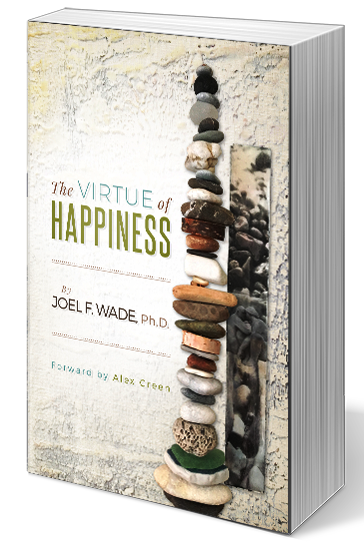
[Note from Jack – As you may know, Joel Wade has been a life-time friend ever since he saved my life resuing me off a cliff in Tibet in 1987. Every person in our family – and many of our close friends in TTP have done coaching sessions with Joel --- which is really just a conversation. I can recommend him with complete confidence and certainty.
Joel is one of the easiest people to talk with because he is relaxed, friendly, warm, and naturally sees the best in people. He knows that everyone sometimes wishes they had someone to just listen to them and that is one of his super powers.
He can give feedback or suggestions on how to be happier, more confident, and communicate better with those around them. He’ll have insights on how you can feel less stressed and more relaxed. He is consistently kind and wise.
You can have a one-time conversation with him to connect and then later reach out when there’s an issue, goal, problem or any matter you want to discuss. He is happily married for many decades, a father of two wonderful grown children, and multiple World Champion water polo goalie .
Joel has been writing his Virtue of Happiness column since TTP’s inception back in 2003. This is one of his very best.]
We each have to master ourselves, our own emotions, impulses, willpower, and consciousness. This doesn’t just happen for us, and cannot be done for us by somebody else; it’s an active, deliberate activity. This need doesn’t represent psychological trouble; it’s part of the normal challenge of being human.
Think about it: if we don’t eat right, or exercise, our health will suffer; if we don’t read, or study, or challenge our minds, our intellect will suffer.
Why would it be different for our psychological and emotional health? If we don’t strive to understand and master our emotions and impulses, our emotional and psychological life will suffer.
It’s normal and healthy to have to work at and master our emotions and thoughts; to bring conscious awareness and effort to what’s true about our unique internal experience, and to channel that mastery to strive toward meaningful goals.
On the one hand, last night was a terrible night for the GOP. There’s no sugarcoating double-digit election losses when there was anticipation of real competition.
There’s little silver lining when the party was wiped out in numerous state elections.
On the other hand, Democrats won in very blue states and cities. Who didn’t expect that, and what will it really change?
Democrats certainly hope that winning governorships in Virginia and New Jersey is a harbinger of success in next year’s midterm elections….HOWEVER, there could be a “bright side.”
August 1977. High in the mountains above the source of the April River, a tributary of the Sepik in Papua New Guinea, I had a First Contact with an undiscovered tribe calling themselves the Wali-ali-fo. They ate “man long pig,” cooked human meat and lived in thatch dwelling built up in trees. Here I am in one with my Sepik guide Peter who got me here.
Peter translated a description of their practice: “When a man dies, we take a pig to his wife and exchange it for the body of the man. We take the body out into the forest and…cook ‘im eat ‘im. We do this so the man will continue to live in the bodies of his friends.”
The Nowheresville Texas Police Station: A long time ago.
[Some details altered to protect the innocent and guilty.]
I was in a police lieutenant’s office, watching a video taken from the body camera of one of our officers. The call had been a welfare check, where two of our people had approached a residence, heard nothing, and proceeded to make warrantless entry.
In Texas, and in the United States at large, warrantless entry of a residence by law enforcement is limited to a handful of justifications falling under “exigent circumstances.”
Basically, it needs to be an emergency that justifies breaching the curtilage [Editor: google it – a very interesting word for citizens], and the Supreme Court has been getting tighter and tighter on applying it. The officers had gone into this house for a situation…. not really meeting that threshold.
She looked up at me. “This is bad.”
Clearly, the officers—both relatively new, had overstepped. Perhaps in good faith, but they had still overstepped.
This is Durnstein Castle, perched on a precipice high above the Danube River in Austria some 60 miles upriver from Vienna. Built in the early 1100s, here is where King of England Richard the Lionheart was imprisoned, having been captured by his enemy Leopold V of Austria on his return from the Third Crusade in the Holy Land.
Eighteen years ago, October 9, 2003, I had the privilege to meet and have an unforgettable conversation with His Holiness the Dalai Lama. It was at a luncheon hosted by India’s Ambassador to the US at his residence in Washington. His Holiness loved my telling him how I had passed out over a thousand pictures of him during my three overland expeditions crisscrossing Tibet. “Illegally, yes?” he asked, as the Chinese make this a crime. “Oh, very illegally!” I answered as we both chuckled.
The Ambassador asked where he was born. His answer, “very remote village in far northern Tibet.” He was startled when I interjected, “Yes, I know, I’ve been there – I even bought a doonchen (telescoping 15 foot-long Tibetan prayer horn) in your village.” “A doonchen?” he exclaimed. “You mean…?” and put his hands to his lips to make this really loud WHOOOH like the horn makes. I nodded and did the same, WHOOOH. We belly laughed, while all the diplomats and Congressmen did not know what was going on.
This is Almaty, the largest city in Kazakhstan with over two million people. Originally named Alma Ata or Father of Apples, as here in the western foothills of the Tien Shan mountains is where apples were first domesticated and cultivated.
Almaty is a thriving prosperous city as the financial/economic- but not political- capital of independent Kazakhstan. And but a stone’s throw away from the magnificent snow-clad Tien Shan, a trekker’s paradise in the spring, summer, and fall, a skier’s in the winter. It’s a modern, spotlessly clean city with gorgeous parks and flower gardens- and there’s a terrific Irish Pub flowing with Guinness.
Skinigin Village, Loch Dunvegan, Isle of Skye. The Isle of Skye in the Inner Hebrides of Scotland is considered by many the most magically entrancing place in all Scotland. From charming fishing villages like this to gorgeously dramatic scenery to famous distilleries like Talisker, you come here for a few days and don’t want to leave the serenity of Skye that captures you.
There could not be a more beautifully opportune place from which to offer my appreciation and gratitude to TTP’s very own Skye, who provided us with his extraordinarily insightful Links and commentary every Thursday until his death last year. Skye was my dearest friend whom I loved and admired like a hero brother for well over half a century. I still treasure his friendship and am so grateful for his long contribution to TTP and to my life. So, From Skye to Skye, thanks, compadre!
Waitangi Bay, Chatham Island. 530 miles east of New Zealand lies an isolated island of windswept rugged beauty that few people have ever heard of. Yet Chatham Island may be an ultimate Christian example of how to prevail over monstrous evil.
In the early 1400s, a Polynesian people calling themselves Moriori sailed from New Zealand across an unknown empty sea to reach an island they named Rekohu, meaning “misty sky.” For 400 years they lived in peace among themselves – and in utter isolation from the world.
But in 1835, another people arrived, and brought Hell with them. They were a group of 500 Maori cannibals from New Zealand determined to take Rekohu for themselves. The Maori killed them like sheep, men, women, children, and babies, and ate them.
The British Governor of New Zealand ignored the Maori Genocide. There were about 2,000 Moriori on Rekohu (renamed Chatham) when the Maoris arrived in 1835. Only 101 Moriori were still alive by 1862. It was Western Christian missionaries who put an end to Maori killing, eating, and enslaving Moriori.
Today on Chatham Island there is a Moriori resurgence – but without rancor. The past is past, they say, what counts is the future. Like few other peoples on earth, the Moriori understand the Christian power of abandoning resentment and grievance.
This Xikrin-Kayapo tribesman and his people live in the deepest heart of the Brazilian Amazon on tributaries of the Xingu River. You wonder what he would think of us as panic, fear, and madness engulfs our civilization. Having spent time in his village not long ago, I’m confident he would simply shake his head in bewilderment and say, “Please just let us live our lives in our forest, that’s all we want.”
Italy’s Siena Cathedral, built from 1215 to 1263 is one of the great masterpieces of medieval architecture. It contains works of art by Renaissance greats from Donatello, Bernini, and Michelangelo. Most stunning of all, however, is the cathedral floor, entirely covered with marble mosaics depicting scenes from the Old Testament, Greek and Roman myths and history. No one photo does it justice, it’s so immense. Here you see Crates of Thebes (265-285 BC) atop the Mount of Wisdom casting riches into the sea for a life of tranquil simplicity.