



 New Lamps for Old
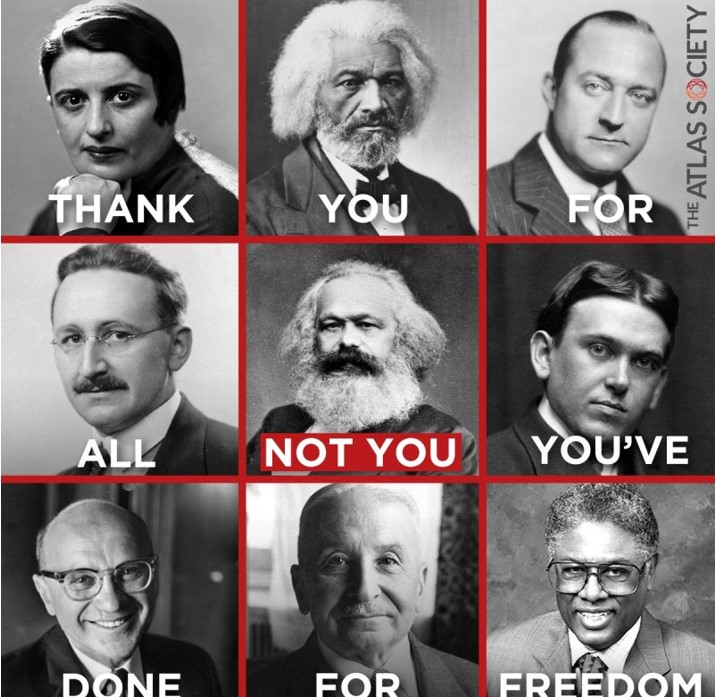
The New Left Wants Your Freedom
New Lamps for Old
The New Left Wants Your FreedomThe Left feels good this week as we saw the New Mexico governor foolishly attempt to suspend the Second Amendment. As Skye pointed out in yesterday's links, nobody is in support, not even David Hogg.
Mitt Romney announced his retirement at the end of his current term. Now, there is a piece of work: Mitt was on the take for some serious bribes in Ukraine and attempted to cover his guilt by impeaching Trump. The good people in Utah hate the man now that he is rightly known as the worst kind of traitor. He did it for money, not some lofty moral purpose.
Bye, pal, hit the road.
The UAW is on strike, and they have been crafty in targeting choke points at the big three automakers. Their strategy will force auto plants to wind down and lay off workers. This means that relatively few strikers are paid from strike funds, but most workers in targeted plants will receive compensation and wages when laid off.
The UAW move shows Hamas, a concept that means controlled righteous anger in Arabic, and is one of the topics we cover in part three of Beautiful Trouble, an analysis of the New Left's approach to advancing modern leftism.
We cover the theology of the new Left and continue discussing their internal training materials, including the hows and whys of seizing freedom. Part four continues next week.
Please join us at the HFR; your forum comments on the Beautiful Trouble series have been very insightful and helpful. Thank you, and as always, your critique and insight are most appreciated this week.
 [This Monday’s Archive was originally published on September 11, 2003. It is still relevant today]
TTP, September 11, 2003
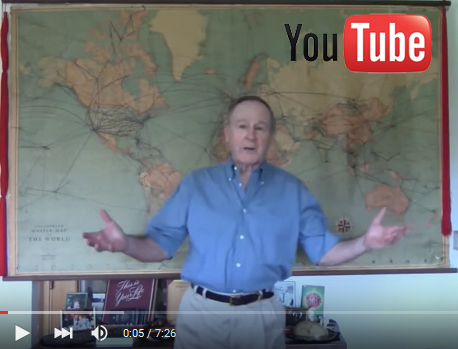
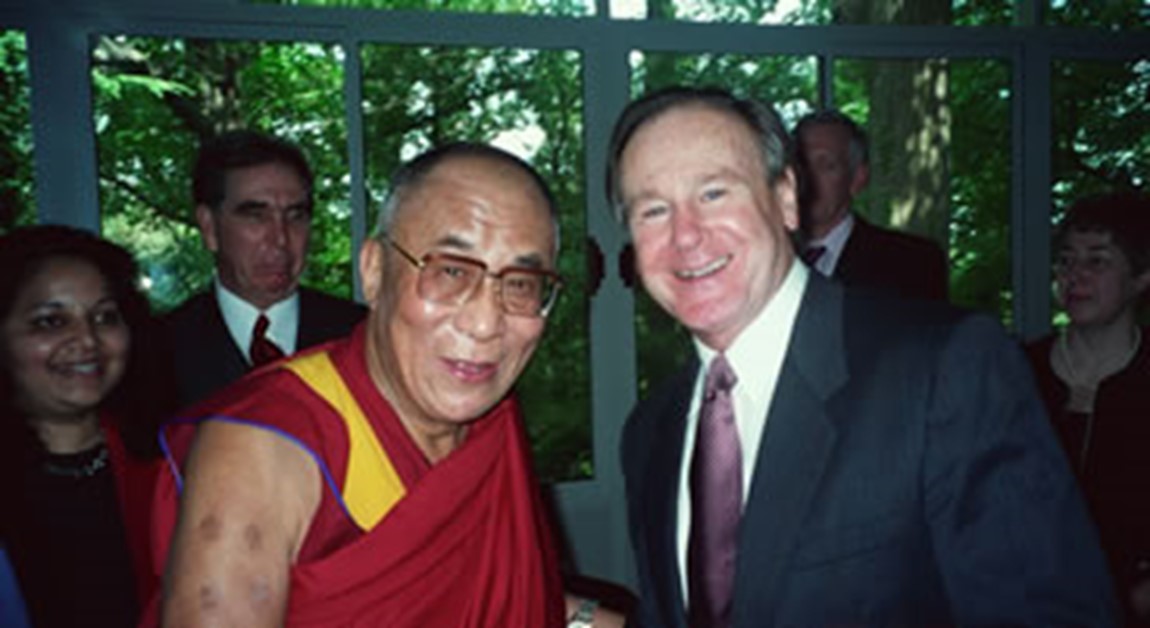
Earlier this week I had lunch with one of the most extraordinary human beings gracing our planet — His Holiness the Dalai Lama.
In the 102-year history of the Nobel Peace Prize, no one has deserved it more than Lhamo Dhondrub, the 14th Dalai Lama. As a man of true peace and compassion, he is unsurpassed. This is due both to his qualities as an individual and to the religion which enables him to optimize them.
From the President of the United States on down, we are subjected to claims that Islam is a “religion of peace.” To understand how absurd this claim is, just compare Islam to a real religion of peace: Buddhism.
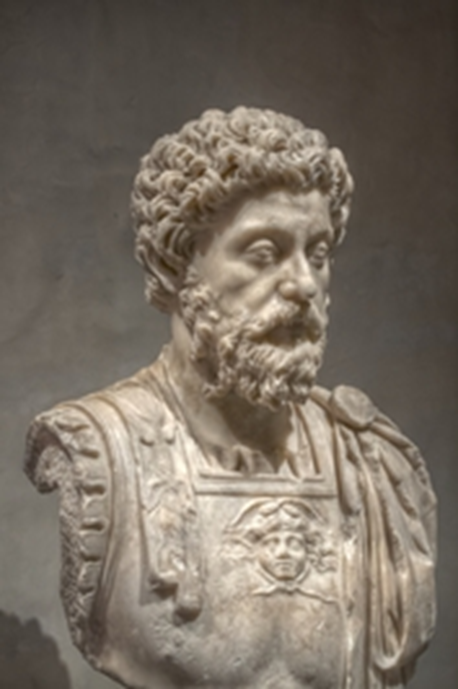 "If it is not right, do not do it; if it is not true, do not say it."
The truth, integrity, information security, and honest dealing appear to be unknown ideas.
In today's links, we discuss how your car spies on you to provide a lucrative cash stream for the manufacturer, how government agents routinely gain access to this data, and more. This includes the combination to your safe, thanks to installed back-doors.
Propaganda is now a central mission of the government as it seeks to control through emotional manipulation. One of its most potent tools is scientism, a sleight of hand that forces actions to adhere to theory instead of vice versa. Scientism is a stepping stone towards global socialism and the abandonment of the market economy.
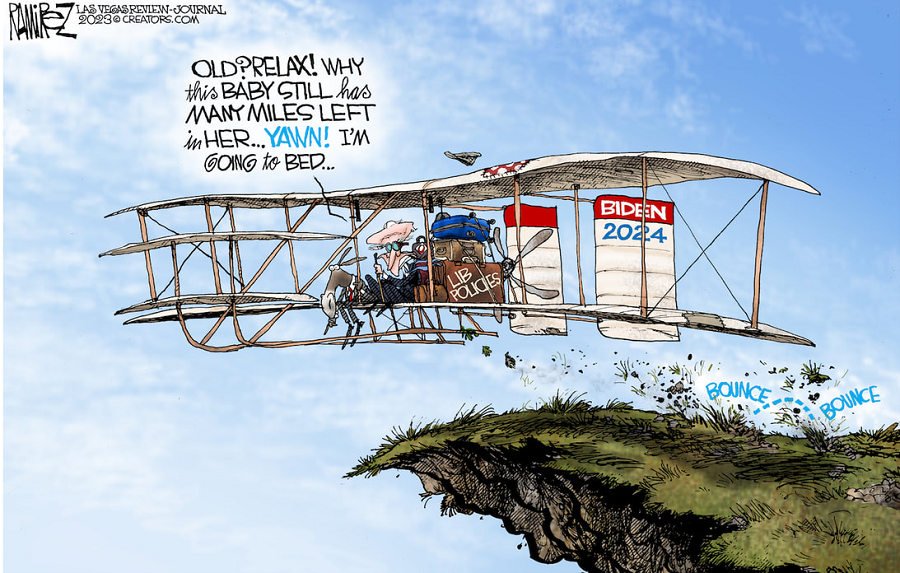
The 1A and 2A endured major blows this week with the courts and sheriffs fighting back throughout the land. It would be easy to blame Biden, but increasingly, he seems to be approaching a vegetative state.
Inflation is awake and breaking free from its chains. Try as it might, the Federal Reserve cannot control this beast. The White House wants higher energy prices to drain money from the economy but risks accelerating stagflation.
Please join us over at Skyes's Links:
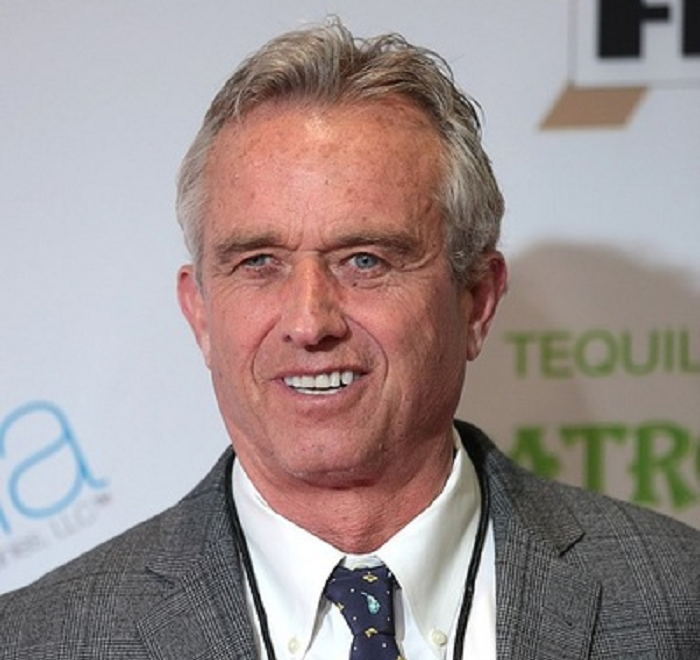 The real end goal of the Robert F. Kennedy Jr. and Vivek Ramaswamy campaigns is a leadership position in the Trump administration. How much criticism of Trump have we heard from these two Trump political opponents?
The key for Trump and for our country to win could be a powerful coalition with RFK Jr. and his millions of Democrat and Independent supporters. With that coalition, freedom will win and evil will lose.
Many of RFK Jr.’s positions make him more Trumpian than the average Republican politician. RFK Jr. is a DINO (Democrat in Name Only) but actually more appealing to Republicans than to Democrats according to recent polling.
An angry American electorate is desperately hungry for truth and radical counterrevolutionary reforms that only Trump, RFK Jr., and a like-minded administration and Congress can provide. The GOP and our country cannot afford to experience another close election loss.
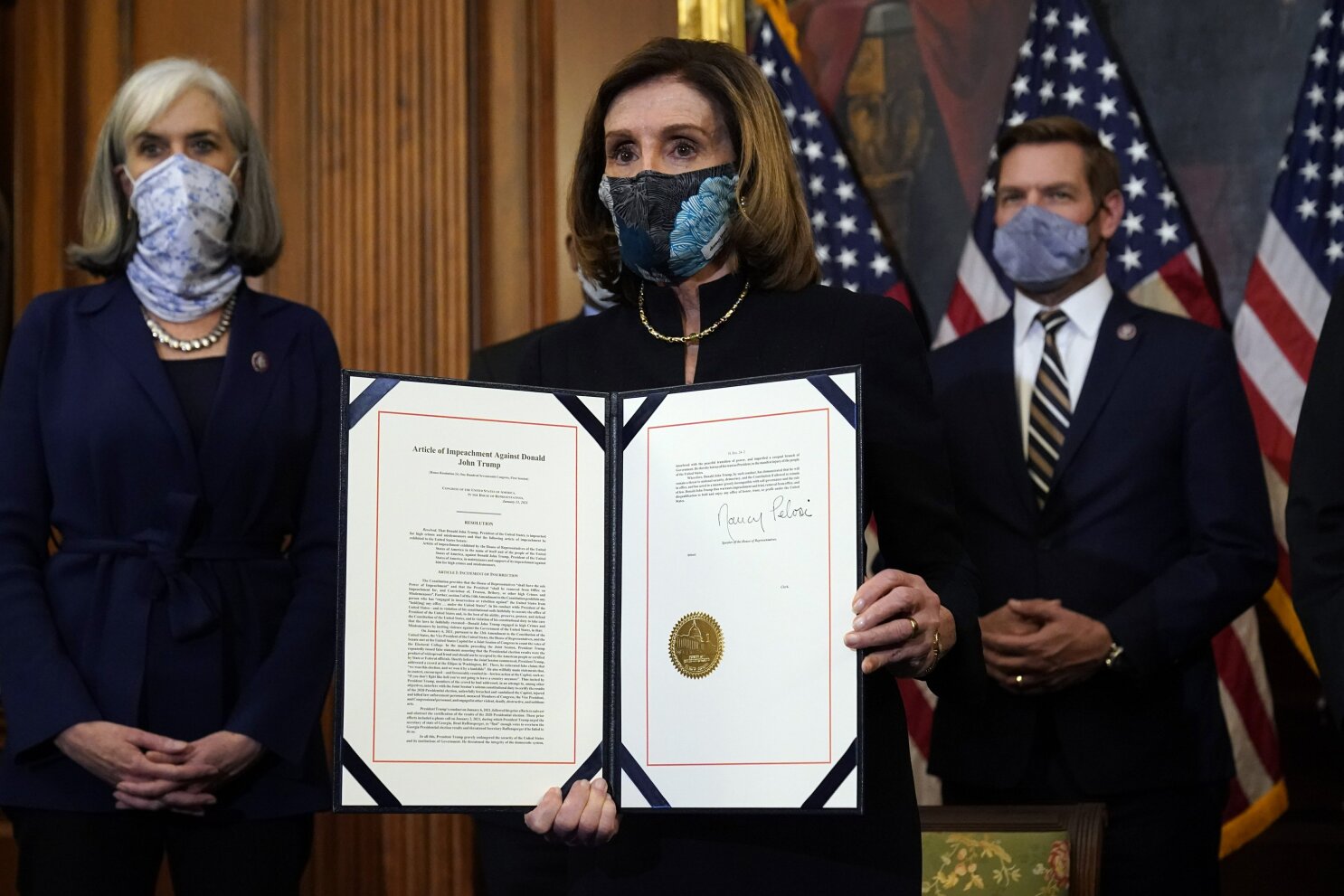 Weaponizing impeachment is just one of many precedents that Leftists now would not wish to have applied to themselves
An impeachment inquiry looms and the shrieks of outrage are beginning.
The Left is now suddenly voicing warnings that those who recently undermined the system could be targeted by their own legacies.
So, for example, now we read why impeachment is suddenly a dangerous gambit.
True, the Founders did not envision impeaching a first-term president the moment he lost his House majority. Nor did they imagine impeaching a president twice. And they certainly did not anticipate trying an ex-president in the Senate as a private citizen.In modern times, the nation has not rushed to impeach a president without a special counsel investigation to determine whether the chief executive was guilty of “Treason, Bribery, or other high Crimes and Misdemeanors.”
But thanks to the Democrats, recent impeachments now have destroyed all those guardrails.
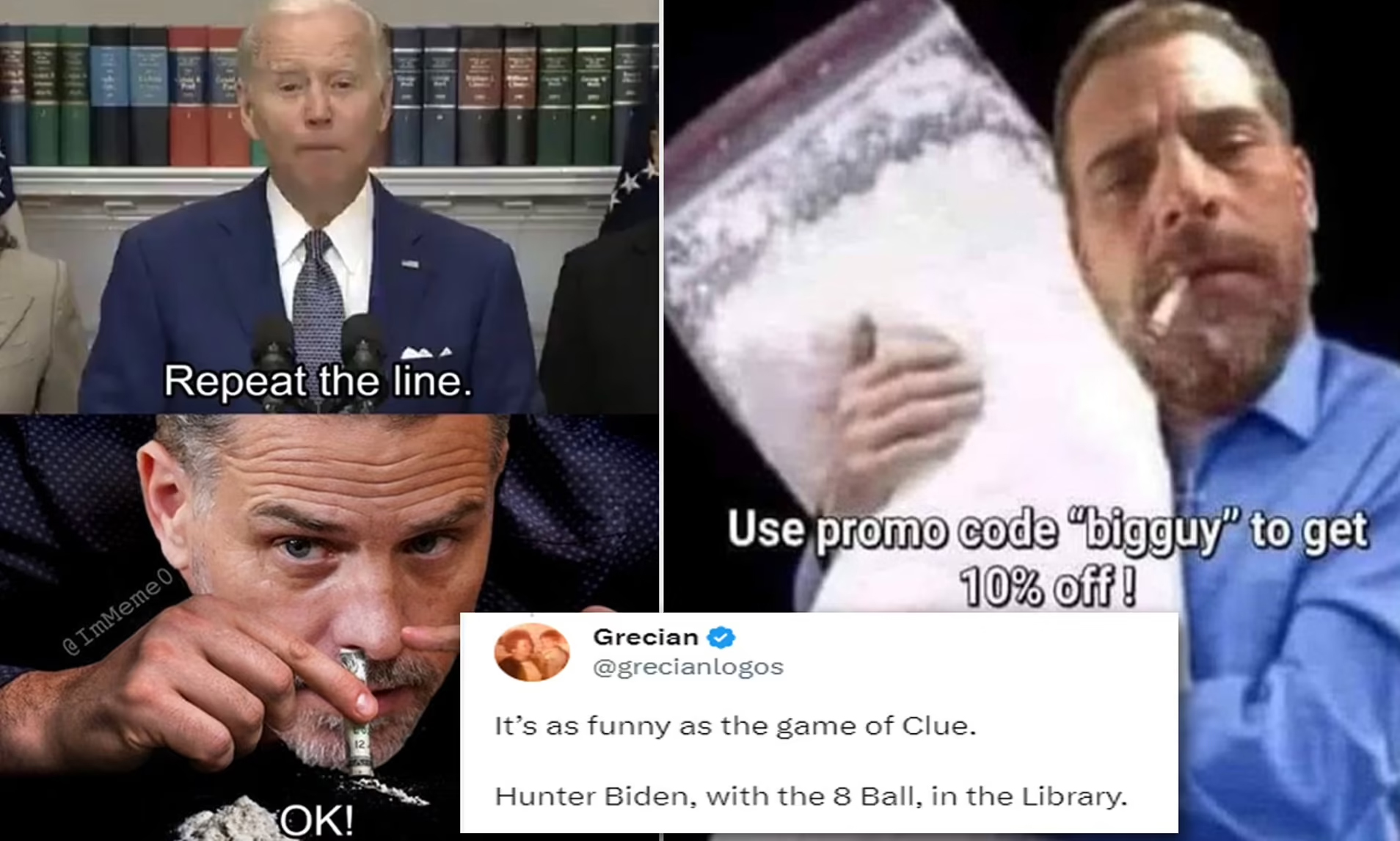 What shameless act or felonious activity was not evidenced on Hunter Biden’s laptop? Racist attitudes toward Asians? Soliciting prostitution? Felonious use of drugs? Photographed nudity and perverse sex? Admissions to illicit foreign shakedowns?
Hunter all but accused his own father President Joe Biden of also being on the foreign take: “I hope you all can do what I did and pay for everything for this entire family… Unlike Pop I won’t make you give me half your salary.”
Hunter’s alleged felonies range from bribery to tax evasion. That he has not yet been prosecuted for anything is scandalous. His exemption is attributable only to Attorney General Merrick Garland’s likely weaponized directives to federal prosecutors to downgrade or forget altogether felony charges against Hunter.
So given such wild behavior, why would not Hunter tone it down, stop the global grifting, cease the reckless behavior—and quit redirecting attention to the likely illegal acts of his father, the President?
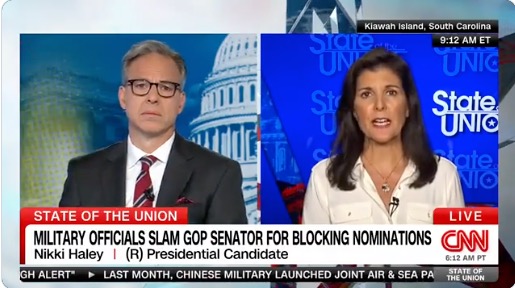 As you may have guessed from the title of this post, I’m not a Nikki Haley fan. She’s a sort of conservative, which makes her way better than a Democrat, but she’s also a squish, which puts her low on my list. I also really dislike her playing the woman card to run. That’s such a Democrat thing to do. Now, my concern is that she’s attacking Sen. Tommy Tuberville (R-Alabama) because he’s holding the Pentagon’s feet to the fire over its illegal abortion policies.
The Hyde Amendment isn’t complicated: It says that federal funds cannot be used to pay for abortions unless the abortion will save the woman’s life or the pregnancy results from rape or incest.
In 2022, in Dobbs v. Jackson Women’s Health Organization, the Supreme Court held that abortion is not a constitutional right, returning the matter to the states. (To make abortion a federal right or ban it nationwide requires a constitutional amendment.) Several states have since banned or severely limited abortion. There are military bases in many of the states that have placed full or partial bans on abortion.
The Pentagon is currently a leftist institution, from the Secretary of Defense and the Chairman of the Joint Chiefs of Staff on down. Obama started a purge of conservatives, and Biden has been finishing it.
 February, 2003. In the deepest hidden heart of the Sahara Desert where Algeria, Libya, and Niger come together, there is a high uninhabited plateau called the Tassili n’Ajjer. It is one of the most magical places on the planet – gigantic rock pillars and arches in spectacular abstract shapes, a forest of 2,000 year-old trees from when the Sahara was once green, the greatest profusion of prehistoric rock art on earth many thousand years old.
This is my son Jackson when we trekked and camped here at age 10. He’ll be guiding our next expedition here with me soon, for it is now safe and secure again. Come with us to have one of the most magically unforgettable experiences of your life. (Glimpses of Our Breathtaking World #122 Photo ©Jack Wheeler)
 This is where Wild Bill Hickok was shot and killed by assassin Jack McCall on August 2, 1876 in Deadwood, South Dakota.
The No. 10 Saloon is where Hickok had been playing five card draw that day. He was uncomfortable with his back to the bar (the furthest chair in the photo) and asked another player, Charlie Rich, twice if he could switch seats so his back would be to the wall behind – and twice Rich refused (the chair on the left).
A miner who had lost at cards with Hickok so badly that Wild Bill gave him money to eat, Jack McCall, came in, walked to the bar behind Hickok seeming to ask for a drink, and suddenly without warning pulled his pistol shot Wild Bill in the back of the head, killing him instantly.
Four cards in Hickok’s hand were showing – two black aces and two black eights, forever to be known as The Dead Man’s Hand. (The fifth or hole card was down and is not known.)
McCall was hung for the murder, buried with the noose still around his neck. Hickok is reverentially interred at Deadwood’s Mount Moriah Cemetery with a large bronze monument immortalizing the single most renowned man for whom the Wild West was named – James Butler “Wild Bill” Hickok. (Glimpses of Our Breathtaking World #227 photo ©Jack Wheeler)
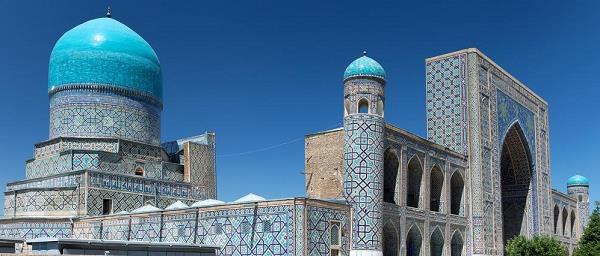
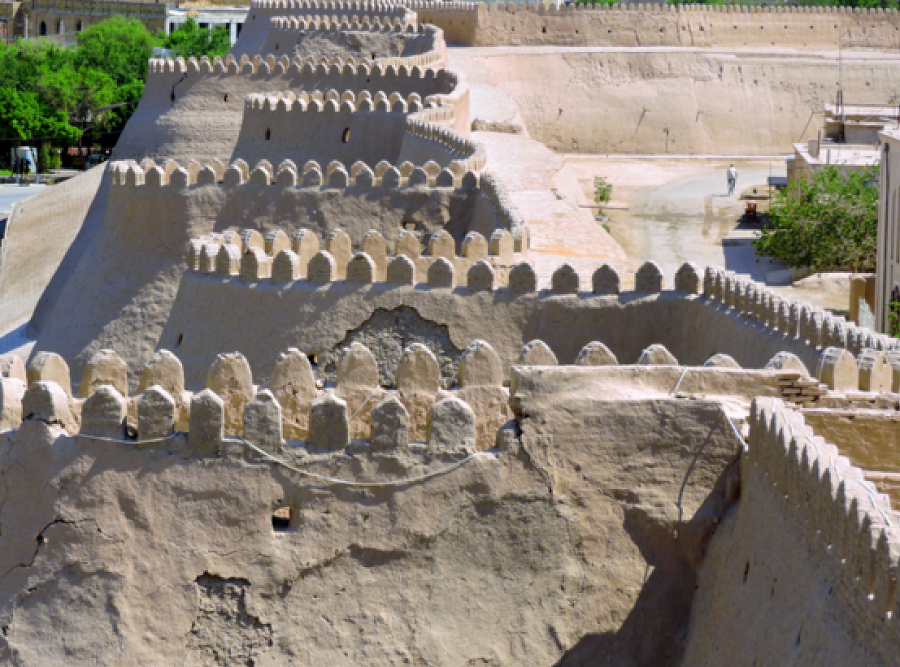 The inner city of the ancient Silk Road oasis of Khiva has been unchanged for centuries. Surrounding 40ft-high snake walls that writhe around the city have protected it for centuries, enabling defenders to shoot, spear, and pour burning hot oil on attackers from three sides.
Khiva’s labyrinth of narrow lanes adorned with blue and aquamarine tile mosaics is a living museum for you to explore. On the Oxus or Amu Darya River in deepest Central Asia, Khiva was ancient when Alexander the Great seized it in 329 BC.
It survived the depredations of Arabs in the 8th century, Mongols in the 13th, Tamerlane in the 14th. The Khanate of Khiva continued to flourish on the Silk Road until conquered by the Russians in the 19th. Today in Uzbekistan, it remains as the best-preserved of the ancient oases of the Silk Road, yet unknown to the outside world.
It need not remain unknown to you, however. We were just here last year, and will be here again soon. Join us and make Khiva a part of your life.(Glimpses of Our Breathtaking World #226 photo ©Jack Wheeler)
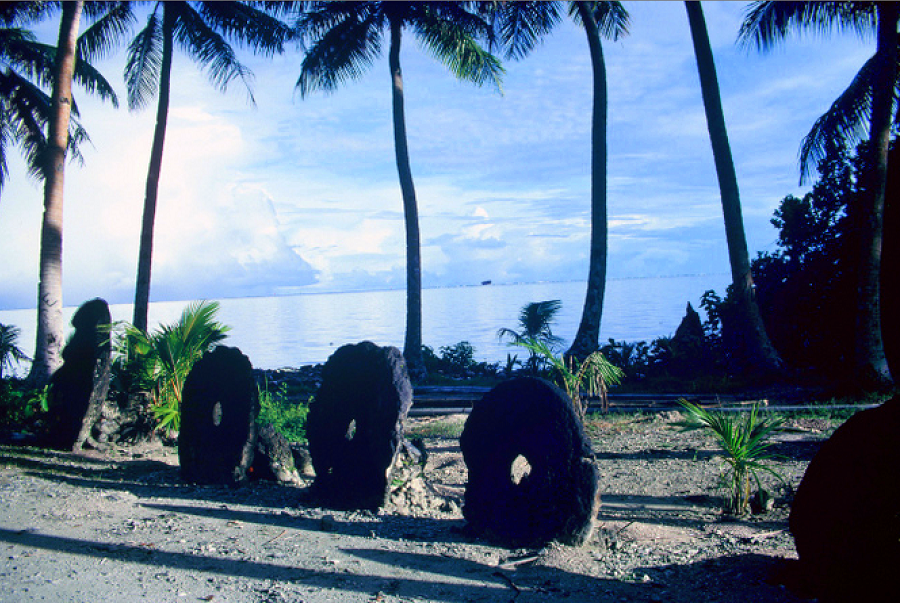 We’re on the island of Yap in Micronesia – some 500 miles southwest of Guam and 1,200 miles east of Manila in the Western Pacific. The Yapese have lived here for over 2,000 years, and have maintained their culture and traditions to this day.
Phenomenal navigators in their outrigger canoes, in ancient times they began sailing to Palau over 250 miles south to quarry large sections of limestone and return to stone-chisel them into circles with a hole in the middle (through which world put a long pole for carrying them.
Called Rai, they have been Yap’s currency for two millennia. The ones you see here are typical size but many are much larger, weighing as much as a car. Rai are the world’s biggest money – used not for day-to-day transactions but large ones like a bride’s dowry and wedding party, or a real estate deal.
The Yapese are a proud and peaceful people who live by their code of Respect and Responsibility. They are warm and welcoming to visitors. A 90-minute flight from Guam makes it easy to get here. Spending time with these special people will be life-memorable. (Glimpses of Our Breathtaking World #216 photo ©Jack Wheeler)
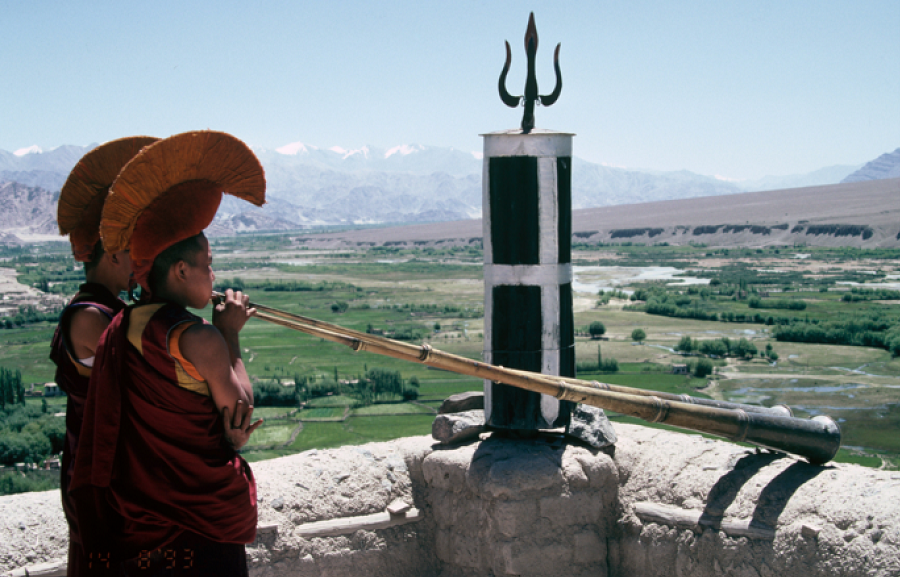 The Tibetan Monastery or “Gompa” of Spituk overlooks the Upper Indus as it flows out of Chinese Tibet and towards Baltistan in Pakistan. The Indus here is the geological dividing line between the ancient Karakorum mountains and the younger Himalayas (40+ million years old and growing: Mount Everest rises 2 inches every ten years).
We’re in Indian Tibet here, a region called Ladakh where Tibetan culture flourishes freely. Wheeler Expeditions first explored Indian Tibet – including running the remote Zanskar River tributary of the Upper Indus, one the world’s most thrilling whitewater experiences – in 1992. We’ll explore it once more next year. (Glimpses of Our Breathtaking World #128 Photo ©Jack Wheeler)
 WASHINGTON, DC — Amid a House impeachment inquiry and increasing questions about bribery and extortion involving Hunter Biden, the White House reminded the press that there's not any direct evidence that Hunter Biden actually exists.
"When you think about it, there's not really any conclusive proof that this 'Hunter' guy is even real," said historic, gay, black Press Secretary Karine Jean-Pierre to reporters. "Have any of you even seen him in person? Have you actually physically touched him? For all we know, Hunter is just a figment of the GOP's wild and fevered imaginations. It's sad, really."
The gathered journalists murmured and nodded in agreement at Jean-Pierre's excellent point.
"It's a shame we didn't start questioning the notion of this 'Hunter Biden' fiction a long time ago," said Meet The Press anchor Chuck Todd. "How could we have been so blind to the deep deception of the far-right? The whole thing was a hoax! This is an attack on democracy."
Journalists have begun to pull all their Hunter Biden stories pending further investigation into the matter. "Once we have investigated the GOP's deception around the existence of this alleged 'Hunter' character, we will update you on that story," said Jake Tapper. "Stay tuned for an update in 5 or 6 years."
At publishing time, new allegations related to Joe Biden's involvement in the corruption surfaced, leading the White House to denounce the existence of Joe Biden as a right-wing conspiracy theory.
____________________________
In Disney's upcoming reboot of 1937's Snow White, will the Prince kiss the sleeping princess? Or will he obtain her consent first?
 Don't Banana My Republic!
The Maui fire last month took many lives and destroyed considerable property. Since then, governments at multiple levels have demonstrated a stilted communication response that increasingly appears inauthentic and politically motivated.
Many children are missing and presumed burned to death. How many? Nobody seems to know. Electronic geofencing prevents private drones from looking at the scene; a tall, opaque fence has been erected around the site. Official government spokespersons do not appear competent or even in the loop.
Censorship has returned to social media with a vengeance as the government demands posts mentioning or discussing the fires be shut down. The immediate question is, why? Why do government agents believe aggressive, centralized narrative control is their best option? Perhaps because we are in election season? Perhaps another reason?
Public relations experts, ministers of propaganda, or whatever they shall be called, did not conceptualize the cause and progression of events effectively. They used poor graphics and messaging filled with blanks and gaps that shredded their credibility.
The official cause of the fire was downed electrical lines into fields of bone-dry grass. Videos of the fire's ignition exist.
But…Many know that directed energy weapons are being researched and that a Chinese satellite operating a LIDAR unit, a laser version of radar, overflew the site. Rumors have expanded to fill the gap without effective official messaging and in light of aggressive censorship.
The fire was a crisis, yet the mismanagement of official communication continues. This begs the question, when faced with crisis communication, why is the first impulse of government to hide, block, and censor? Are government communication teams so thoroughly woke that they cannot perform their jobs? No wonder faith in institutions is collapsing.
Much is being written about expanding the economic zone called the BRICS. Are we supposed to be afraid? And afraid of what exactly? A collection of global extraction-based economies has joined a geographic and political zone centered on China. Most are middle to low-income, low-productivity, low-innovation economies with a collectivist bent. Sure, they can engineer a famine or crisis to promote the debtor/creditor international perspective. At best, they are trying to build a cargo-cult version of the old USSR. In the end, economics are more powerful than political systems. It has been thus throughout all of history,
If the United States stops patrolling the trade routes between the BRICS, pirates and scoundrels will prey on the ships. Even with China as a central member, the BRICS do not have an effective blue-water navy.
We return to the second part of the discussion of Beautiful Trouble, the left's new playbook for revolution in light of modern social media and mobile phones. Today's conversation covers the conceptual framework behind leftist dogma. We will wrap up the conceptual framework next week before moving on to their tactics and logistics, training, and organization over the following weeks.
Troublemakers, as they call themselves, want to remove individuals' right to think and discuss important topics. What is most annoying is the government action in Maui is in synch with the philosophy behind Beautiful Trouble.
Please click over to this week's HFR and join the forum conversation. They want to silence your voice. Don't let them.