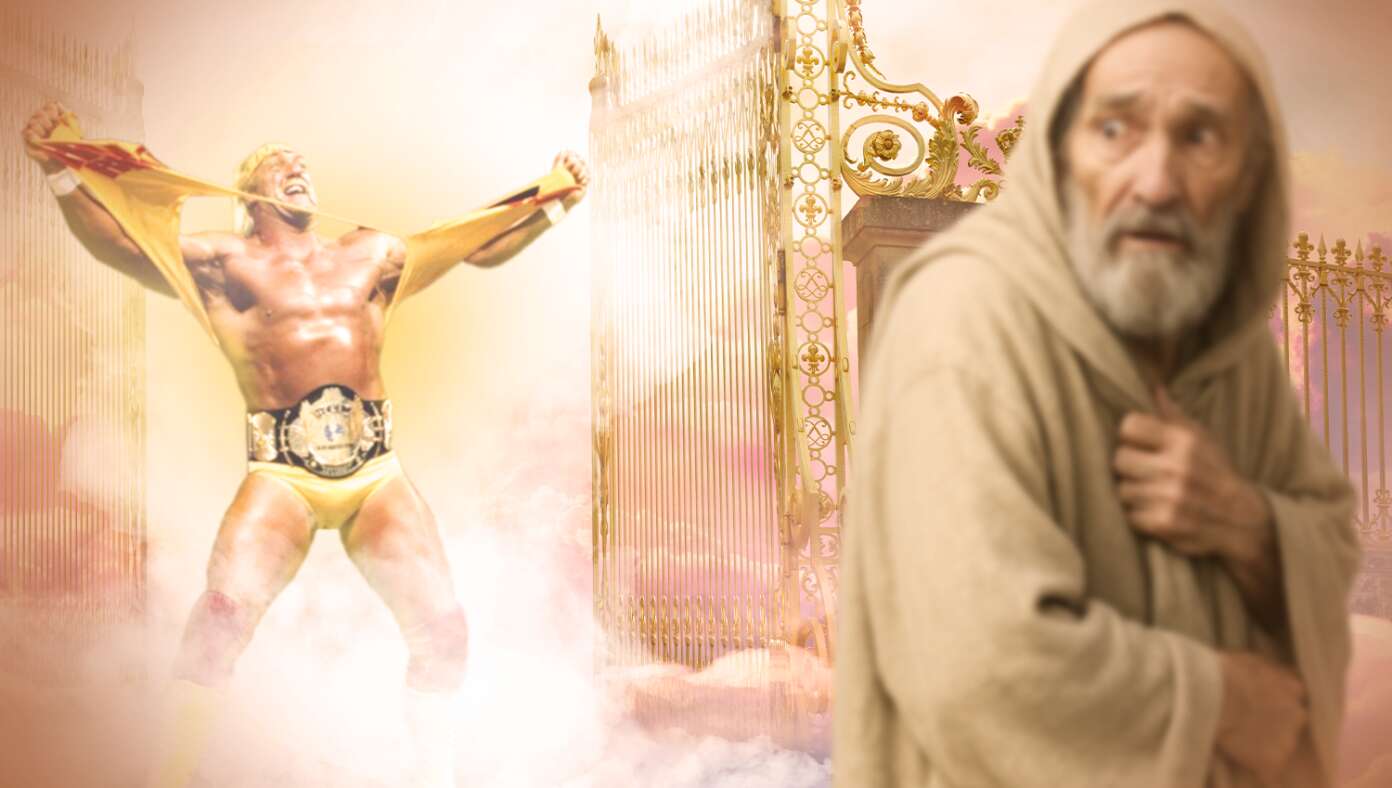
 HEAVEN — What began as a regular day in Heaven was quickly turned upside-down, as legendary sports entertainment icon Hulk Hogan made a surprise entrance to challenge Jacob to a wrestling match.
Jacob, long regarded as the most experienced and intimidating wrestler in the Bible, was reportedly standing in the heavenly ring and speaking to a large crowd of his fans when Hogan's "Real American" theme music blared over the speakers, heralding the arrival of the Hulkster.
"Oh my! What's this? Can it be? It is! It's Hulk Hogan!" an angelic commentator said as Hogan walked to the ring. "What's he doing here? Is he here to issue a challenge to Jacob? Hold on to your hats, folks!"
Hogan made his way through the smoke, lights, and pyro before stepping into the ring, ripping off his shirt, and staring down Jacob. "Lemme tell ya somethin', brother!" the Hulkster said to the roar of the crowd. "All my life, I've been hearing about what a bad dude you were back in the day, man. They said you wrestled with God, brother. Well, now that the Hulkster has arrived, it's time to step up to the challenge. Let's do it, Jacob! You and me, right here, tonight, brother!"
The crowd roared in excitement as Jacob paused to look out into the crowd before slowly shaking Hogan's hand. "You want some, Hogan? You got it!" the patriarch replied.
Over the deafening cheers of the crowd, Hogan promised to give Jacob a fight he'd never forget. "Whatcha gonna do, brother," he asked, "when Hulk Hogan, these 24-inch pythons, and all my heavenly Hulkamaniacs run wild on you?!"
At publishing time, fans and commentators were speculating that while Hogan may have a size and weight advantage in the matchup, Jacob was likely to try to use his patented ladder as a weapon to gain the upper hand.
~ Babylon Bee reporting.
Read more...



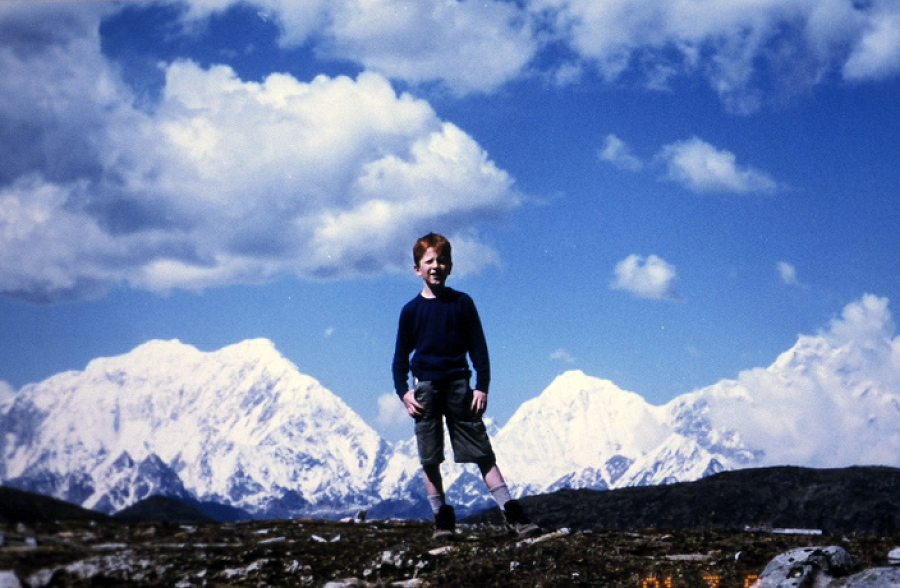 In the summer of 2001, I led an overland expedition of 2,500 kilometers across Eastern Tibet, traversing by foot the “Great River Trenches of Asia,” over the 15,000’ Si-la pass between the Salween and Mekong Rivers, thence to the Upper Yangtze by 4WD following it to near its source, onto Lhasa, capital of Tibet.
 Join the forum discussion on this post

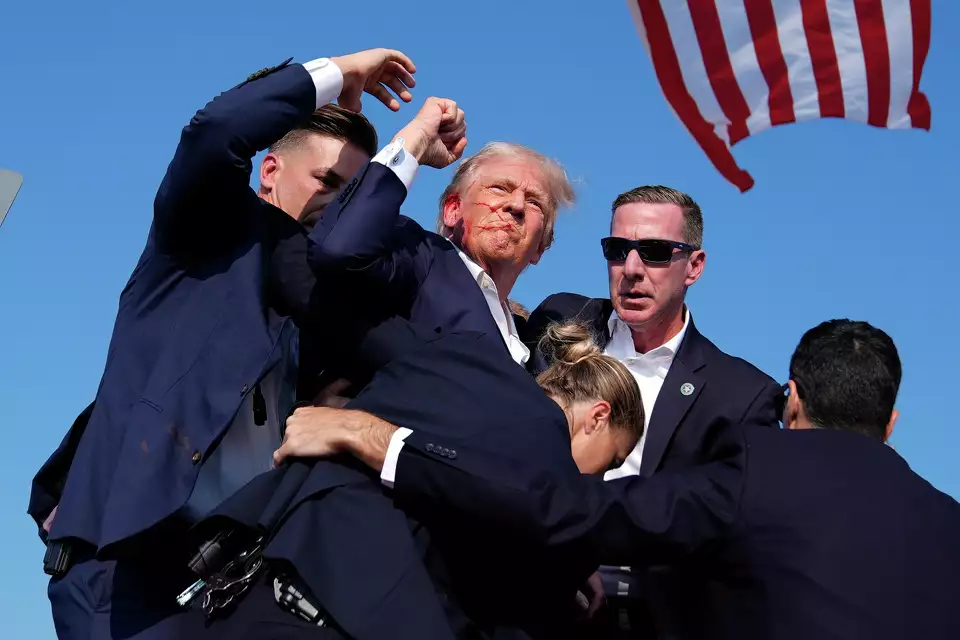 On Sunday (7/13), we relived that horrific yet awesome moment one year ago, when God’s Millimeter Miracle saved our President’s life, then captured by the most iconic photo of our day, he stood defiantly to challenge us all to Fight! Fight! Fight! to save and preserve our country.


 US President Donald Trump’s very public volte face in his attitude towards Russian counterpart Vladimir Putin is aimed at forcing the Kremlin to end the war in Ukraine.
 Much has been written about the enormous scandal involving the Biden administration’s cover-up of Joe Biden’s dementia.