The Oasis for
Rational Conservatives

Saturday, July 11, 2026

Member Menu

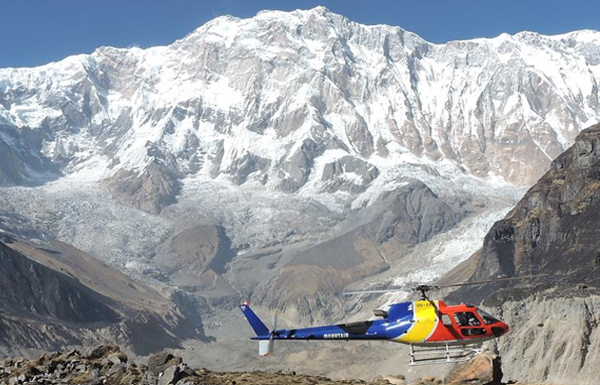
Himalaya Helicopter Expedition

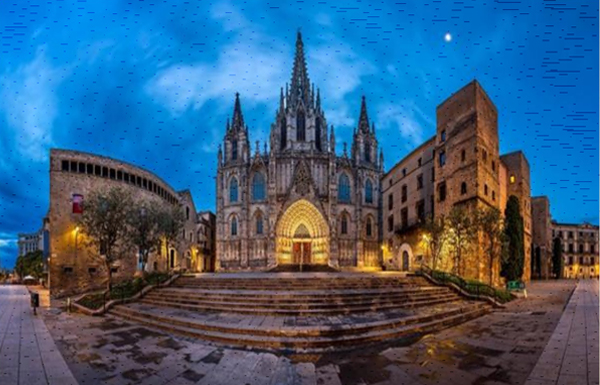
Spain Reconquista

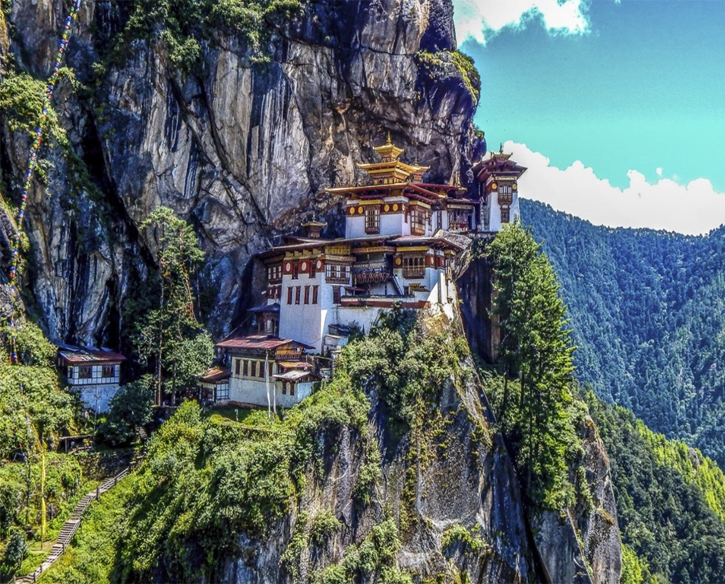
Bhutan: Land of Thunder Dragon

Reconquista Exploration

Wheeler Expeditions

Member Discussions

Article Archives

Archives

L i k e U s ! ! !

HALF-FULL REPORT 07/10/26

Finally!  If Winston Churchill were here today, he’d no doubt be thinking of Donald Trump exampling his famous quote: “You can always count on Americans to do the right thing - after they've tried everything else.”  The Khamanei funeral in Tehran with all the “Kill Trump” signs in English was the final straw.  So now it’s:

Okay, we’re off on a HFR you’re guaranteed to enjoy.  Here’s a teaser on coming attractions:

Read more...

PRESIDENT TRUMP ON AMERICA’S 250TH BIRTHDAY

It almost didn’t happen. 350,000 patriots had gathered on the National Mall Saturday evening, when in early evening Capitol Police declared a lightning storm imperiled their lives requiring them to evacuate.  That included the President and his First Lady, but they refused. “I’ll give this speech tonight all alone if I have to at 4am – this is the most historic 4th of July of our lifetimes,” he countered.

And sure enough, the skies cleared, 150,000 were able to come back, and at 11:45pm, POTUS began to speak.  Instead of an Archive this week, I’d like you to watch his speech entire. You may cry over the heroes he introduces. The best part is at the end.  It was followed by an astoundingly spectacular fireworks show.  America at 250!  What a moment for us all.

Can’t resist.  Here’s another view of the fireworks and music – America rocks on!

Read more...

MCCARTHY WAS RIGHT

Joseph Raymond McCarthy was a United States Senator from Wisconsin who rose to national prominence in the early 1950s because he dared to confront a reality that much of the American establishment preferred to ignore.

He believed communism was not merely a foreign threat but an internal one.

McCarthy understood that America’s adversaries did not always arrive in military uniforms or foreign armies. Sometimes they arrived through institutions, ideas, influence networks, and political movements that slowly reshaped public opinion and government policy from within.

His fight took place during one of the most dangerous periods in modern history.

Joseph Stalin controlled Eastern Europe behind the Iron Curtain.

Mao Zedong had consolidated communist rule over China.

The Soviet Union had successfully penetrated American institutions through espionage networks that reached into the highest levels of government.

Communist parties, front organizations, propagandists, and fellow travelers operated throughout the Western world.

Read more...

THE FOSSIL-FUELED PILLARS OF CIVILIZATION – Part 1

[TTP:  This is the first of a three-part series we’ll cover this week. The original article was too long to post all at once, but too good to merely summarize.]

It’s important to understand that fossil fuels are today, and will continue to be for many decades to come, the essential foundation for civilization as we know it in the world today.

We should first note how the fossil fuels we get from the ground were made. As Brian Villmoare writes in The Evolution of Everything: The Patterns and Causes of Big History:

[P]lants use the stored chemical energy [which they get from the sun through photosynthesis] to grow. But when animals eat those plants, they are acquiring that same stored energy, which they then convert to growth, or store as fat.

If a predator eats an animal, that same energy is passed down to the predator. So, in effect, when a lion eats an impala it is eating an animal that is stored solar energy, only in chemical form.

Humans access this same solar energy when they eat plants or animals, or burn logs for warmth. But what about other forms of energy?

When we burn gasoline in our cars, we are using that exact same solar energy.

Hundreds of millions to billions of years ago, giant mats of cyanobacteria and other organisms covered the Earth’s oceans. When they died and were buried beneath the ocean floor, over time that plant material decayed and slowly converted into what we call crude oil.

A similar process occurs during coal formation, when plant matter is buried and decays over millions of years. In both cases, the product we burn is a stored accumulation of millions of years of solar energy, converted into a chemical form via photosynthesis.

The only form of chemical energy on Earth that is not the result of photosynthesis is nuclear energy.

Read more...

THE FOSSIL-FUELED PILLARS OF CIVILIZATION – Part 2

[TTP:  This is the second of a three-part series we’re covering this week. If you missed the first part, go here. We’ll pick up right where we left off yesterday.]

While there is little discussion of the practical impossibility of switching to alternatives to fossil fuels today, discussions focusing on exaggerated claims of climate change have made most people aware of the costs of using fossil fuels.

But many fewer people are aware of the staggeringly large benefits fossil fuels have brought and continue to bring to humanity.

Read more...

THE FOSSIL-FUELED PILLARS OF CIVILIZATION – Part 3

[TTP:  This is the last of a three-part series we’re covering this week. The first part is here and the second part is here.

We’ll pick up right where we left off yesterday.]

And that’s just food. Without electricity, drinking water in all cities would be unavailable.

Large electric pumps push water into the municipal supply, often to great heights.

And then the water has to be treated to make it safe to drink.

Before electrification powered by fossil fuels, drinking water for most people was both contaminated and far away.

Fossil fuels have also made clothing more available than ever. As Epstein writes, “Before widespread use of electricity, most people had only several items of clothing for their entire lifetimes,” but today “we use machines to grow the raw materials for clothing (or, in the case of synthetic clothing, to drill for them), to produce fabrics, to sew fabrics into clothing, to transport clothing. All of this makes clothing production so cost-effective that a poor person can buy a very warm winter jacket at Walmart for $50.”

Along with warm clothing, fossil fuels give us warm shelter.

Read more...

INFLUENZA, NUTRITIONAL SUPPORT, AND THE MAGIC PILL

It’s no news to savvy TTPers that every year seems to bring some new miracle drug or nutrient or spice or combination thereof that is going to transform the life of everyone who can just be persuaded to try it.

The idea that humans are uniform, interchangeable parts is implied in many ways in our society, and that our insides are also uniform and generally interchangeable is regularly reinforced by diagrams and models shown in anatomy and biology classes throughout school and in medical facilities everywhere. But is that really so?

I loved watching Lost in Space when I was a kid. It always made me laugh when Mrs. Robinson would set the table for their dinner and go around lovingly placing a pill in the middle of each plate to satisfy all of their nutritional needs. At eight, I thought a pill for dinner would be great – everyone strong and healthy (and no dishwashing!) Today I wonder if that image has influenced modern thinking more than we know.

While humans are made in generally similar forms, and our insides are situated in generally the same formation, we are extremely idiosyncratic in how our internal systems respond to stress, medicines, nutrients, toxins, sicknesses, remedies, etc.

Only consider the wide differences we have recently seen in how people all over the world responded physically to the Covid virus. Some were devastated, others had few-to-no symptoms at all.

Yet we keep believing that science will come up with a one-size-fits-all solution for health.

Read more...

THE VIRTUE OF SELF-INTERESTED WORK

Teamwork is an essential element of classroom learning and in real life.

Giving and helping others are wonderful things. We are appreciated when we give to others through charity, volunteer work, or other acts of kindness; and rightly so.

When we can help another person in some way, it creates a spirit of goodwill, and it’s one of the single most important acts we can do for our own happiness.

What’s often overlooked though is how much consciousness, caring, time, money, and energy each one of us already puts into significantly helping other people every day – through the work we do.

Every hour we’ve spent in a classroom, in an internship, and at work is an hour we’ve spent honing and perfecting our skills. Every dollar we’ve spent for tuition, books, seminars, travel – and of course those most expensive of seminars, the cost of failure or loss that have added to our wisdom – is a dollar we’ve spent investing in our ability to do our work well.

Read more...

FLASHBACK FRIDAY – CLIMBING MOUNT OLYMPUS

mount-olympusAugust, 1971. Here is where the Ancient Greeks believed their 12 Olympian Gods lived, on the summit of the highest peak of Olympus – Mytikas at 9,571ft/2,918m. There are 52 jagged prominences of Olympus, but if you want to commune with Zeus, Apollo, Aphrodite, Athena and the rest, this is where you go.

It takes just two days: morning drive from Athens (4 hrs) to Litochoro, then the roadhead at Priona (2,500ft). Afternoon hike of some 3 hours through pretty pine forests to the comfortable Spilios Agapitos refuge (6,700ft) for dinner and a bunk bed overnight. You’re up at dawn for a strenuous but not technical climb up to Skala peak at 9,400ft. In my photo, you’re looking at Mytikas from Skala. It’s a Class B rock scramble – no ropes or gear, but this shouldn’t be your first mountain rodeo. Be careful!

I was by myself at the Mytikas summit and no selfies in those days, so I said my greetings to the gods, and I was back down at the refuge by lunchtime. You’ll be back at the Plaka below the Acropolis in Athens for ouzo and dinner. (Glimpses of Our Breathtaking World #45 photo ©Jack Wheeler)

Read more...

THE SHERMAN TANK THAT’S STILL THERE

tank-at-tarawaThe horrifically heroic Battle of Tarawa was fought November 20-23, 1943, with the US Marines determined to take the entrenched Japanese – which they did, both sides suffering ghastly losses. The Marine amphibious force assaulted the Japanese garrison on the small island of Betio in Tarawa Atoll of the Gilbert Islands – now the country of Kirimati.

The spearhead of the assault was led by the Marine’s Charlie Company, 1st Corps Tank Battalion and its M4-A2 Shermans on what was codenamed Red Beach. One particular Sherman sank a few yards offshore and lies there to this day. It’s easy to wade out and clamber upon it, as these friends of mine did when I brought them there in 2016.

We hear a lot about “climate change” causing “the oceans to rise.” But as you can see, the sea level at Tarawa has been the same for the past 77 years. (Glimpses of Our Breathtaking World #124 Photo ©Jack Wheeler)

Read more...

ROME IN AFRICA

roman-theatreThe best place to see Roman ruins is not in Rome or anywhere in Italy. It’s in Africa – specifically on the Mediterranean coast of Libya. This is the Roman theatre at Sabratha built in the 1st century BC. Over 2,000 years old, it’s still mostly intact. Starting as a Berber village, the Phoenicians founded the city as Sabrat by 500 BC. Then came the Greeks, then the Carthaginians, and after the Punic Wars came Rome.

The Libyan coast was a lush fertile place back then. So much so that Sabratha and the other major Roman city nearby, Leptis Magna, produced several million pounds of olive oil per year – sale of which to Rome enabled them to achieve great wealth. It’s a shame that Libya remains today in chaotic civil war. Hopefully the day is not off when experiencing Rome’s most magnificent remains will be possible here again. (Glimpses of Our Breathtaking World #79 photo ©Jack Wheeler)

Read more...

THE ROCK OF ZANZIBAR

rock-of-zanzibarIt would be hard to find a more exotic restaurant than The Rock, perched on a coral outcropping off Michanwi Pingwe beach on the east coast of Zanzibar in the Indian Ocean.  Start off with what I found to be the world’s best (and largest) piña colada, then tuck in to marvelous fresh caught grilled lobster along with an excellent French chardonnay.  Finish with coconut tiramisù and a large cup of great Tanzanian coffee.  Rebel and I will always fondly remember our experience here – and so will you should you ever visit the extraordinary island of Zanzibar.  (Glimpses of Our Breathtaking World #287, photo ©Jack Wheeler)

Read more...

THE LAND OF THE DRAGON’S BLOOD TREE

dragons-blood-treeThis is the Dragon’s Blood Tree, Dracaena cinnabari. It can be found in only one place on earth, a remote island called a Lost World for its uniqueness, the “most alien-looking place on our planet.”

Although it’s known as the most alien, strangest, weirdest, and bizarre place you can go to, it’s also completely safe and incredibly beautiful. Anybody who comes here returns saying, “You have to see it to believe it.” What is this place?

It’s the World Heritage Site of the island of Socotra, the “Galapagos of the Indian Ocean,” 240 miles off the coast of Yemen and now secured by the UAE. It’s hidden, remote, and far away. (Glimpses of Our Breathtaking World #34 Photo ©Jack Wheeler)

Read more...

HALF-FULL REPORT 07/03/26

Welcome to the 250th Fourth of July HFR!  We’ve done something completely different for this auspicious moment. Instead of a weekly review, I asked members of the TTP Team to each write a message of their own on the significance of this day:  Rod Martin, Joel Wade, Mark Deuce, Michelle & Greg Pryor, TTP editor Mellie Smith, TTP administrator Miko de los Reyes, and yours truly. Mike Ryan sends his regrets being in the field solving a company’s engineering emergency.

You’ll want to read and savor them all – then be sure and share your thoughts on our 250th in Comments or the Forum.  Please – join in yourself.  We want to hear from you.  Here’s to a joyous 250th Fourth of July to all TTPers!

Read more...