








Trump’s American System.
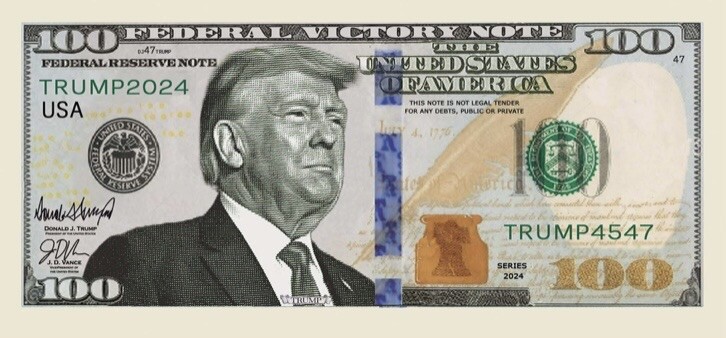 Start with a simple observation: in a republic the fight is always over narrative. Budgets matter. Laws matter. But the side that defines reality for the public usually wins the next round.
That is the frame for understanding President Trump’s State of the Union address on Tuesday night.
The speech worked because it was built on fundamentals. Not tricks. Fundamentals.
Trump leans heavily on repetition. He always has. Phrases like “America is back,” “record-breaking,” and “golden age” were examples. Repetition in rhetoric functions the way torque functions in mechanics. It applies steady force in the same direction until something moves. People remember rhythm long after they forget footnotes.
He also structured the speech around contrast. Before versus now. Weakness versus strength. Disorder versus control. His binary framing simplifies a complicated political environment into two competing trajectories. Voters rarely choose between white papers. They choose between stories about direction.
Then there was the theater.
Invited guests were in the gallery. Personal stories, and emotional recognition of loss introduced throughout the speech were moments clearly designed to draw applause or visible discomfort from the opposition. Sure, this is showmanship but through his incredible;e use of rhetorical tools, the policies of the administration become human faces. Human faces are harder to dismiss than GDP statistics.
The delivery mattered as much as the content. Trump’s style remains intentionally conversational, occasionally improvisational, and thoroughly entertaining. He drifted off script a few times, added asides and inserted some well-delivered jabs. His informality created the impression of spontaneity even when the architecture underneath was tightly constructed. Supporters read that as authenticity while his critics read it as excess. Either way, this speech commanded global attention.
Medium awareness was obvious. In the age of cable news and short-form video, speeches are consumed in fragments. Trump builds fragments that travel well using short declarative lines and clean emotional beats. This speech was organized into moments that can survive clipping without losing force. Roosevelt understood radio intimacy. Kennedy understood television optics. Reagan understood the emerging cable ecosystem. Trump understands social media virality.
The opposition response revealed something else. Democratic rebuttals focused on individual hardship stories and fact-check clips. Establishment RINO Republicans channeled their inner John Anderson and Nelson Rockefeller as they turned quickly to economic theory, especially arguments about tariffs functioning as consumer taxes. Those are legitimate debates. But they occurred inside a field of play Trump had already defined. He set the tone. Others reacted to his momentum.
The broader theme was civilizational. Trump framed the United States as a deliberate break from imperial tradition and positioned the upcoming 250th anniversary of the Declaration of Independence as part of an ongoing struggle for self-government. That move elevates ordinary policy disputes into historical continuity. It suggests that present elections carry inherited meaning.
Put all of this together and a conclusion emerges.
The speech energetically displayed technical control over repetition, contrast, emotional pacing, audience choreography, and media adaptation. When a speaker consistently applies classical rhetorical tools while calibrating them to modern distribution channels that force opponents to respond within his narrative architecture, then we are observing a practitioner operating at high proficiency.
In plain terms: Trump is many things to many people and yet no one can deny that he is a modern communication professional and fully aware of his craft.
*******
The State of The Union Is Strong

A nation advances when it chooses to produce. Production means transforming nature through human creativity whether it be steel from ore, power from the atom. A producer culture builds. An imperial financial culture extracts. That distinction framed President Trump’s 2026 State of the Union.
Trump structured the address so that core American priorities such as secure borders, child safety, industrial revival, and an end to insider privilege were placed front and center. When Democrats sat silent during those passages, the optics reinforced his argument. In politics, optics are evidence for millions who never read a policy brief.
The speech ran nearly one hour and forty-eight minutes, the longest in modern history. The length signaled stamina and command in direct comparison to Biden’s sinking ship. The dominant theme was economic revival. Trump described a “golden age,” record markets, rising wages, declining inflation, factory construction, and energy expansion. He tied these outcomes to tariffs, deregulation, and domestic investment.
Trump clearly explained that he views tariffs through the American System developed by Alexander Hamilton. The American System holds that national sovereignty is earned and maintained through productivity and industrial capacity, not through currency manipulation or open borders.
Tariffs, in this framework, function as a development tool. They shape incentives. They channel capital into steel mills, aluminum plants, auto factories, and advanced manufacturing rather than offshore financial arbitrage. When targeted under statutes such as Section 232 for national security or Section 301 for unfair trade practices, tariffs operate as industrial policy in defense of sovereignty.
Critics frame tariffs as consumer taxes. Trump countered with empirical claims: new aluminum capacity in Oklahoma, declining trade deficits, manufacturing starts rising, and union support in key sectors. His argument rests on the causality that protective measures plus capital formation equals productive resurgence. The speech reinforced that causal chain several times.
Border security formed the second pillar. Trump presented mass deportations and reduced illegal crossings as restored order. Order is the prerequisite to production as a state that controls its territory controls its economic destiny. Trump treated sovereignty as economic capacity, not an abstraction.
The address also invoked society’s builders. These included the industrial workers, veterans, first responders, and families. Trump said a producer republic honors those who create tangible value. The nearing 250th anniversary of the Declaration of Independence was framed as continuity of self-government against imperial systems of control. That civilizational note inked present industrial policy to the founding break from the British Empire that sought to treat the Thirteen Colonies in the same way that the modern Empire treats Canada and Australia. A resource base to extract.
Foreign policy references were concise but forceful: strengthened alliances, adversaries contained, military rebuilding. Trump’s core concept here is that strength abroad protects productive capacity at home. Energy dominance and manufacturing depth provide strategic resilience.
The elite reactions were predictable with foreign media skepticism and the RINO and Democrat establishment rebuttals. Both continue to struggle to counter the populist production narrative.
That struggle reveals the coveted strategic terrain as the opposition has dialed in on procedural limits and abstract trade theory. The president speaks about factories and wages, shifting the emotional center of gravity toward production.
Trump is not talking about Reagan-era supply side economics, but his arguments are close. The RINOs are being pushed into the John Anderson policy wonk box. Pretty soon they will be advocating for increased taxes on gasoline and diesel, just as Anderson did in the 1980 election.
Trump demanded bold intervention in the speech because the economic system under Biden drifted toward managed decline. Trump’s speech presented tariffs, border control, and industrial policy as coordinated elements of national revival. This was a declaration of economic sovereignty wrapped in patriotic narrative. The trap lay in forcing opponents to reveal distance from a producer ethos. The underlying thesis was unmistakable: America prospers when it builds, and it declines when it outsources its creative power.
*******
The Supreme Court Weighed In
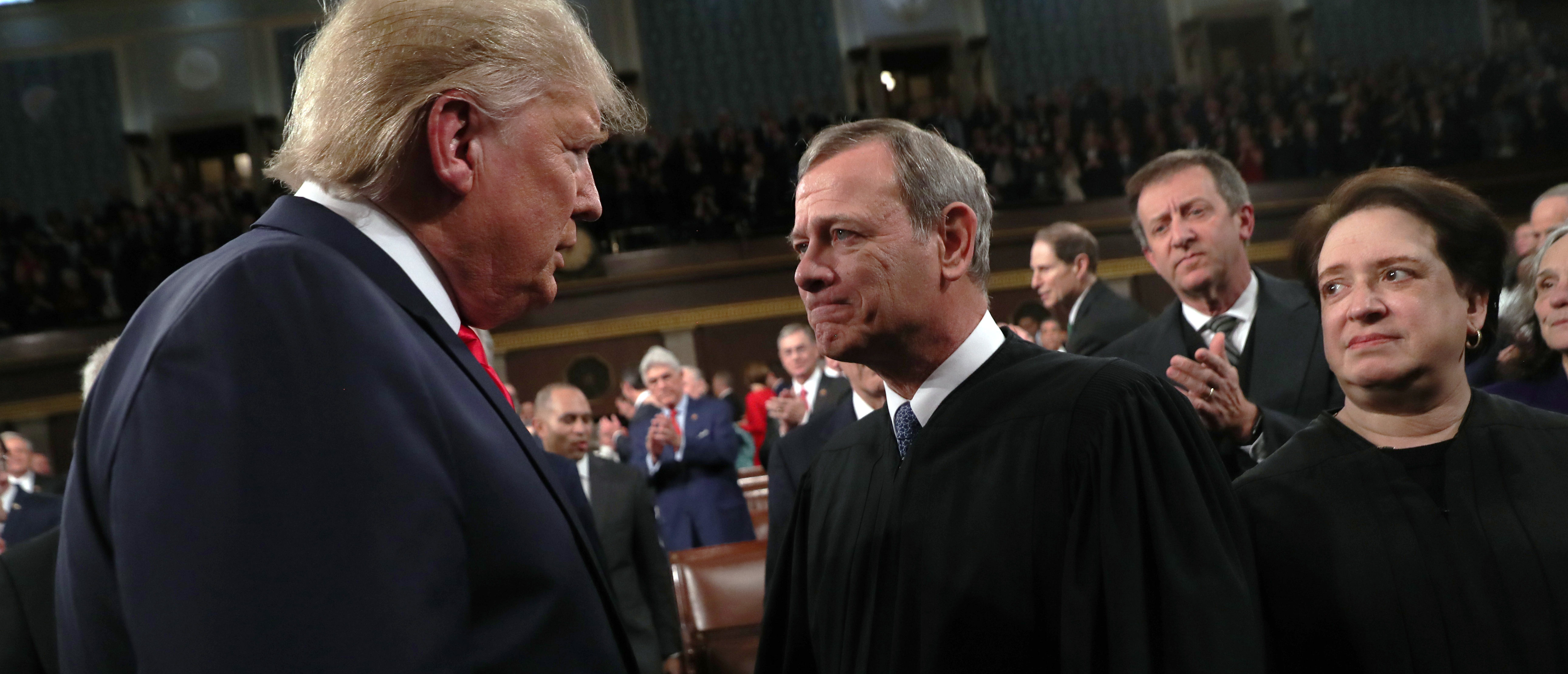
In the American system, Congress writes the laws and controls taxation. The executive enforces them. When a president exercises major economic power, he must anchor that action in clear statutory authority. That boundary protects the separation of powers.
Since the end of the Cold War, executive power has been eroding in the United States in favor of the technocrats in the bureaus and agencies, and radicals in the Judiciary. If the Trump presidency can be summed in one concept, it is a restoration of executive powers back to the office of the president.
This means testing limits and pushing boundaries.
On February 20, 2026, the Supreme Court of the United States enforced a boundary in a 6–3 ruling that invalidated key portions of President Trump’s tariff program, holding that the International Emergency Economic Powers Act (IEEPA) did not grant authority to impose broad tariffs of the kind used. IEEPA authorizes certain emergency economic actions against foreign threats. The majority concluded that sweeping, revenue-generating tariffs require clearer congressional authorization.
Chief Justice John Roberts wrote for the majority. His reasoning was straightforward: extraordinary economic measures demand explicit legislative approval. More than $200 billion in tariff revenue was implicated. That scale triggered constitutional scrutiny.
The ruling addressed authority, not strategy. Within days, the administration shifted to Section 122 of the Trade Act of 1974. That provision allows temporary tariffs of up to 150 days without new legislation. A 10% global tariff was announced and later increased to 15%, with the understanding that extension requires Congress.
This pivot demonstrates tactical flexibility inside legal constraints. It also creates uncertainty. Businesses that paid the invalidated tariffs may pursue refunds. Litigation over repayment could stretch for months.
The broader impact is strategic. Courts reaffirmed congressional primacy over trade taxation. The executive recalibrated. Markets must now price legal risk alongside supply-chain exposure and inflation pressure.
*******
Start With The First Principles.
 A tariff is a tax imposed on an imported good at the border. That much is mechanical. The economic question is incidence. Incidence means who actually bears the cost after markets adjust. The legal payer and the economic bearer are rarely the same actor.
Friedrich Hayek is routinely dragged into this debate as if he settled it with a slogan. He did not. Hayek worked within the marginalist tradition of Austrian Economics. That tradition, rightly understood, holds that price outcomes depend on supply and demand elasticities.
Elasticity measures responsiveness. If supply is elastic, producers can shift production, absorb costs, or redirect goods with relative ease. If demand is inelastic, consumers continue buying even when price rises. The relative elasticities determine who carries the burden of a tariff.
This has become standard microeconomics since the Reagan Revolution. It is not ideological. When supply is highly elastic and demand is relatively inelastic, buyers bear more of the tariff through higher prices. When demand is elastic and supply is constrained or tied to a specific market, producers absorb more of the cost through lower margins. In many real markets, the burden splits.
Hayek understood price formation as a dynamic discovery process. Prices transmit information about scarcity, preference, and opportunity cost. A tariff alters that information structure. How the adjustment distributes cost depends on competitive conditions, substitution options, time horizon, and capital mobility. It does not reduce to a simple chant.
The free-trade talking point that “a tariff is a tax on the consumer” functions as rhetoric, not analysis. It assumes high pass-through from importer to buyer. Pass-through is the rate at which a tax shows up in final prices. Empirical studies show pass-through varies widely across sectors and over time. Steel, autos, semiconductors, agricultural goods markets behaves differently because elasticities differ.
Short run and long run also diverge. In the short run, supply chains are rigid. Contracts are fixed and capacity is limited. Incidence may tilt toward consumers. In the long run, capital relocates. Domestic production expands. Foreign producers cut margins to retain market share. Elasticities change causing the incidence to shift.
Hayek warned against central planners who assume static models capture complex systems. Ironically, his name is now invoked to defend static claims about tariff incidence. That is intellectual laziness.
The strategic layer matters. If a tariff induces domestic capacity expansion in the form of new mills, new plants, and new mines then over time domestic supply becomes more elastic. Increased elasticity places downward pressure on price. The initial incidence calculation becomes obsolete because the structure of the market has changed. Policy reshapes elasticities.
This does not sanctify every tariff but it does clarify the terrain. The correct question is empirical: what are the relative elasticities in this sector, at this time, under these competitive conditions? Who has substitution options? Who holds market power? Who needs access more urgently?
Chanting slogans obscures these variables. Serious analysis demands them.
Hayek never reduced tariff incidence to a moral absolute. He operated inside a framework where price outcomes emerge from relative responsiveness in supply and demand. Anyone invoking his authority should at least honor the mechanics he accepted.
The bottom line is that markets are dynamic systems. Tariff incidence is a function of elasticity, time, and strategic response. Anything less than that is just talking-point economics.
*******
We Can Do This The Easy Way Or The Hard Way
 Iran seeks regime survival. The United States seeks to prevent a nuclear-armed Iran and preserve regional stability. Those objectives collide at uranium enrichment.
As of February 27, 2026, negotiations remain active and stalled. Indirect talks in Geneva and mediated by Oman and in conjunction with the International Atomic Energy Agency Director General Rafael Grossi produced “intense” negotiations to stop renewed Iranian uranium enrichment but no breakthrough. Technical teams will meet next week in Vienna.
The gap is structural and not something procedural.
The U.S. position under President Trump is clear: near-zero long-term enrichment, dismantlement or strict limits on Fordow, Natanz, and Esfahan, removal of 60% enriched stockpiles from Iran, no sunset clauses, and narrow sanctions relief. Limited medical-grade enrichment remains theoretically available under intrusive verification.
The goal is permanent denial of weapons capability.
Tehran’s position is equally clear: enrichment is a sovereign right. No destruction of facilities. No export of enriched uranium. Full sanctions relief. Foreign Minister Abbas Araghchi describes talks as constructive while reaffirming continuation of enrichment.
Verification is the pressure point. The International Atomic Energy Agency reports loss of continuity of knowledge regarding stockpiles and cannot fully confirm suspension across declared sites. U.S. intelligence assesses Iran is not currently building a weapon, yet retains the capacity to generate sufficient fissile material rapidly if it chooses.
Leverage now defines the environment. The United States has surged forces into the region with two carrier strike groups, the USS Abraham Lincoln and the USS Gerald R. Ford, plus additional land-based aircraft and naval assets. The posture signals readiness for sustained strike operations if ordered.
The State Department has authorized departure of non-essential personnel from Jerusalem and sanctions continue to target Iranian networks, including missile and proxy infrastructure.
Diplomacy continues because both sides calculate benefit in delay, yet the risk band is rising. Washington seeks a durable, enforceable settlement. Tehran seeks capability with sanction relief. The next Vienna round will test whether either side adjusts core assumptions. Until then, deterrence and negotiation advance in parallel, and escalation remains a real possibility.
*******
Pakistan and The Afghan Taliban
 Pakistan and Taliban-controlled Afghanistan are now in open cross-border combat. This is no longer skirmishing. It is declared escalation.
On February 26, 2026, Taliban forces launched attacks against Pakistani military positions across the border. Islamabad responded within hours with airstrikes on targets in Kabul and Kandahar and publicly shifted to what it called an “open war” posture. Casualty numbers are contested, as they always are in the first phase of a conflict. Pakistan claims over 130 Taliban fighters killed. Afghan authorities claim dozens of Pakistani soldiers dead. Civilian casualties, including deaths in a refugee camp, confirm that this is already spilling beyond purely military targets.
This did not materialize overnight.
Since the Taliban regained control of Afghanistan in August 2021, relations with Pakistan have deteriorated steadily. Islamabad accuses Kabul of harboring Tehrik-i-Taliban Pakistan, a militant group responsible for repeated attacks inside Pakistan. From Pakistan’s perspective, this is a sovereignty violation. From the Taliban’s perspective, it is leverage.
Border clashes intensified in late 2023. A ceasefire mediated by Turkey and Qatar briefly lowered the temperature. It lacked enforcement mechanisms, verification protocols, and a durable political settlement. It was a pause, not a solution.
Now the pause is over.
Pakistan is a nuclear-armed state. Any sustained instability along its western frontier affects force readiness, internal security allocation, and strategic signaling toward India. New Delhi will assess whether Pakistani attention and resources are being diverted. In South Asia, perception drives posture.
Both Islamabad and Kabul face threats from ISIS-K. Bilateral hostility reduces the probability of coordinated intelligence or operational cooperation and these fragmented security environments are fertile ground for transnational jihadist actors.
Now widen the lens.
Pro-Iranian actors benefit from instability in this corridor. Iran has a long record of asymmetric strategy by leveraging proxy forces, shaping peripheral conflicts, and forcing adversaries into multi-front dilemmas. Tehran maintains channels inside Afghanistan and across militant networks in the broader region.
Whether this escalation was orchestrated or merely exploited, the strategic effect is the same: U.S. planners now face another volatile theater.
This is a live escalation in a volatile region with global implications.
*******
Cuba Libre
 Things are cooking up in Cuba after Cuban forces shot and killed four people, including one US citizen, on a US-registered speedboat carrying exiles attempting to enter Cuba. This is interesting as Cuba condemns American efforts to intercept boat people heading from Cuba to the USA. The diplomats are engaged, but the optics and precedent set by Cuba support Trump’s claims that serious countries do not allow free migration.
With Cuba in the news, let’s talk about Cuba’s pulp mill as it is an industrial complex that I know rather well. The Soviet-built bagasse pulp mill at CAI Ciro Redondo was born from a simple idea. Unlike today, Cuba once grew vast amounts of sugarcane. Its sugar mills produced mountains of bagasse which is the fibrous cane residue left after juice extraction.
Instead of burning all of it, why not turn that material into pulp and paper? The Soviets supplied the capital and Finland provided the engineering and equipment. On paper, the plan looked efficient and modern. Sugar would feed the evil empire. Bagasse would feed the pulp mill and Cubans would have toilet paper. Nothing wasted.
The chemistry was sound. Bagasse can be pulped as other countries continue to prove. But bagasse is not clean wood. It carries insects, pith, ash, and lots of silica. It spoils if stored poorly and demands careful depithing before cooking. Its ash and silica can quickly foul evaporators and recovery boilers if not managed closely. In a bagasse mill, discipline is everything. Maintenance must be relentless.
The Cuban system depended on central planning and steady Soviet support. But the 5-year plan did not account for fluctuating harvests and bagasse quality shifts. Spare parts and technical expertise flowed from abroad. But when the Soviet Union collapsed, that support disappeared almost overnight. The mill entered the “Special Period” with limited redundancy and a fragile local supply chain. Operations became intermittent and production declined to just five months per year, during a good year. Cuba continued to import paper.
Just recently, the power plant at the combined Ciro Redondo sugar and pulp mill was re-connected to feed the failed national electrical grid, ending nearly 50 years of on and off bagasse pulp production and its product, toilet paper. Honestly, I have empathy for any population that can no longer produce toilet paper.
Brazil has a very successful bagasse pulp sector built through investing in depithing, recovery systems, operator training, and local maintenance capability. The difference between Cuba and Brazil is not process design or chemistry.
You see, machinery can be purchased. Industrial character cannot.
A pulp mill demands steady habits such as clean inputs, careful balance and constant upkeep. When those habits exist, a byproduct becomes national strength. When they weaken, even the best-designed plant drifts toward decay.
The moral is simple: technology amplifies the culture that runs it. If a nation wants durable industry, it must build the human systems that sustain it. Steel and concrete follow national character.
*******
Naval Supremacy
 The Navy has some new kit.
The U.S. Navy’s first operational high-energy laser deployed on a destroyer is the HELIOS system or High Energy Laser with Integrated Optical-dazzler and Surveillance.
It was installed aboard the USS Preble (DDG-88) since 2022. As of early 2026, Preble remains the only ship equipped with the full 60-kilowatt-class HELIOS weapon, developed by Lockheed Martin. The UK has a similar weapon.
HELIOS is integrated directly into the Navy’s Aegis combat system. It allows the laser to track and engage threats alongside missiles and naval guns rather than functioning as a standalone experiment. The system can destroy or disable small drones, fast attack craft, and some incoming missiles. It can also “dazzle” enemy sensors temporarily blinding cameras or optic. It can also perform long-range surveillance functions as a form of LIDAR.
A laser shot costs little more than the fuel required to generate the electricity and is often cited at roughly a dollar per engagement. Compare this to missiles that can cost over a million dollars each. Because it draws power from the ship’s generators, it offers what the Navy calls a “deep magazine,” meaning it can fire repeatedly without depleting finite munitions. In an era of low-cost drone swarms, that cost-exchange ratio is decisive.
Yet limitations remain. Weather degrades performance; fog, rain, and sea spray scatter the beam. Effective destructive range is typically a few miles, and the laser must maintain steady line-of-sight.
This type of weapon can’t drop 16-inch shells over the horizon.
However, the defense calculus changes with this weapon. Instead of rounds of ammunition or missiles in the ship’s battery, this weapon is limited by the number of seconds need to damage or destroy a target. If, for example, 5-seconds of time on target is need to destroy an incoming missile, this is 5-seconds unavailable to destroy a second missile. Even a whopping 60-kilowatt laser beam does not kill a target instantly.
*******
Great News!
 Victory has arrived for common sense and tradition. Under intense pressure, Scouting America, also called the organization formerly known as the Boy Scouts, has reversed course on years of woke, DEI policies.
Our own Dr. Jack Wheeler still holds the record as the World’s youngest Eagle Scout, an incredible feat. I was late to the game at age 17 when I earned my Eagle, and that achievement substantially influenced who I am to this day.
My Scoutmaster was a hard-boiled leader and he taught me well. He had been with the 2nd Ranger Battalion and participated in both D-Day and the Battle of Bastogne during the Battle of the Bulge. His unit was tasked with scaling the cliffs at Pointe du Hoc overlooking Omaha Beach to neutralize German artillery that threatened the landing forces.
During the Battle of the Bulge in December 1944, his same battalion and unit was involved in the defense of Bastogne, a critical town surrounded by German forces. Their presence contributed significantly to the American defense against the German offensive. Secretary Pete Hegseth is right. The Boy Scouts and the Department of Defense were tightly aligned until 2012.
The new directives are clear and uncompromising: membership will be determined solely by biological sex at birth, not gender identity. Boys and girls will no longer share showers, tents, or any other intimate spaces. Privacy, respect, and safety are restored.
Beyond these foundational corrections, Scouting America is honoring service families by waiving registration fees for children of active-duty, Guard, and Reserve members. This is a long-overdue recognition of those who defend the nation. A new military service merit badge is being introduced, reinforcing values of duty, discipline, and civic responsibility.
Leadership has pledged a rededication to the core ideals that have defined Scouting for generations: duty to God and country, character, service, and leadership. The Department of Defense is monitoring progress closely, with support contingent on meaningful implementation over the next six months.
This is a restoration of the principles that built the organization and shaped young Americans into leaders of character. Tradition, reason, and service prevail. Scouting America has reaffirmed that some truths are not negotiable and that common sense, at last, wins.
Click Here to watch Sec. Pete Hegseth lay down the new reality.
*******
A Sign In The Heavens?
 Shortly after sunset tomorrow, seven planets will array themselves along the same sweeping arc of sky that has guided navigators and astronomers for millennia. Mercury, Venus, Mars, Jupiter, and Saturn will be visible to the unaided eye, forming a luminous chain above the western horizon.
Uranus and Neptune will also be present along the same line, though a small telescope will be required to pick them out. The sight will not resemble a tight cluster, but rather a graceful procession stretched across the twilight sky.
This alignment follows the ecliptic, which is the apparent annual path of the Sun against the background stars. Geometrically, it is the plane of Earth’s orbit projected onto the celestial sphere.
Because the planets formed from a rotating disk of gas and dust, their orbits remain close to this same plane, so they always appear near that solar pathway in the sky. When several planets occupy the same side of the Sun from our vantage point, they line up along this shared orbital highway, producing the rare and elegant spectacle visible tomorrow evening.
Mike Ryan is a chemical engineering consultant to heavy industry.
______________________________________________
CLICK HERE TO SUBSCRIBE TOTHE POINT
or Contact us at 202-656-3008 / info@tothepointnews.com
 Join the forum discussion on this post