





[This Monday’s Archive is the 19th in the Keeping Your Sanity series I wrote during the Fauci Covid insanity. It was in TTP on May 24, 2021. It remains really good advice for all of us today on how to keep our brains young.]
We’re listening to one of the greatest geniuses of modern times, Richard Feynman. One of the secrets to his genius is that, all his life, he kept the curiosity we all have as a child.
That was when, for all of us, the world was as young as we were. Remember? Everything was new, and fascinating, we were endlessly curious, we wanted to know why and asked questions about all sorts of stuff.
Remember how time went by much slower when you were young – and how you’ve noticed that the older you get, the faster time goes by?
There’s a scene in the movie On Golden Pond starring Henry Fonda and Katherine Hepburn where they are celebrating the 80th birthday of Fonda’s character. “What’s it like to be 80?” he’s asked. He answers, “I’m surprised it got here so fast!”
Let’s not do that. Let’s have time slow down, and recapture our curiosity of youth – by having our brain grow physically younger. We’ll do that in a small place in our brain that’s Greek for “seahorse.”
Yes, we’re going to talk about staying sane with hippocampal neurogenesis.
The seahorse-shapedhippocampus is the human brain’s filing clerk. It’s responsible for transforming short-term memories into long-term memories, so it has to know if those fleeting impulses are important to be stored in the first place, and if so, where do they go in the brain for long-term storage.
Failure or impairment of this task is one of the clearest signs of Alzheimer’s or dementia. As the medical journal Neurology reports: Shrinking Hippocampus Signals Early Alzheimer’s:
“People who have lost brain cells in the hippocampus area of the brain are more likely to develop dementia… shrinkage of the brain, particularly in the hippocampal area, may be an early sign of Alzheimer’s disease, occurring years before obvious memory loss and other symptoms appear.”

Get that? Years before. Clearly, stopping this years in advance is a critical way to keep your brain sane and functioning optimally. How do you do this? One word: novelty.
The older you get, the more our lives can get bogged down in routine. We do the same things at work, the same chores at home, play the same games at play. We get used to the usual – and the perception of time speeds up as we keep doing the same things.
With this, the hippocampus gets bored, lazy – and shrinks with so little to do. We need to correct this – by doing something new. The word is in italics because of this study in the science journal Nature: Only watching others making their experiences is insufficient to enhance adult neurogenesis.
The hippocampus plays a critical role in visual-spatial memory. So in order for it to grow new neurons – “neurogenesis” – you’ve got to be physically engaged (visually-spatially) in doing, learning, and experiencing something novel and new.
You can rewire your hippocampus making your brain younger by learning and engaging in a new physical sport or activity. A university brain researcher once told me what she did was take up square dancing – meet new friends and learn a physical activity at the same time.
Where were we when we talked about this? Hiking in the Chilbo Mountains of North Korea. She was in my group I took there in 2012. She explained:
“This – exploring North Korea – is a perfect example of how to promote hippocampal neurogenesis, Jack. You can’t get much more novel than exploring here! We are exploring, doing, seeing, learning about a country and culture that’s about as strange and different as you’re going to get.”
I mentioned that this is what I do for a living. She gave me a huge smile. “You’ve got a very happy hippocampus, Jack.”
It’s a fond memory of mine – but I have to say, less so today for my brain and those of hundreds of millions of others, thanks to the Chicom Feardemic lockdowns and other paranoias. Not being able to get out into the world – from exploring a new country to kids not going to school and playing with friends – has done incalculable damage to countless people all over the world.
That’s why it’s more critically sanity-saving now than ever before to break free of the staleness of life this flu bug has caused for much of mankind.
Of course, I think the best way for you is to go on an adventure with me to some cool remote place in the world. That’s my business.

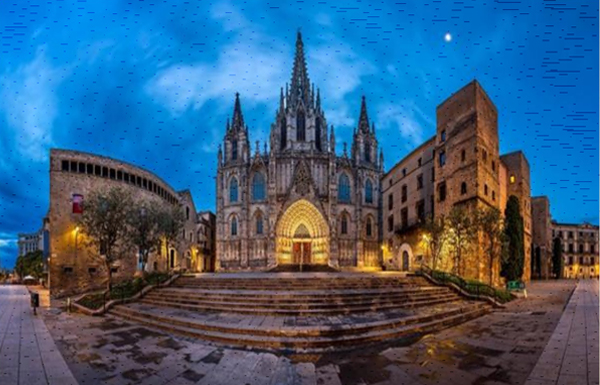
However, you are surrounded by alternatives. Live in or near a big city with buildings of interesting architecture? Visit one – preferably with a kid or grandkid of yours – and ask to see the building engineer to find out how it was built, how it’s maintained. Odds are he’ll be delighted to give you a tour.
Public utilities like your local water treatment plant often give public tours. Finding out what it takes to keep our water clean and protect us from sewage is a revelatory learning experience. Same with a power plant. Or a mine if you’re in a more rural area.
Naturally, you’ll want to visit a new place of nature and real outdoors to hike in and explore.
Whatever you choose, get out into the world and commit yourself to novel visual-spatial learning experiencesfrom now on. The older we get, the more our brains need these.
Your hippocampus will thank you, and your sanity preserved for long to come.
To read articles like this every week, we invite you to become a TTPer!
|
 Join the forum discussion on this post



4 Responses
Loved this. I should have figured it out sooner myself!
I do this by learning new crafts. When I was seven, my oldest (and dearest) sister taught me to knit. Then how to do Frakturschrift (broken angle script), then bread-baking, then crochet, then pottery…. We lived close to the Henry Ford Museum where she would take classes and then teach them to me. At seventeen, my parents dragged me off to California, far away from my Linda, but I already knew that there wasn’t much I couldn’t do if I wanted to. I’ve made a point of learning something new, until I was good at it, every year: murals, singing, watercolor, cheese-making, woodworking, oil painting, pickleball, hand-stitching, paper-cutting, kombucha, leatherworking – this year it’s basketweaving.
It drove my family nuts – WHY didn’t I just keep doing anything, make a business out of it??? I never really understood it myself – but I’m pretty sure I just got bored! lol
I’ve heard all my life that it was childish not to just settle down to one thing. I’m going to forward this article to all of my OLD peers –See, I was keeping my brain young. 🙂 (There may, possibly, be a little childishness in there, too, of course.)
Mellie
Mellie
Thanks for this and similar articles which pertain to living well—which doesn’t require a Gulfstream or celebrity or any trappings of the ubermensch. Let us recall that the dwellers of Galt’s Gulch were not preening “alpha dogs” or self-satisfied fat-cats. Ayn Rand described them as “normal men” in prominent italics. A supremely important point.
We want to be rational conservatives and that requires a steady eye on political matters. But wading through swamps, dodging alligators and pulling off leeches, does get wearisome. Thanks again for signposts to the most important matter… a life lived well. It takes work and any instruction manuals tend to get buried under rubbish heaps, all too often.
Remember Feynman crackling the Challenger booster gasket in the liquid nitrogen? He was a very very great man.
He, and TTP, ben berry berry good for my Hippocamus.
Quoth Hamlet : “I am but mad north-northwest. When the wind is Southerly I can tell a hawk from a handsaw”
I miss Rush.